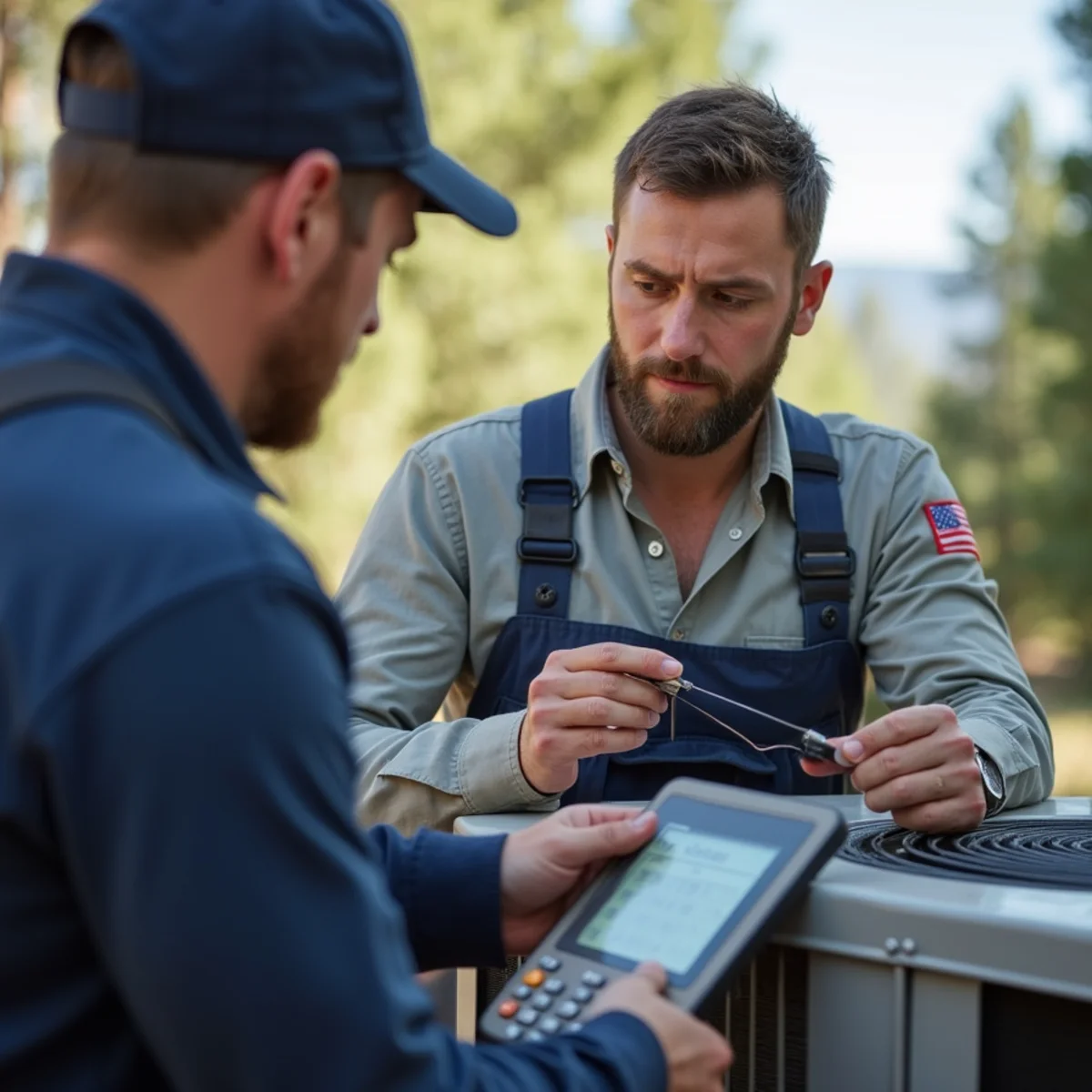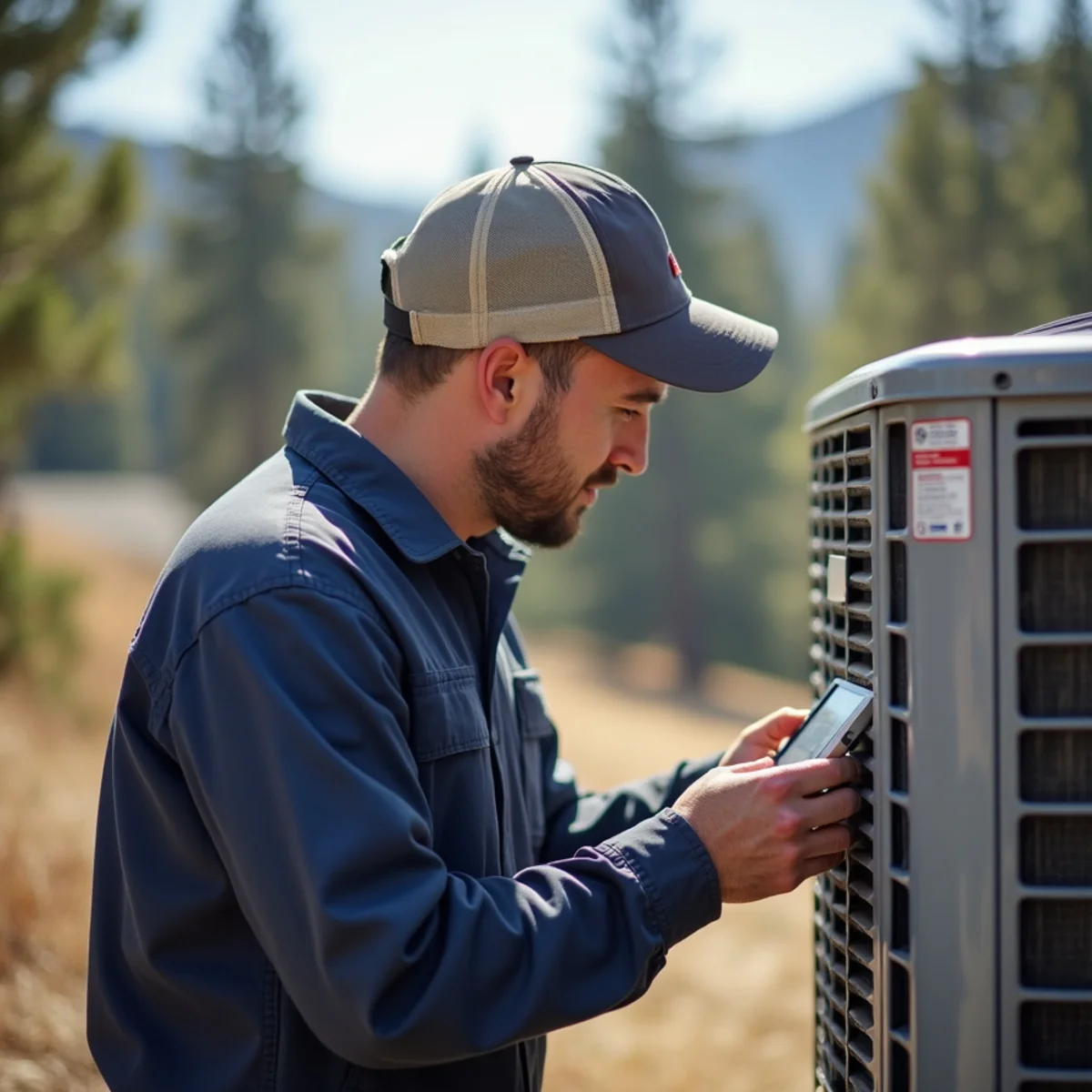
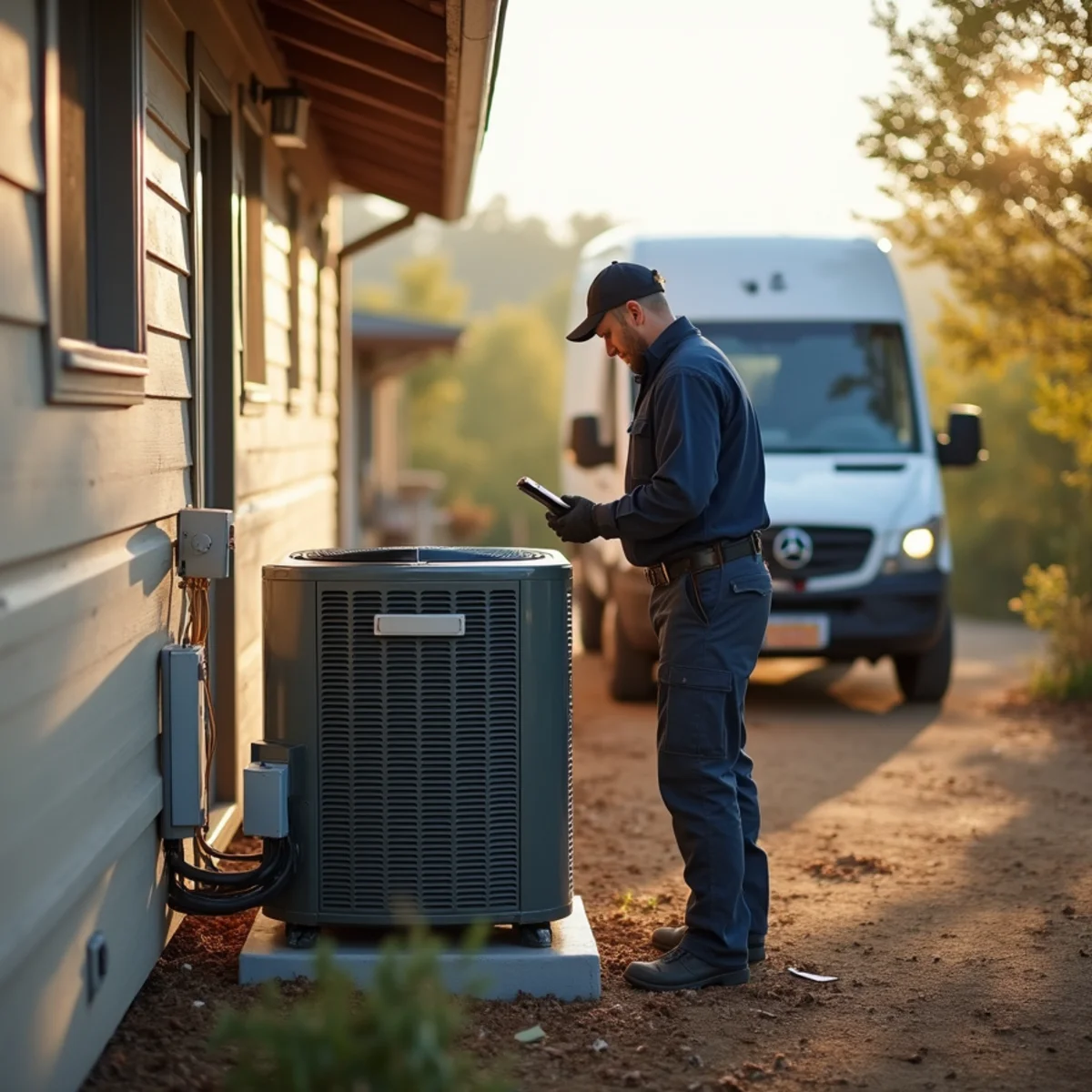
Replacing an air conditioner is a 12–15 year decision. We size it with an ACCA Manual J load calculation — not by matching the old tonnage — so your new system holds temperature through Auburn's hottest weeks without short cycling or driving up your PG&E bill.
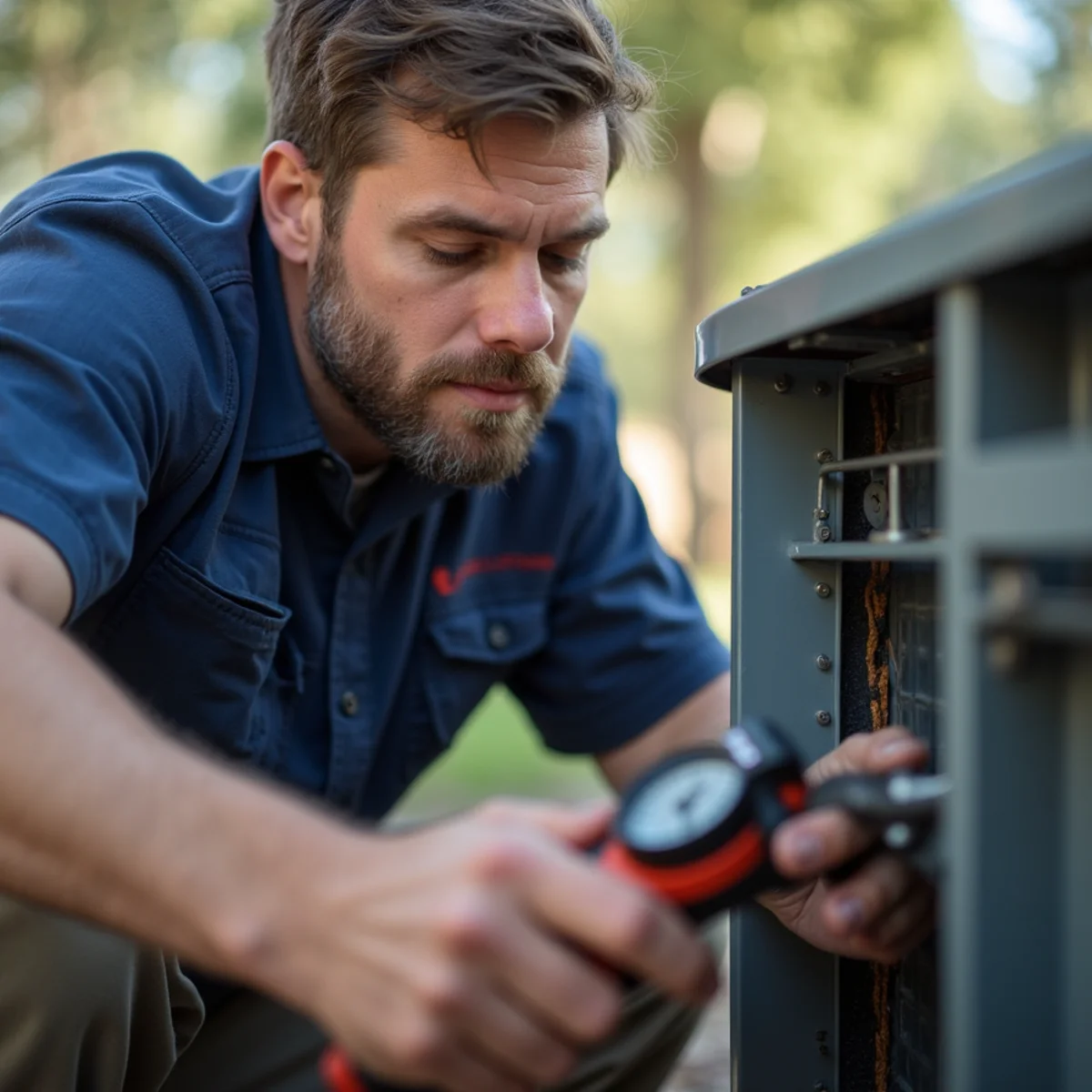
When It's Time to Replace, Not Repair
Replacement deserves a serious look when the numbers stop favoring repair. We'll give you an honest comparison, but these are the signs a new system usually wins:
- Recurring failures or an escalating repair history
- The system can't keep up on 95–105°F afternoons
- Rooms stay uneven no matter how you set the thermostat
- An aging R-22 system where refrigerant is expensive or unavailable
- Rising energy bills from a low-SEER unit and leaky ducts
- You want quieter operation and better dehumidification
Right-Sized With Manual J — Bigger Isn't Better
An oversized AC cools fast, then shuts off before it removes humidity or evens out the house — that's short cycling, and it wears the equipment out early. We run a room-by-room Manual J calculation that accounts for your square footage, insulation, windows, attic heat, and duct condition. In foothill homes with hot attics or additions, that calculation often reveals a duct or airflow problem a bigger unit would only mask.
SEER2, Title 24, and Rebates
Today's high-efficiency SEER2 systems cut run-time cost meaningfully over an old 10-SEER unit. New installations must also meet California 2025 Title 24 requirements and the 700 GWP refrigerant limit for equipment installed on or after January 1, 2025 — we identify the compliant equipment and handle the permit and documentation. We'll also point you to current PG&E and manufacturer rebates and explain financing so you can compare the total cost, not just the sticker.
Directional cost context
Central AC replacements in the Auburn market commonly run $3,500–$8,500, and a full HVAC replacement $10,000–$20,000+, depending on equipment, ducts, electrical, and permits. These are directional ranges, not a quote — we put your exact scope in writing.
Our Installation Process
- 1Free in-home evaluation with Manual J sizing and a duct and airflow inspection.
- 2Written options comparing efficiency tiers, a heat-pump alternative, financing, and rebates.
- 3Professional install: new equipment, pad, line set, electrical, and any needed duct correction.
- 4Startup commissioning — we verify charge, airflow, and temperature split — plus permit, warranty, and cleanup.
Considering heating and cooling from one system? Compare a heat pump installation before you decide, and if some rooms have no ducts, a ductless mini-split may solve the comfort problem without a bigger central unit.
What's Included When We Install Your AC in Auburn
A replacement is only as good as the install behind it. Our AC installation is a complete job — new equipment, the parts around it that make it last, and the paperwork that keeps your warranty valid. Cutting corners on the line set, the pad, or the electrical is how a strong compressor dies young. A typical central AC installation includes:
- A right-sized condenser and a matched indoor evaporator coil — mismatched equipment loses efficiency and can void the manufacturer's warranty
- A new composite equipment pad, refrigerant line set (or a proper flush of the existing one), and fresh brazed connections pulled to a deep vacuum
- The electrical whip, disconnect, and breaker checked and corrected to carry the new unit's load safely
- A new filter drier and a weighed-in refrigerant charge instead of a guess by gauge pressure and feel
- Duct and airflow correction where the old system was choking on undersized, disconnected, or leaky attic runs the previous unit had to fight
- A compatible thermostat set up and tested for the new equipment
- Startup commissioning — verified charge, airflow, and temperature split — plus permit filing and haul-away of the old unit
What Affects the Cost of AC Installation in Auburn
Two Auburn homes rarely get the same number, because the equipment on the pad is only part of the job. These are the factors that move an AC installation price:
- Cooling load and tonnage from the Manual J calculation — bigger isn't automatically pricier, but it sets the equipment tier your home actually needs
- Efficiency level — a higher-SEER2 system costs more upfront and less to run through every stretch of Auburn's 90°F-plus summer
- Duct condition — sealing, resizing, or replacing leaky foothill attic ducts adds to the scope but protects the whole investment from day one
- Electrical — panel capacity, a new disconnect, or a whip upgrade to serve the new unit
- Line-set length and whether it can be safely reused, plus the pad, permit, and disposal of the old equipment
- The 700 GWP refrigerant rule for equipment installed on or after January 1, 2025, and California 2025 Title 24 documentation
Central AC replacements in the Auburn market commonly run $3,500–$8,500, and a full HVAC changeout $10,000–$20,000+ — directional context, not a quote. We put your exact scope and price in writing, and keep financing separate from rebates so you see the real total you'll pay rather than a monthly payment with the full number buried inside it.
Plan the swap for spring or fall
A dying AC almost always fails on the hottest day, when schedules are jammed and you're deciding under pressure in a 90°F house. Replacing on your own timeline in the shoulder seasons lets us compare efficiency tiers, line up rebates, and correct ducts properly — and you skip the peak-season scramble entirely.
Why Auburn Homeowners Choose The HVAC Auburn CA
You'll live with this system for well over a decade, and the crew that installs it matters as much as the brand on the box. Homeowners pick us because:
- We size with an ACCA Manual J load calculation, not by copying the old tonnage — so the system holds temperature without short cycling itself to an early grave
- We pull the permit and install to California 2025 Title 24 with compliant refrigerant, so the job passes inspection and your warranty stays intact
- Upfront, written, line-by-line pricing — never a headline number presented as a quote
- A licensed CA CSLB C-20 contractor, bonded and insured, doing the work with our own local crew rather than a rotating subcontractor
- Straight talk on rebates and financing, plus an honest heat-pump comparison when it's the better long-term value
AC Installation Across Auburn & Placer County
We install and replace central air conditioners throughout Auburn and the surrounding valley and foothill communities. That includes North Auburn, Loomis, Rocklin, Granite Bay, and Lincoln, along with the rest of Placer County. Every install starts with an in-home Manual J evaluation, wherever your home sits and however the old ducts were run.
Ready for AC Installation in Auburn?
Same-day in Auburn · 24/7 emergency
Frequently Asked Questions
With an ACCA Manual J load calculation — a room-by-room analysis of square footage, insulation, windows, attic heat, and ductwork. Matching a new unit to the old tonnage is not a substitute, especially in foothill homes with hot attics or additions where the old unit may have been the wrong size all along.
Directional Auburn-market ranges are $3,500–$8,500 for central AC and $10,000–$20,000+ for a full HVAC replacement. Your written proposal depends on equipment size and efficiency, duct and electrical work, permits, refrigerant, and disposal. We provide a line-by-line quote, not just a headline price.
Often, yes — through PG&E and equipment manufacturers, and sometimes state programs. Availability, eligibility, and amounts change, so we confirm what currently applies to your exact equipment and never advertise a rebate maximum as guaranteed money.
Yes. AC replacements and installations require a permit in California. We pull the permit, install to California 2025 Title 24 requirements, use compliant refrigerant, and document the startup — so the job passes inspection and your warranty stays intact.
A straightforward central AC changeout is usually a one-day job. If we're correcting ductwork, upgrading electrical, or the equipment location is hard to reach, it can run into a second day. We give you the timeline in the written proposal before we start, so you can plan around having the crew on site.
It's rarely a good idea. The outdoor condenser and the indoor evaporator coil are engineered as a matched set, and pairing a new condenser with an old, mismatched coil hurts efficiency, can cause early failure, and often voids the manufacturer's warranty. Modern refrigerant and efficiency rules also make many older coils incompatible with new equipment. We'll tell you honestly if your coil can stay, but in most cases we replace them together.