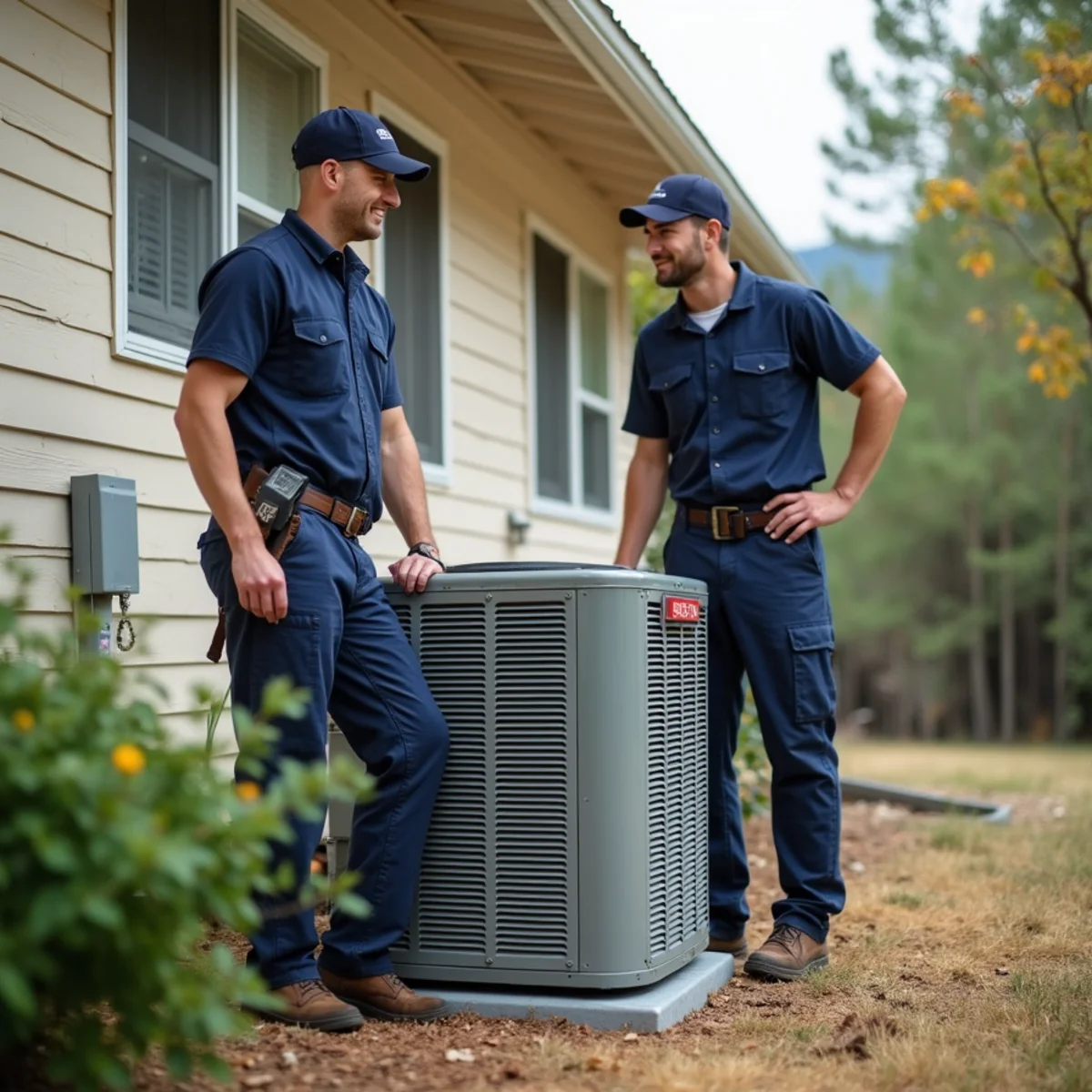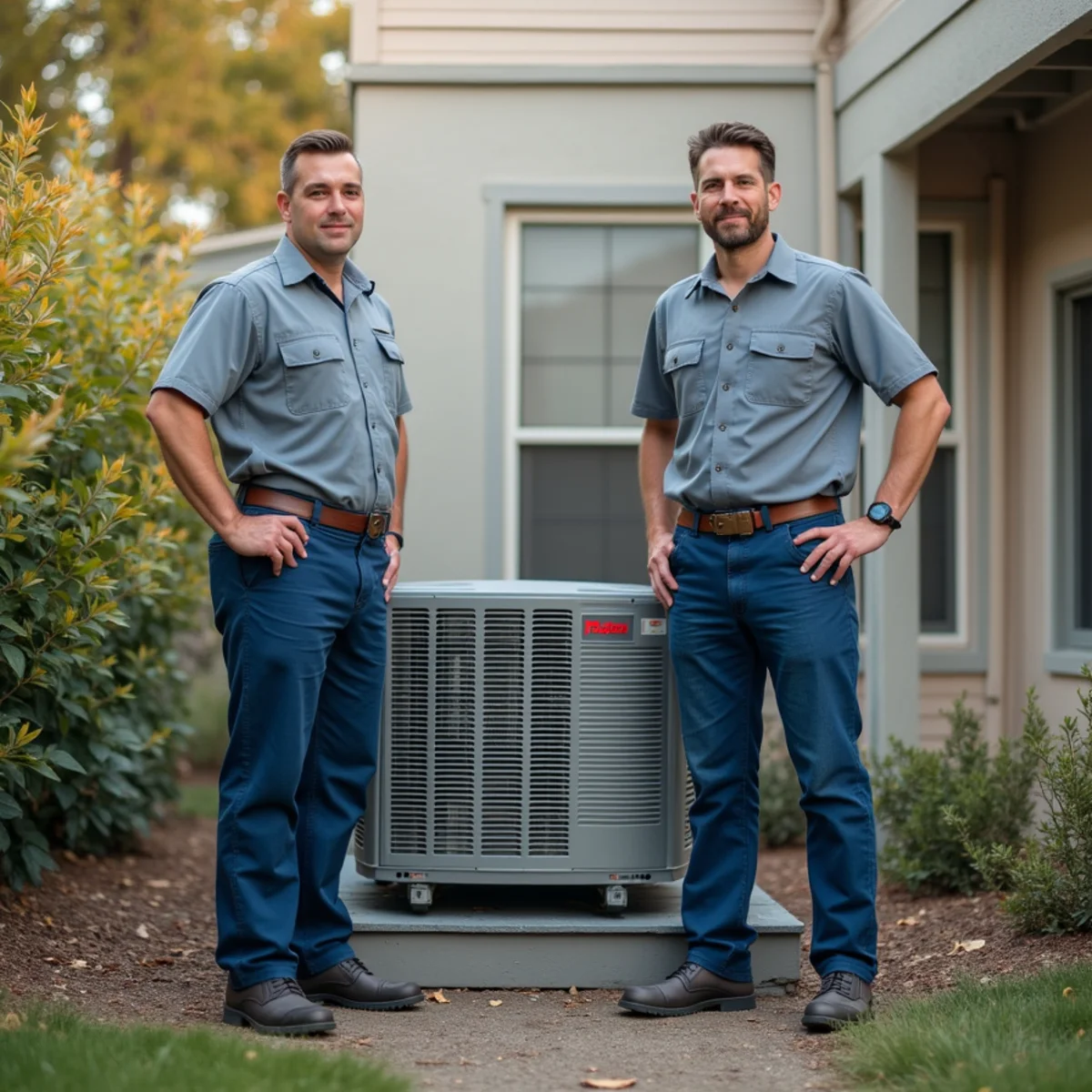
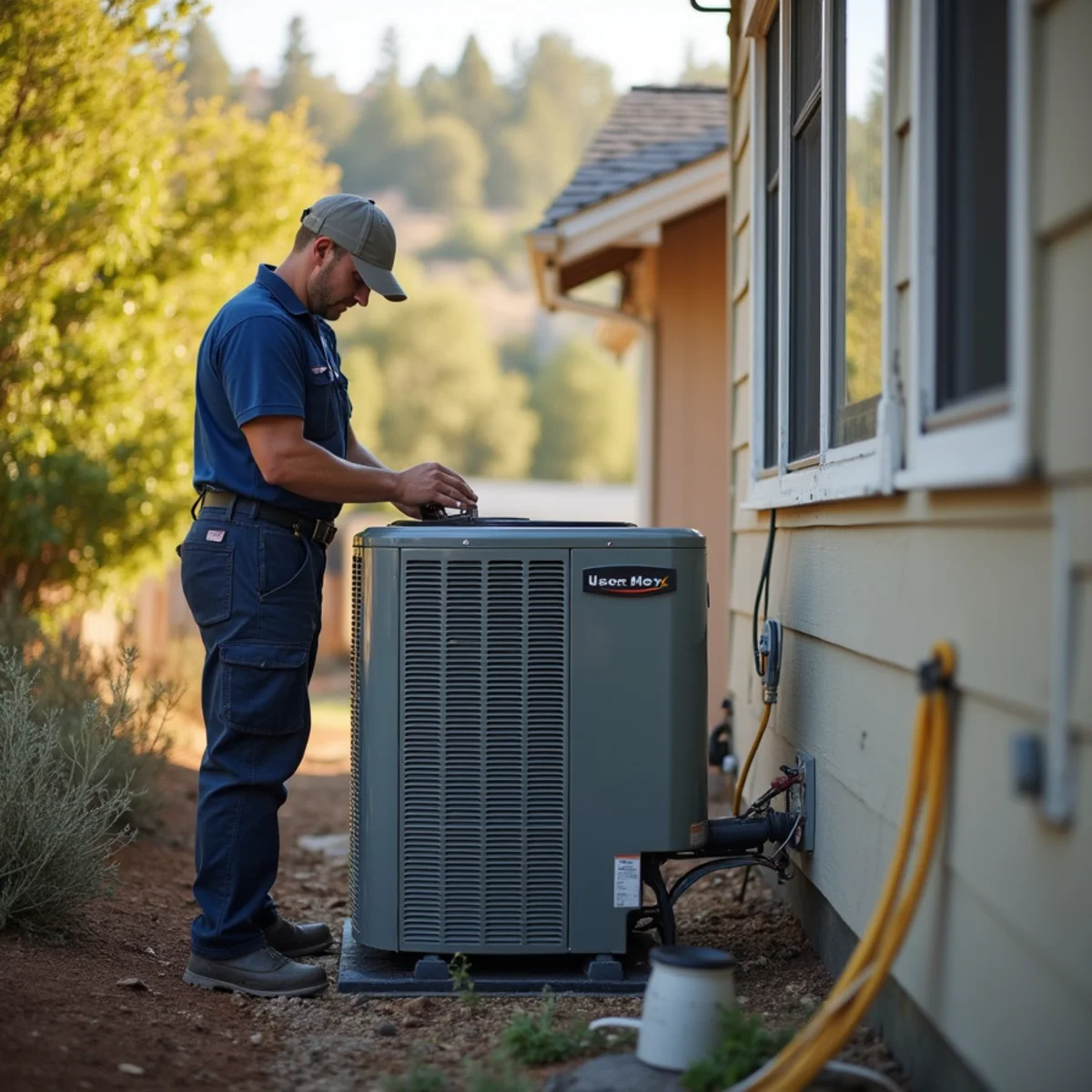
A heat pump heats and cools your home from a single efficient system — a strong fit for Auburn's climate, where summers are hot and January lows sit near 38°F. We install and repair heat pumps, size them properly, and give you straight answers on rebates and payback.
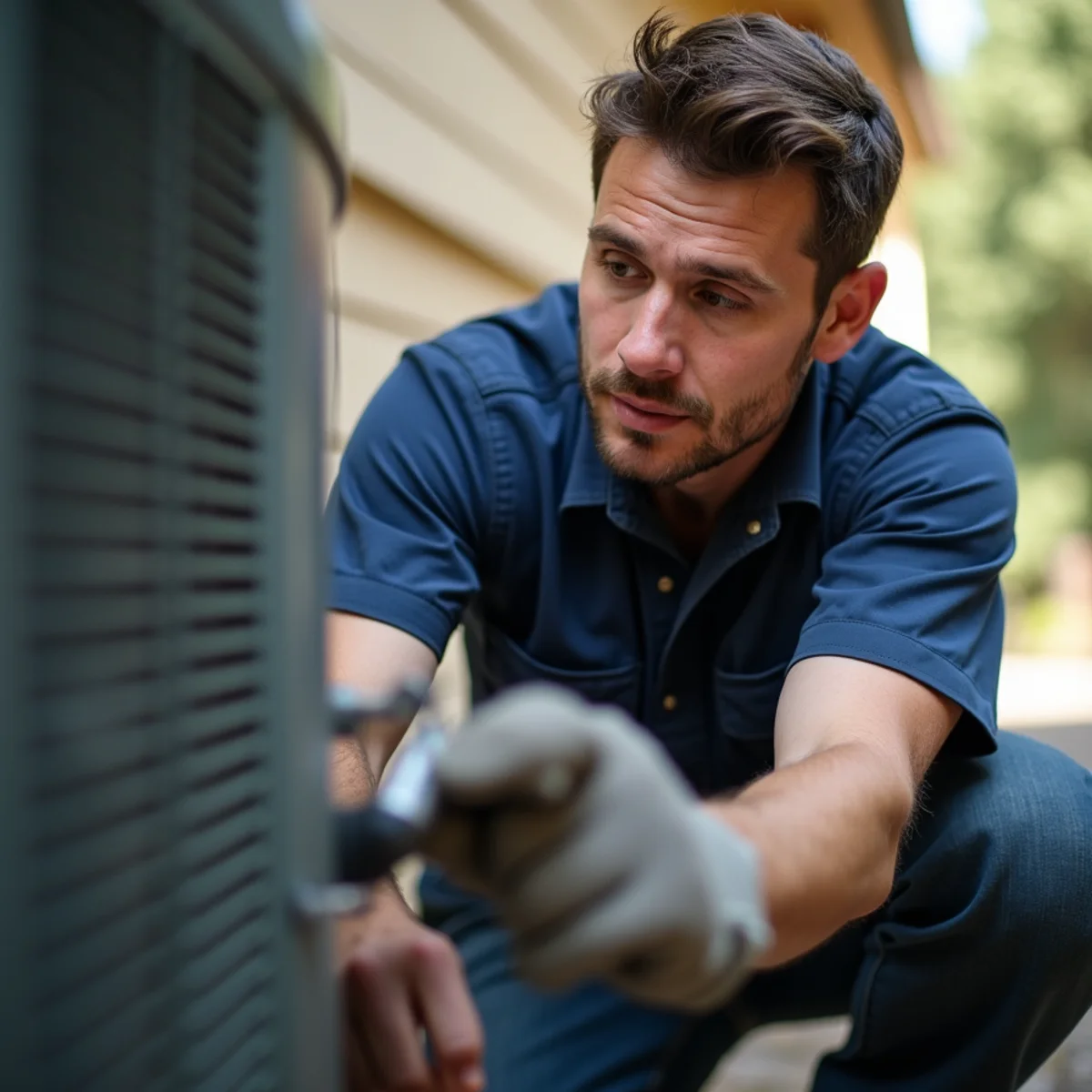
Is a Heat Pump Right for Your Auburn Home?
At Auburn's elevation of roughly 1,200 feet, modern heat pumps handle both the cooling load of 90°F+ summers and the heating load of wet, mild winters efficiently. They shine when you're replacing an old AC and an aging furnace at the same time, electrifying off propane, or adding efficient comfort to an addition. For higher, colder locations like Colfax or Alta, we'll discuss cold-climate models or a dual-fuel setup with backup heat.
Heat Pump Repair
Because a heat pump runs year-round, it sees more hours than a cooling-only system — so timely repair matters. We diagnose reversing valve faults, defrost control problems, refrigerant issues, low airflow, and the auxiliary-heat problems that drive up winter bills. If your heat pump is heating weakly or icing over, don't wait for it to fail completely.
Sizing, Title 24, and Refrigerant
Heat pumps are unforgiving of bad sizing and poor ductwork, so we run a Manual J calculation, evaluate your electrical capacity and ducts, and set up controls and backup heat correctly. New systems meet California 2025 Title 24 and the 700 GWP refrigerant limit — we identify compliant equipment and document commissioning at startup.
Rebates change — we verify
Federal HEEHRA guidance describes up to $8,000 for qualifying California homeowners, but single-family HEEHRA funds were reported fully reserved statewide as of February 24, 2026. We confirm current PG&E, TECH, manufacturer, and state rebate status for your exact equipment rather than promising a maximum. See our heat pump cost, rebates & payback guide.
Directional Cost and Payback
A whole-home heat pump commonly runs $8,000–$18,000+ in the Auburn market, and a single-zone ductless heat pump $2,500–$6,500, depending on scope. We model the real payback against your current PG&E or propane costs so the efficiency claim is grounded in your bills — not a brochure.
What's Included When We Install Your Heat Pump in Auburn
A heat pump replaces both your heating and your cooling, so the install touches more of the system than a straight AC swap. Get the sizing, controls, or backup heat wrong and an efficient machine turns into a high-bill space heater — which is why the setup matters more than the badge on the unit. A typical heat pump installation includes:
- An outdoor heat pump matched to an indoor air handler or coil, sized from a Manual J load calculation rather than the old tonnage
- Backup heat set up correctly — electric heat strips, or a dual-fuel pairing with a gas or propane furnace for the coldest snaps and outages
- A smart thermostat configured with the balance point and compressor lockout so backup heat only kicks in when it's genuinely needed
- The electrical whip, disconnect, and a breaker or panel check for the added electrical load
- A new line set (or a proper flush), composite pad, filter drier, deep vacuum, and a weighed-in refrigerant charge
- A duct and airflow evaluation and correction, since heat pumps are unforgiving of the leaky or undersized ducts an old furnace could mask
- Startup commissioning in both heating and cooling modes, permit filing, and haul-away of the old equipment
What Affects the Cost of Heat Pump Installation in Auburn
Heat pump pricing spans a wide range because the systems do, from a single ductless zone to a whole-home dual-fuel setup. The main factors:
- A whole-home ducted system versus a single-zone ductless unit — a very different scope, and a very different price
- Electrical capacity — some homes need a subpanel or a service upgrade to add a heat pump's load and any backup heat strips safely
- Backup heat choice — electric strips versus integrating or keeping a gas or propane furnace for dual-fuel operation
- A cold-climate model for higher, colder foothill locations like Colfax or Alta that see real winter
- Duct condition, refrigerant, the equipment pad, and line-set length
- Permit, California 2025 Title 24, and the 700 GWP refrigerant rule for equipment installed on or after January 1, 2025
A whole-home heat pump commonly runs $8,000–$18,000+ in the Auburn market, and a single-zone ductless heat pump $2,500–$6,500 — directional context, not a quote. We put your scope in writing and model the payback against your actual PG&E or propane bills, so the efficiency case rests on your numbers rather than a brochure's best case.
Heat pumps run on electricity — plan for PG&E shutoffs
During a PG&E Public Safety Power Shutoff, an all-electric heat pump can't heat or cool. In foothill areas prone to PSPS, that's a real argument for a dual-fuel setup with a gas or propane furnace, or a backup-power plan for the system. We raise it during design so an outage doesn't leave you without comfort when you most need it.
Why Auburn Homeowners Choose The HVAC Auburn CA
A heat pump only delivers its efficiency if it's sized, wired, and set up right. Homeowners choose us because:
- We size with an ACCA Manual J calculation and check your electrical and ducts before we ever recommend a piece of equipment
- We set the balance point and backup heat correctly, so you get efficient heating without runaway electric-strip bills all winter
- We pull the permit and install to California 2025 Title 24 with compliant refrigerant
- Straight answers on rebates — we confirm current PG&E, TECH, and manufacturer status instead of promising a maximum that may already be gone
- A licensed CA CSLB C-20 contractor, bonded and insured, locally owned, that models real payback against your own bills
Heat Pump Installation Across Auburn & Placer County
We install heat pumps throughout Auburn, the valley towns, and the higher foothills, matching the equipment to the elevation. That includes North Auburn, Loomis, Rocklin, and Meadow Vista, up to colder spots like Colfax, and across the rest of Placer County. For the coldest locations we spec cold-climate models or a dual-fuel setup with backup heat.
Ready for Heat Pumps in Auburn?
Same-day in Auburn · 24/7 emergency
Frequently Asked Questions
Yes. At Auburn's ~1,200-ft elevation with January lows near 38°F, modern heat pumps heat efficiently and cool through hot summers from one system. For colder, higher-elevation homes we recommend cold-climate models or a dual-fuel setup with gas or propane backup heat.
Directional ranges are $8,000–$18,000+ for a whole-home heat pump and $2,500–$6,500 for a single-zone ductless unit. Final cost depends on sizing, electrical work, ductwork, permits, and refrigerant. We provide a written proposal and model the payback against your actual energy bills.
Sometimes — through PG&E, TECH Clean California, manufacturers, and federal programs — but availability and funding change. Notably, single-family HEEHRA rebates were reported fully reserved statewide as of February 24, 2026. We confirm what currently applies to your equipment before you budget for it.
Often, yes — that's where heat pumps make the most sense. Replacing an aging AC and furnace with one properly sized heat pump can simplify your system and cut energy costs, especially if you're currently on propane. We'll run the Manual J and show you the comparison.
Mechanically they're close cousins. A heat pump is essentially an air conditioner that can also run in reverse — in summer it moves heat out of your house to cool it, and in winter it runs the other way to pull heat from the outside air and warm the house. That's why one heat pump can replace both your AC and your furnace. The supply air in heating mode feels cooler and steadier than a furnace's short blasts of hot air, which surprises some people at first, but it's heating the home efficiently the whole time.
Sometimes, but not always. A heat pump adds electrical load, and if your panel is older, already full, or short on amperage, it may need a subpanel or a service upgrade to add the equipment and any backup heat strips safely. Many Auburn homes have room to spare. We check your panel capacity as part of the in-home evaluation and include any electrical work in the written proposal, so it isn't a surprise mid-install.