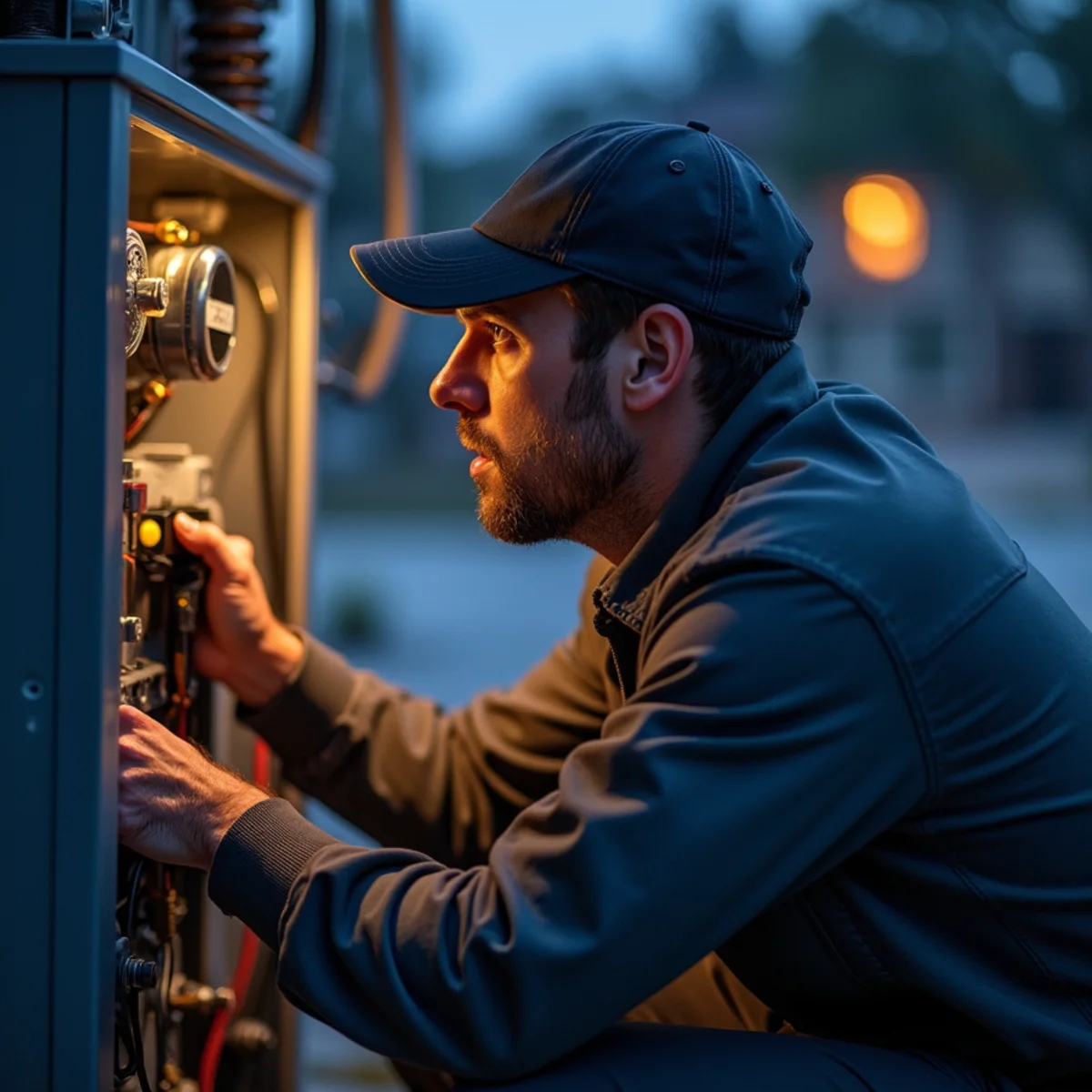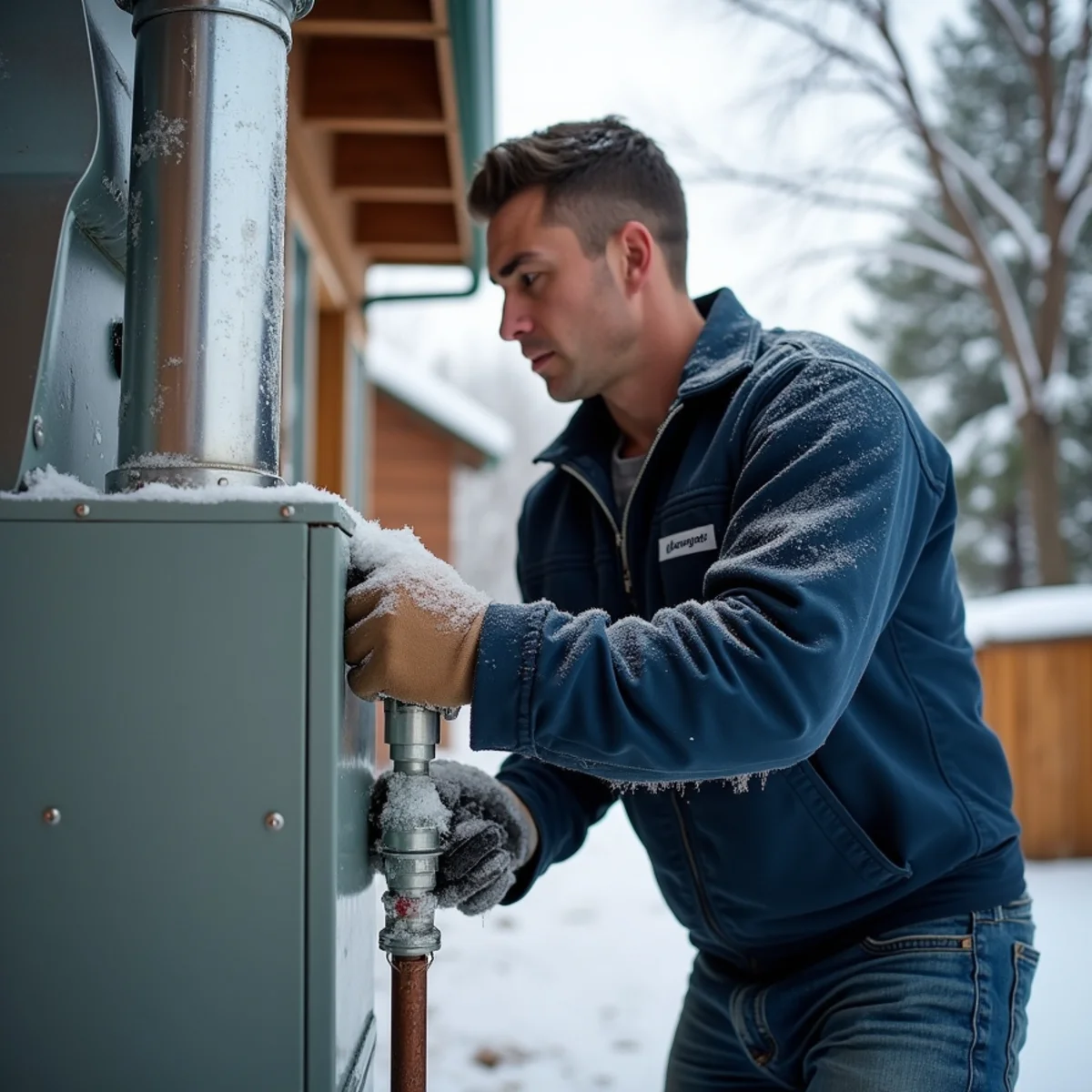
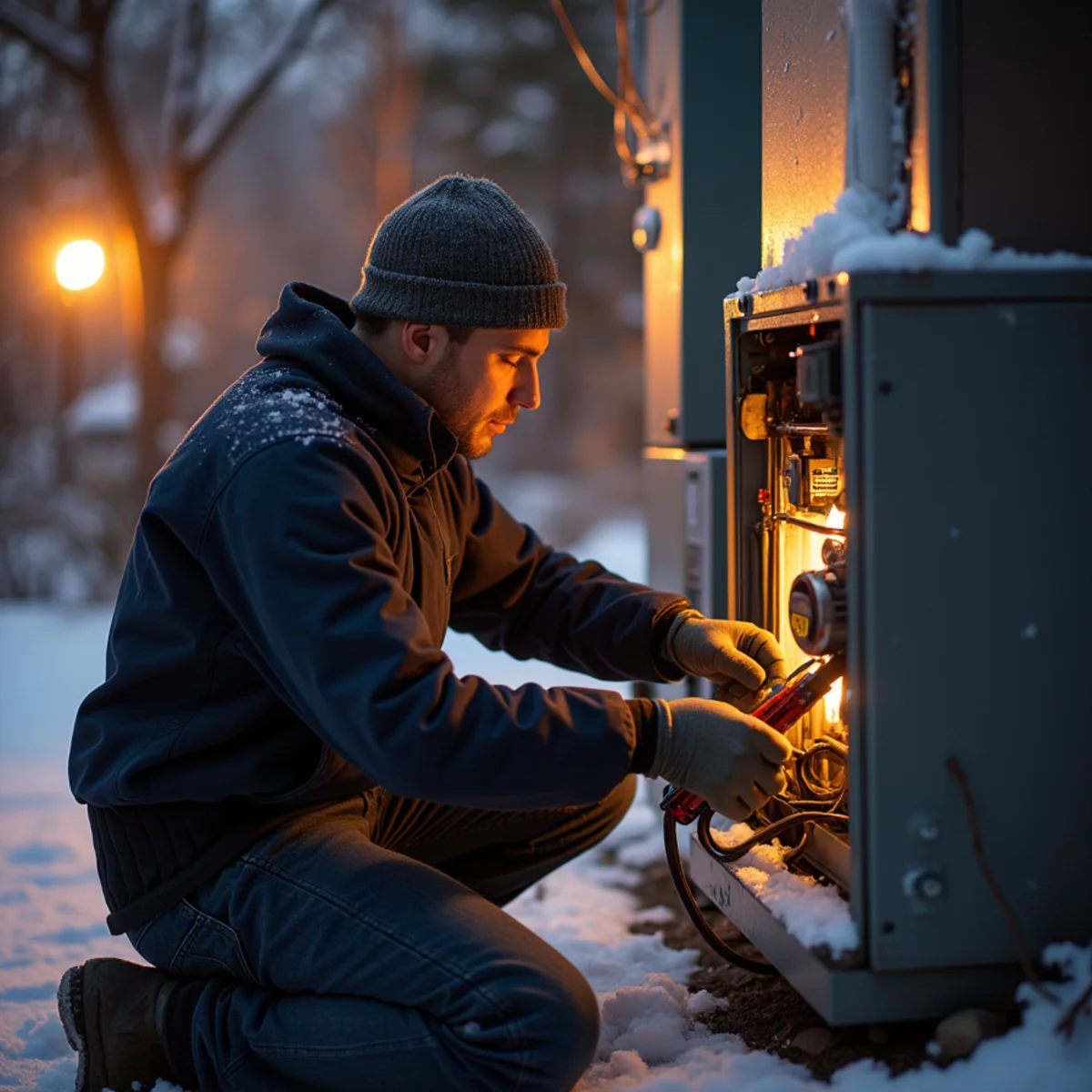
A furnace that quits on a freezing foothill night is more than uncomfortable — it puts children, older adults, pets, and pipes at risk. We answer no-heat calls around the clock and carry the ignition and control parts that cause most winter failures.
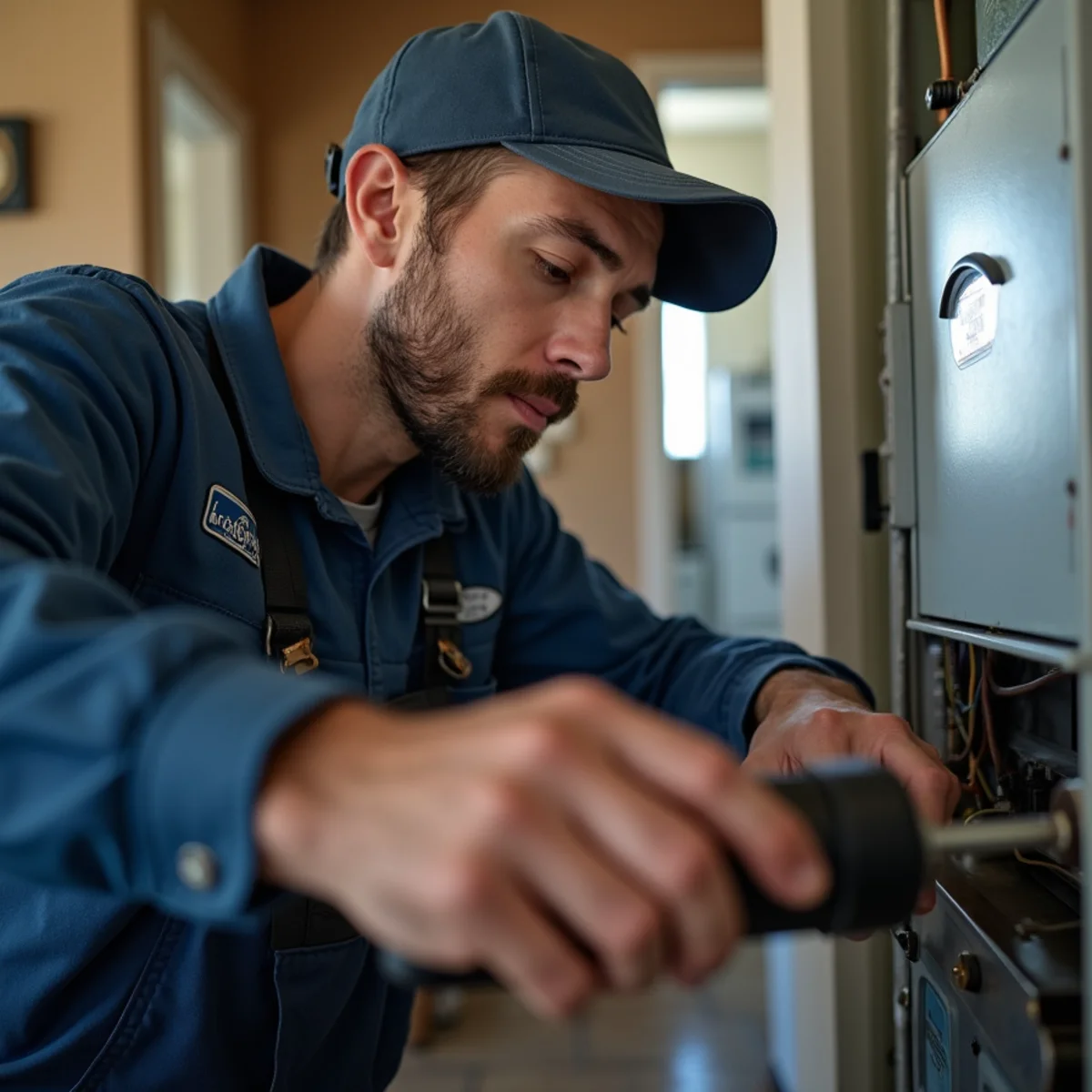
No Heat? Do This First
Before you call, a few safe checks can save a service visit — or tell us exactly what's wrong:
- 1Confirm the thermostat is set to heat and above room temperature.
- 2Check that the furnace switch and breaker are on and the filter isn't badly clogged.
- 3Look for a lockout light on the furnace, but don't repeatedly reset it — that's a safety feature.
- 4If you smell gas or burning, stop, leave if needed, and call from a safe place.
Protect your pipes and your people
On hard-freeze nights, no heat can mean frozen pipes on top of a cold house. Move vulnerable occupants somewhere warm, open cabinet doors under sinks on exterior walls, and call us. Our December freeze playbook and no-heat emergency steps walk through it.
The Failures We See on Cold Nights
Most no-heat emergencies come down to a failed hot-surface igniter, a dirty flame sensor shutting the burners down, a bad control board, a blower motor fault, or a safety lockout doing its job. We diagnose the real cause, check the heat exchanger for safety, and repair it — carrying the common parts so you're not left cold waiting on a supplier.
Higher Elevations, Colder Nights
Heating demand is far higher in Colfax, Foresthill, Alta, and the snow-line communities than on the valley floor. We understand the difference and dispatch accordingly. If your furnace keeps failing, we'll discuss whether repair or replacement is the smarter call once you're warm again.
What's Included When We Make an Emergency Furnace Repair in Auburn
A no-heat call on a freezing night is heating work and safety work at the same time. Restoring warmth quickly matters, but so does confirming the furnace is safe to run — a furnace that lights again isn't automatically a furnace that's safe. Every emergency visit includes:
- Priority overnight dispatch for no-heat calls, with homes that have infants, elderly occupants, or pets moved to the front
- A truck carrying the hot-surface igniters, flame sensors, control boards, and blower parts that cause most winter failures
- A heat-exchanger inspection and carbon-monoxide check before we ever hand the furnace back to you
- A real diagnosis of the fault rather than clearing a safety lockout and hoping it holds
- Verification of the gas or propane supply and ignition, so a supply problem isn't mistaken for a furnace fault — common on rural propane systems
- The repair completed from stock when the failed part is a common one
- A safe shutdown and clear space-heating guidance if the furnace can't run safely tonight
- Heat restored and tested, with the system cycling normally, before we leave
Rural propane? Check the tank first
Before you write it off as a furnace failure, a no-heat call around Applegate, Bowman, or Ophir is sometimes an empty or low propane tank, a valve someone bumped closed, or a regulator that iced over in the cold snap. If you can safely read your tank gauge, do that first — it can save a service visit. If the tank's fine, the problem is the furnace, and we'll fix it.
What Affects the Cost of Emergency Furnace Repair in Auburn
No-heat repairs are diagnostic-based, so the price depends on what actually failed and when you called — not on a flat after-hours menu. A dirty flame sensor and a failed control board are worlds apart in cost, and we'd rather find out which it is than guess from the furnace's age. The honest factors are:
- The time of the call — a freezing weeknight costs less to serve than a weekend or a holiday
- The failed part, from an igniter or flame sensor to a control board or blower motor
- Propane-specific parts, or a regulator or tank-supply issue on a rural system
- Whether a cracked heat exchanger turns a repair into a safety-driven replacement
- Access and drive time to higher, colder communities off the valley floor
- Special-order parts on older or less common furnaces
- Whether the fix is a single-visit repair or a temporary stabilization until a part arrives
We give you the after-hours rate before we come and the repair in writing before we start. If a cracked heat exchanger or a pattern of failures makes replacement the safe call, directional Auburn-market full-system ranges run $10,000–$20,000+ (directional, not a quote) — but we get you safely warm first and put the numbers in daylight.
Why Auburn Homeowners Choose The HVAC Auburn CA
When the heat quits on the coldest night of the year, you want a company that answers the phone and doesn't gamble with your family's safety to close the ticket faster. That's the standard we hold on every no-heat call:
- True 24/7 no-heat response — our top winter priority — with a real person on the phone, not voicemail
- Same-day and overnight dispatch in Auburn and North Auburn; higher foothill runs depend honestly on distance and conditions
- Safety-first work — heat-exchanger and carbon-monoxide checks, and no talking you past a genuine hazard
- Licensed CA CSLB C-20, bonded and insured, with propane experience as well as natural gas
- A locally owned foothill team that understands how much colder Colfax, Foresthill, and Alta run than the valley floor
Emergency Furnace Repair Across Auburn & Placer County
Cold nights hit the higher foothills hardest, and we dispatch accordingly. We answer no-heat calls in North Auburn, the mid-elevation homes of Meadow Vista, the propane country around Applegate, and the colder, higher communities of Colfax and Foresthill. Across Placer County, tell us if there are vulnerable occupants or a risk of frozen pipes when you call, and we'll prioritize your dispatch. We're straight about drive time to the snow-line communities, and we head your way the moment we're routed.
Ready for Emergency Furnace in Auburn?
Same-day in Auburn · 24/7 emergency
Frequently Asked Questions
Yes. No-heat calls are our top winter priority, and we run 24/7. Call +1 (327) 210-5999 and tell us if there are infants, elderly household members, pets, or a risk of frozen pipes so we can prioritize your dispatch.
That short cycling on a cold night is often a dirty flame sensor, an overheating limit switch from restricted airflow, or a failing igniter. It can also be a safety lockout. We diagnose the specific cause rather than just resetting it, because repeated resets can mask a real safety problem.
Portable heaters can bridge the gap if used carefully: keep them clear of anything flammable, never leave them unattended, and never use a gas range or outdoor equipment to heat indoors — that risks carbon monoxide. We'll get real heat restored as quickly as we can.
No. If your furnace locks out, resetting it repeatedly can bypass a safety response to a real problem like a flame or overheating fault. Try one reset; if it locks out again, leave it off and call us so we can find and fix the actual cause safely.
It's a real risk on the coldest foothill nights. Auburn's January normal low is about 38 degrees, but hard-freeze nights run colder, and higher communities like Colfax and Foresthill colder still. Pipes in exterior walls, crawlspaces, and unheated garages are the most exposed. While you wait, open the cabinet doors under sinks on outside walls, keep a faucet at a slow trickle, and get heat restored quickly. Tell us if the house is already cold when you call.
Treat it as a life-safety emergency first. Get everyone and any pets outside to fresh air immediately, then call 911 or the fire department from outside — don't go back in to investigate. A furnace with a cracked heat exchanger or a blocked flue can produce carbon monoxide, which is odorless and can't be smelled. Once you're safe and the home has been cleared, call us and we'll inspect the furnace and heat exchanger before it runs again.