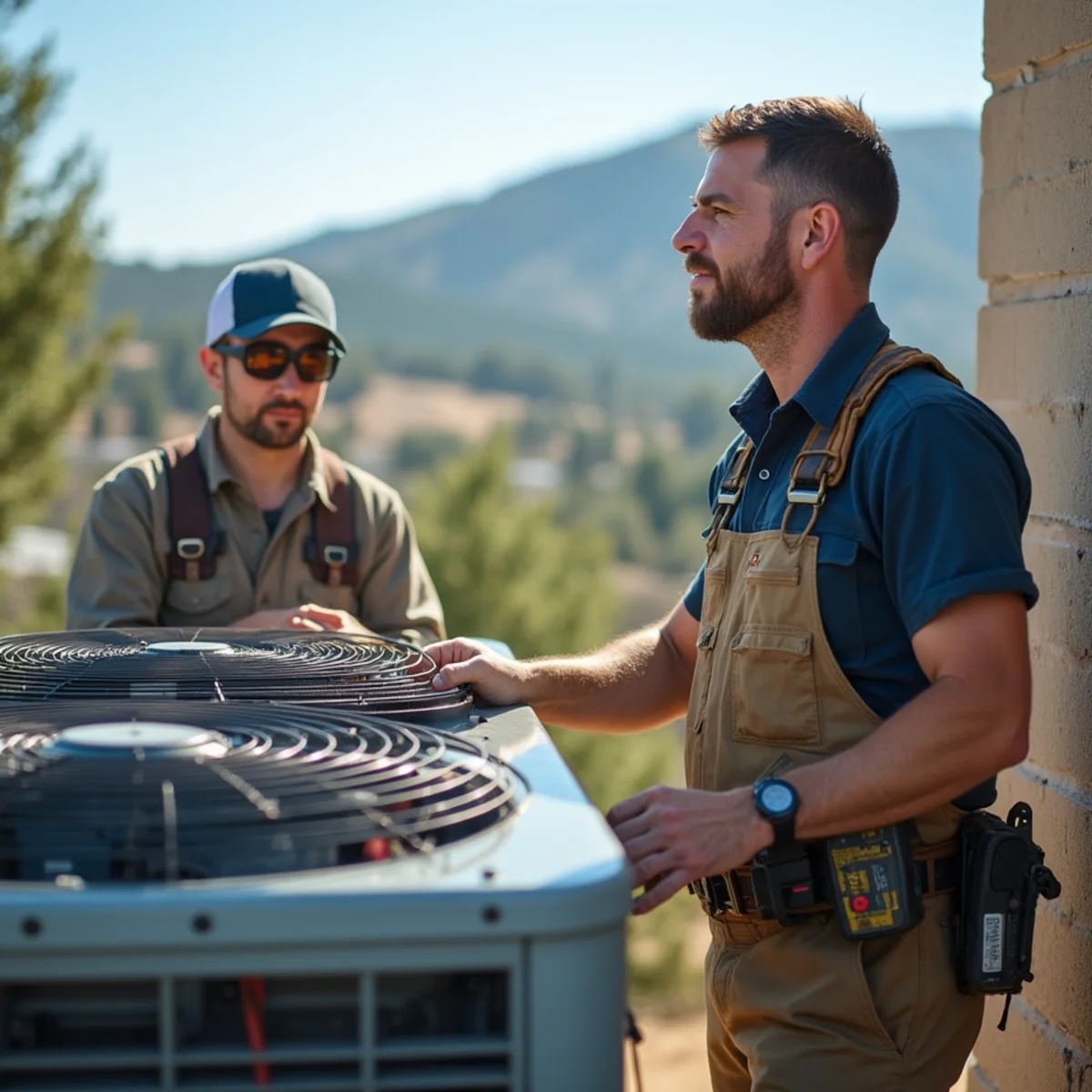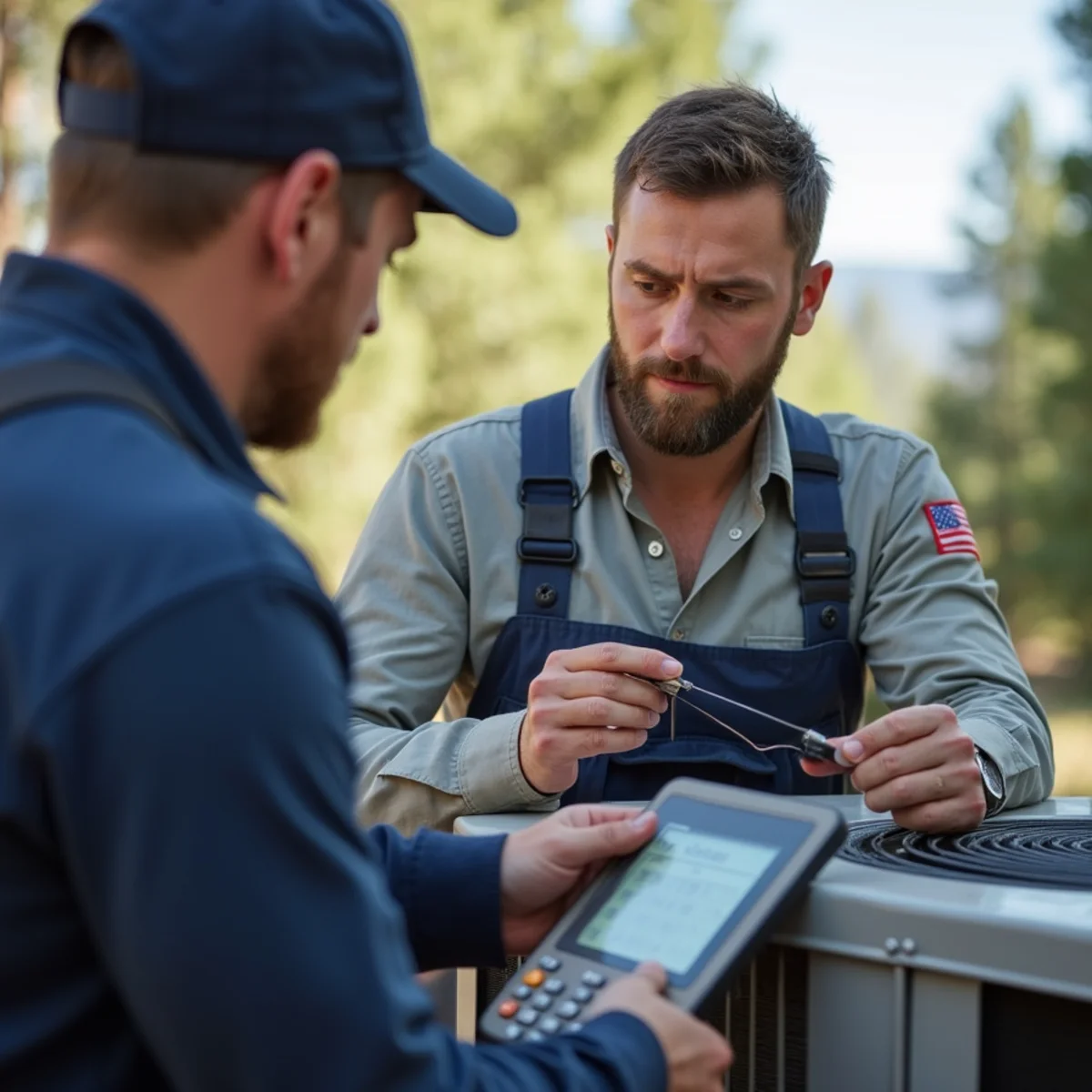
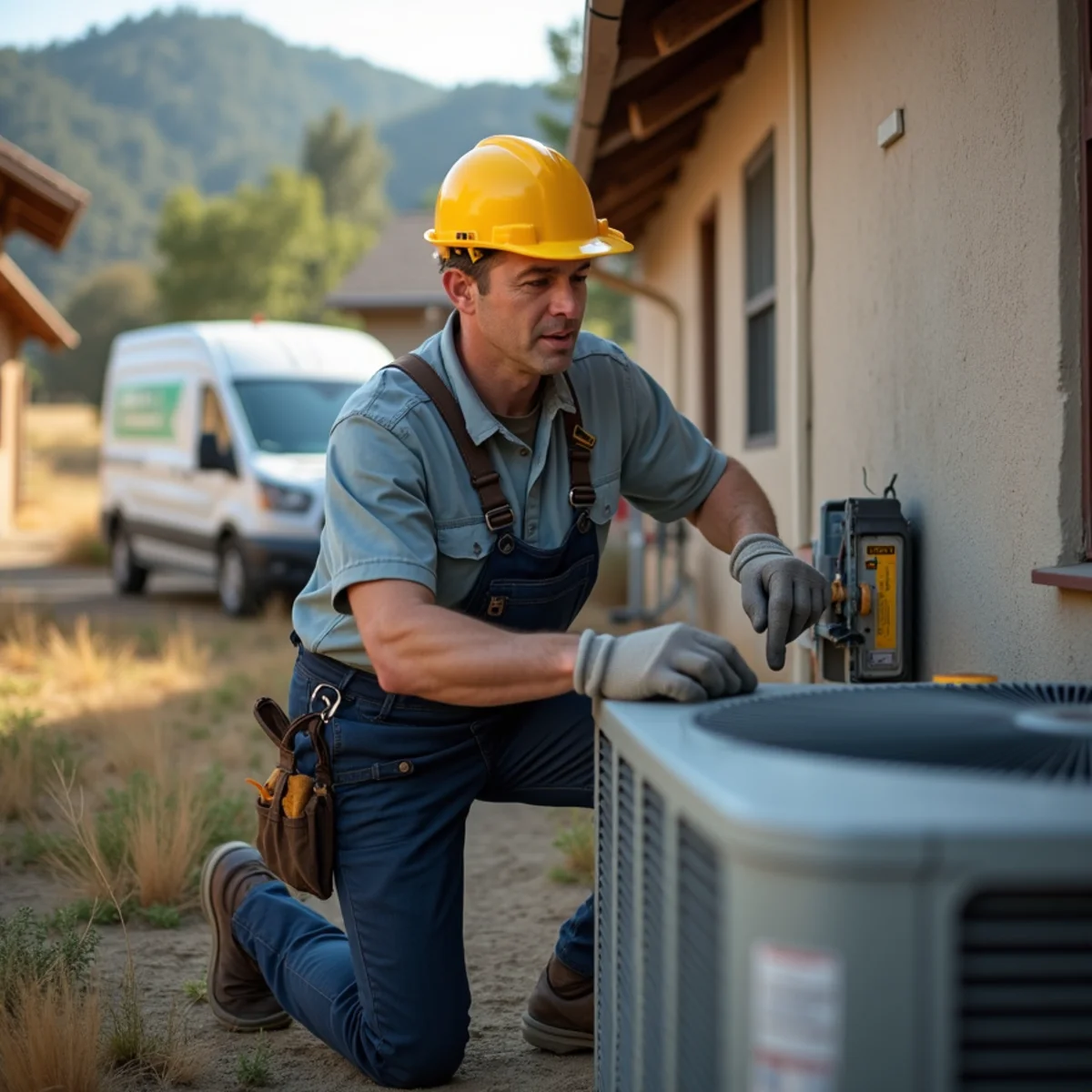
Evaporative 'swamp' coolers made sense in an earlier era, but they struggle on Auburn's most humid summer afternoons, add moisture to your home, and can't touch the comfort of refrigerated air. Converting to a modern AC or heat pump system gives you consistent, quiet cooling you can actually count on.
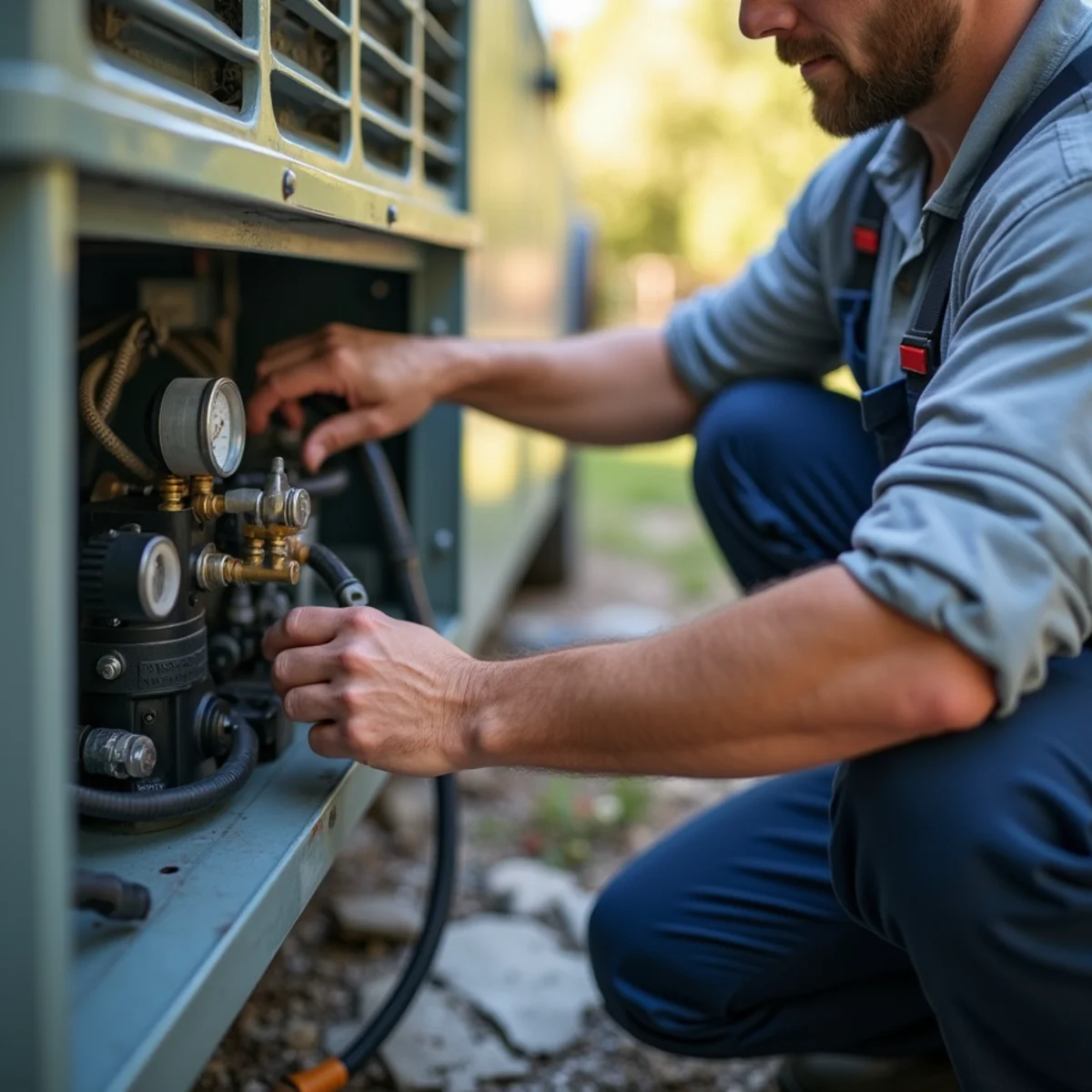
Why Homeowners Are Converting
- Swamp coolers lose effectiveness as afternoon humidity rises
- They add moisture indoors — the opposite of what you want in a heat wave
- Open cooler vents leak conditioned air and let in smoke during fire season
- Constant water use, pad replacement, and maintenance add up
- Refrigerated AC holds a steady temperature regardless of humidity
- A heat-pump conversion adds efficient heating too
What a Conversion Involves
Converting is more than swapping a box on the roof. We evaluate your home's cooling load with a Manual J calculation, assess whether existing ductwork can be reused or needs modification, size the new refrigerated system correctly, handle the electrical and the roof or wall penetrations the old cooler leaves behind, and seal the openings that were leaking air and smoke. Done right, you also close a major wildfire-smoke entry point into the home.
AC or Heat Pump?
A conversion is the perfect moment to consider a heat pump instead of cooling-only AC, since we're already doing the electrical and duct work. One system then handles both heating and cooling efficiently. For homes with limited or no usable ducts, ductless mini-splits are an excellent conversion path. We'll compare the options against your home and budget. Our swamp cooler to refrigerated air guide walks through it.
Directional cost context
Conversion cost depends heavily on whether ducts can be reused, electrical capacity, and the system chosen — central AC commonly runs $3,500–$8,500 and a whole-home heat pump $8,000–$18,000+ in the Auburn market. We provide a written scope after seeing your home.
What's Included When We Convert Your Swamp Cooler in Auburn
A swamp-cooler-to-refrigerated conversion touches the roof, the ducts, the electrical, and the thermostat — it's a compact project with several trades rolled into one. Here's what a conversion from us includes:
- Removing the old evaporative cooler and the water line that fed it
- A Manual J load calculation to size the refrigerated system for your home, not the cooler's old airflow
- Assessing whether existing ducts can be reused, resized, or need replacing for refrigerated airflow
- Installing the new condenser, the air handler or furnace coil, and the refrigerant line set
- Running the electrical — a new dedicated circuit and disconnect the old cooler never needed
- Sealing and flashing the roof or wall penetration the cooler leaves behind, closing a smoke and air-leak path
- Setting up and configuring a proper thermostat for the new system
- Commissioning — verifying charge, airflow, and temperature split before we call it done
What Affects the Cost of a Swamp Cooler Conversion in Auburn
Conversion cost hinges on how much of a refrigerated system your home can reuse and how much has to be built new. The big drivers:
- Whether your existing ductwork can carry refrigerated airflow or needs resizing and replacement
- The system you choose — cooling-only central AC, or a heat pump that adds efficient heating
- Electrical capacity and whether your panel has room for the new circuit
- Roof or wall repair and sealing where the old cooler was mounted
- Home size, layout, and the equipment efficiency tier
- Permits and California 2025 Title 24 compliance, plus compliant refrigerant on new equipment
As directional context, installed systems in the Auburn market commonly run $3,500–$8,500 for central AC and $8,000–$18,000+ for a whole-home heat pump — directional, not a quote. We put your exact conversion scope and the diagnostic fee in writing after we see the home.
Why Auburn Homeowners Choose The HVAC Auburn CA
A conversion is part demolition, part precision install, so you want one licensed crew that owns the whole job from the roof down. Homeowners pick us because:
- Licensed CA CSLB C-20, bonded and insured — one accountable contractor for the roof, ducts, electrical, and equipment
- Every conversion sized with an ACCA Manual J load calculation, so the refrigerated system fits the house
- Upfront written pricing, and honest guidance on AC versus heat pump versus ductless for your specific home
- Permits pulled and installs done to California 2025 Title 24 with compliant refrigerant
- Locally owned, and we properly seal the old cooler opening — closing a wildfire-smoke entry point, not just capping a hole
Convert in spring, not July
The comfortable time to convert is before the heat arrives. Doing it in spring means the roof work, ducting, and electrical happen on your schedule — not during a 100°F week when you're desperate for the cooler you just removed to come back.
Swamp Cooler Conversion Across Auburn & Placer County
Evaporative coolers still sit on rooftops all over the foothills, and we convert them across Auburn and Placer County. We handle conversions in North Auburn and the older, rural properties of Newcastle, Applegate, Ophir, and Foresthill, and throughout the rest of Placer County.
Ready for Swamp Cooler Conversion in Auburn?
Same-day in Auburn · 24/7 emergency
Frequently Asked Questions
Evaporative coolers lose effectiveness as humidity climbs on Auburn's muggiest afternoons, add moisture indoors, and leak air and wildfire smoke through their open vents. Refrigerated AC holds a steady, comfortable temperature regardless of humidity and — as a bonus — seals up a major smoke-entry point in your home.
Sometimes. Some homes have ducts that can be adapted; others need modification or new runs because evaporative systems move air differently. We inspect your ductwork as part of the evaluation and tell you exactly what can be reused, which affects the final cost.
A conversion is an ideal time to consider a heat pump, since we're already handling the electrical and ductwork. A heat pump gives you efficient heating and cooling from one system. If your home lacks usable ducts, ductless mini-splits are another strong conversion path. We'll compare the options for your home.
We remove the old unit and properly seal the roof or wall penetration it leaves behind. That not only prevents leaks but closes an opening that let conditioned air escape and wildfire smoke enter — a real benefit during fire season in the foothills.
A straightforward conversion that can reuse most of the existing ductwork is often completed in a day or two. If the ducts need resizing or replacement, the electrical panel needs work, or the roof opening needs significant repair, it takes longer. We give you a clear timeline in the written scope after we evaluate your home, ductwork, and electrical.
Refrigerated air conditioning does use more electricity than an evaporative cooler, so you can expect higher summer cooling costs in exchange for steady, humidity-proof comfort. How much depends on the system's efficiency, your home, and your PG&E rate plan. A right-sized, high-efficiency system paired with a smart thermostat set to your time-of-use rates keeps the increase in check, and converting to a heat pump can cut your winter heating costs to help offset it. We'll model the trade-off against your actual bills.