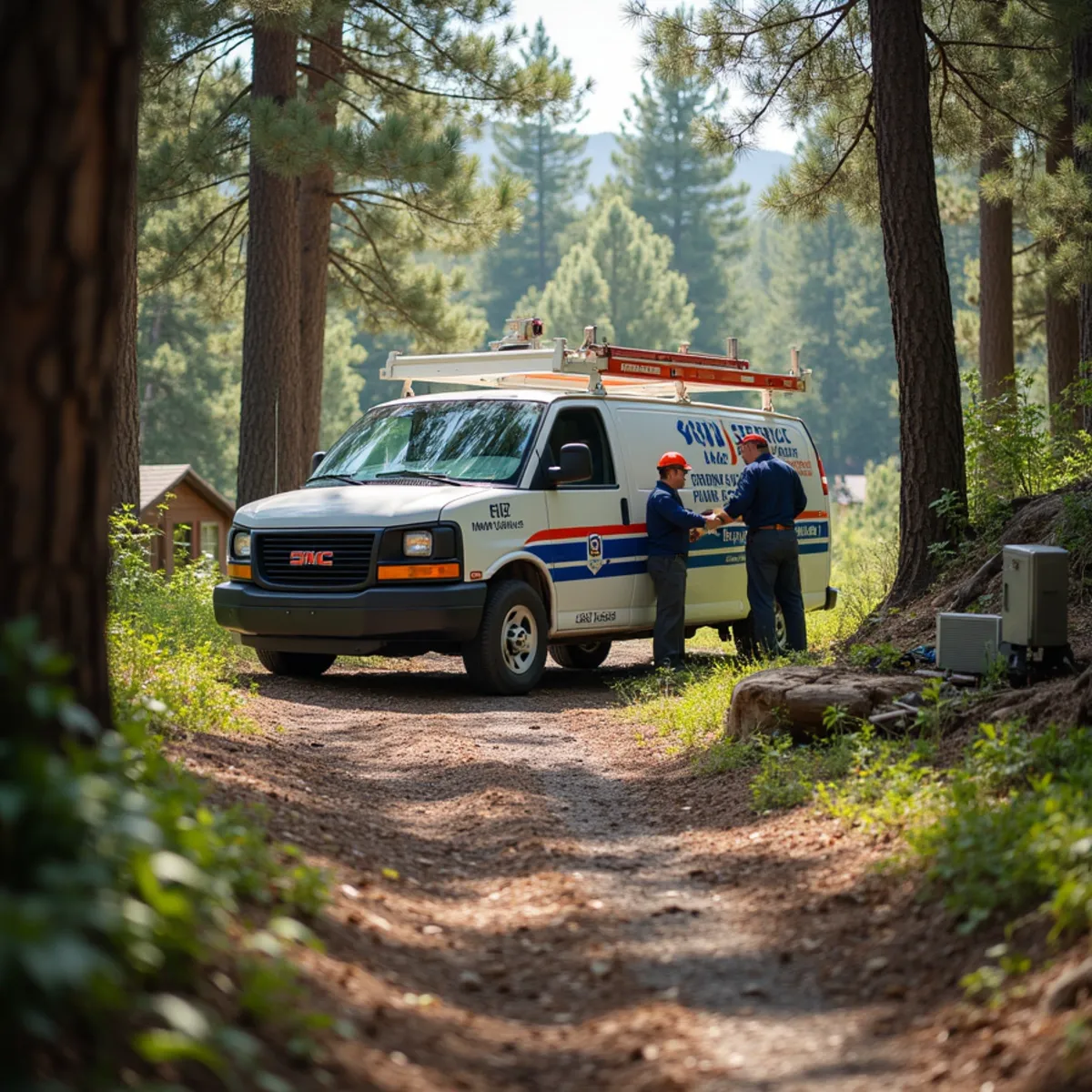
If you've lived through a PG&E Public Safety Power Shutoff in the foothills, you know the drill: fire-weather warning, then the lights go out for a day or three, usually during exactly the hot, dry stretch when you most want the AC. And the moment the grid drops, your central air or heat pump becomes a very expensive box that does nothing.
A lot of homeowners assume a generator solves it — until they discover their generator can run the fridge and a few lights but not the air conditioner. HVAC is one of the biggest electrical loads in the house, and backing it up during a PSPS takes more planning than grabbing a portable unit off a store shelf.
This guide explains why HVAC is such a heavy load, walks through your real backup options from portable to whole-home, covers the sizing basics, and frames the costs directionally so you can plan without getting a nasty surprise.
Why HVAC Is Such a Big Electrical Load
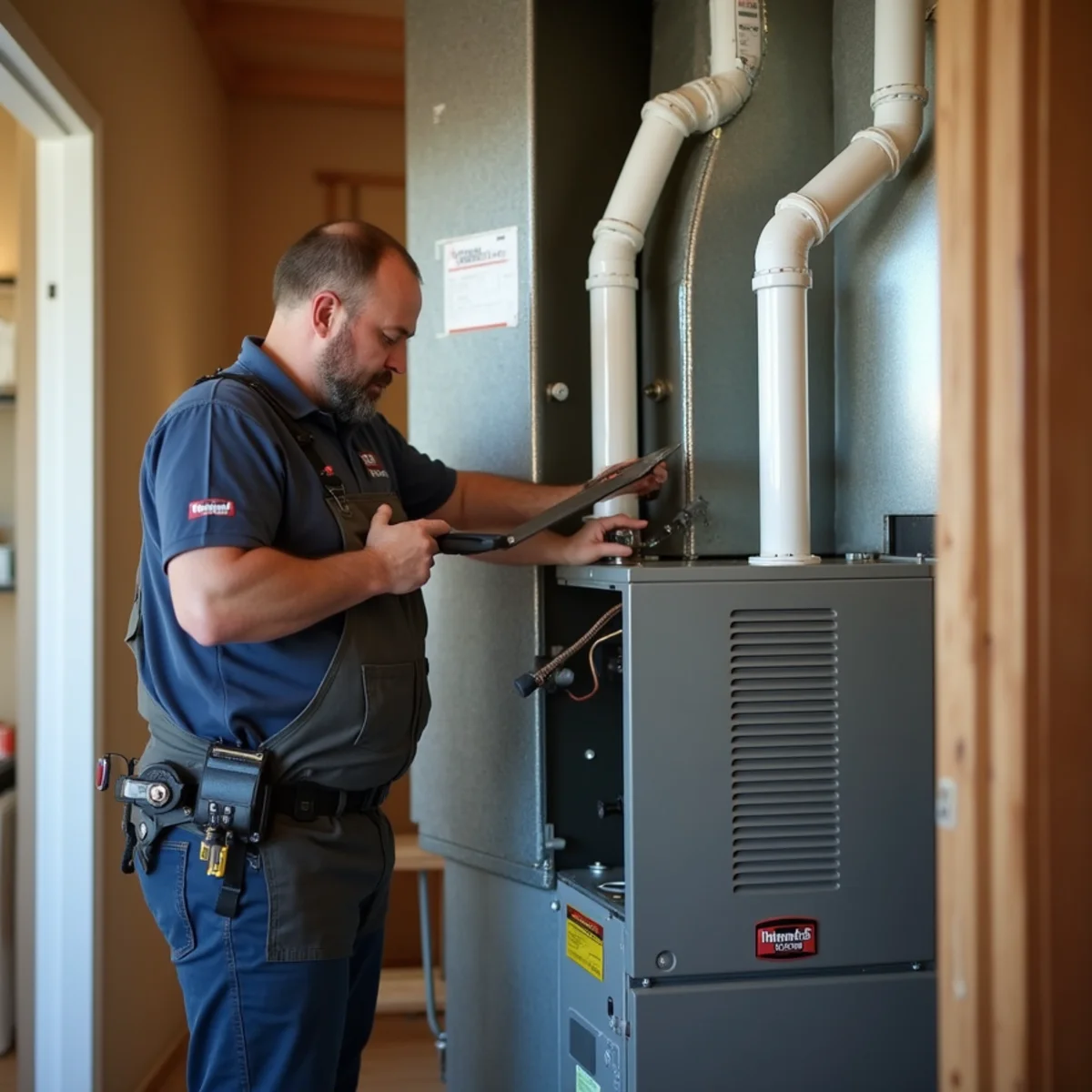
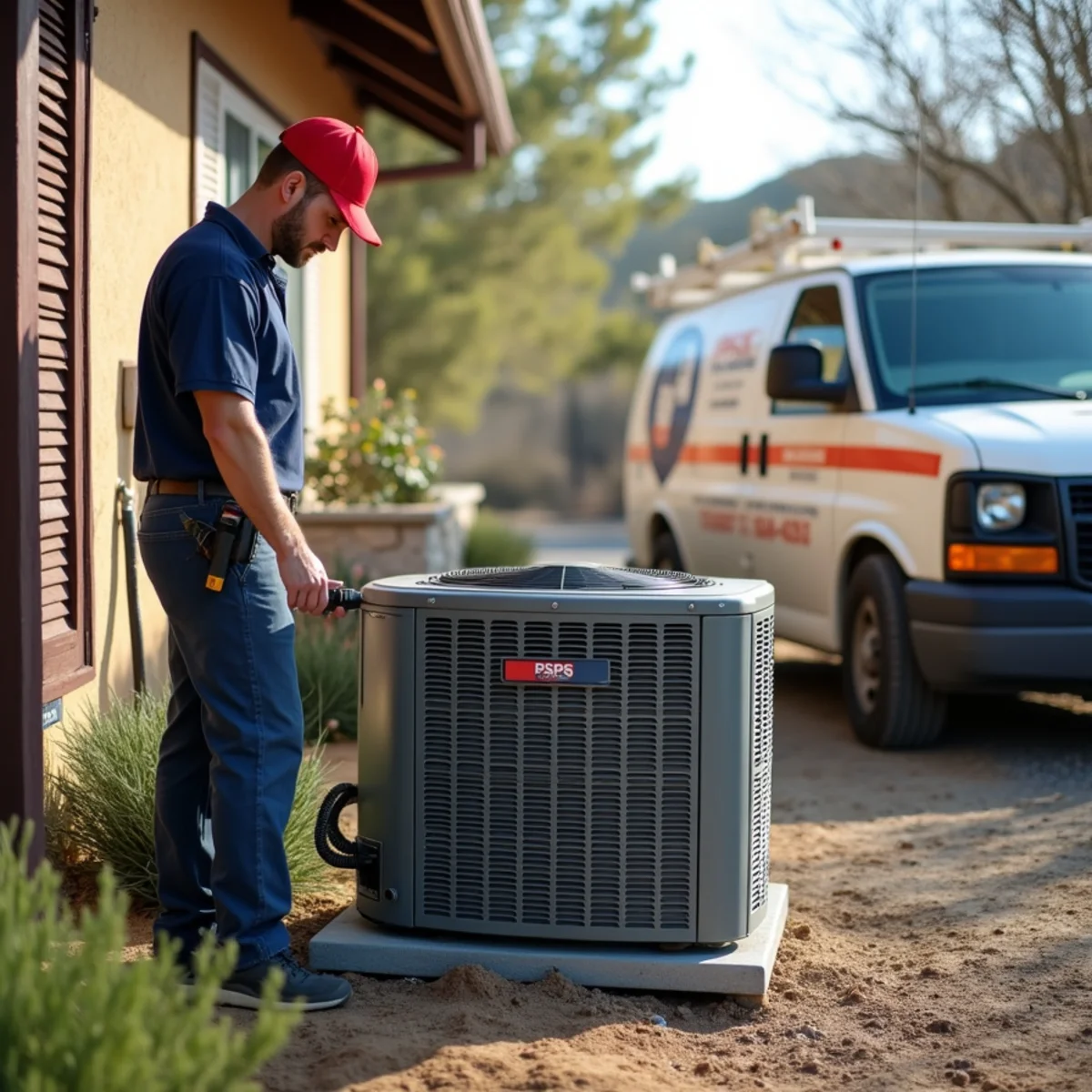
Air conditioners and heat pumps have a compressor motor that draws a large surge of power the instant it starts — often several times its running draw. That inrush is what trips up undersized generators. A furnace is gentler (mainly the blower motor and controls), which is why keeping heat alive during a winter PSPS is usually easier than keeping central AC running during a summer one. Electric resistance heat, on the other hand, is a huge load all on its own.
Run time matters as much as the surge. During a summer shutoff the AC may need to cycle for hours, so the real question isn't just whether your backup can start the compressor once — it's whether it can sustain that load across a 100°F afternoon, then do it again the next day. That's where fuel supply and battery capacity become the true limit, not the peak wattage printed on the label.
The starting surge is the real hurdle
It's not the running watts that stop a generator from starting your AC — it's the momentary surge when the compressor kicks on. A soft-start device can reduce that surge and sometimes let a smaller power source handle a system it otherwise couldn't. Ask whether one fits your equipment.
Your Backup Options, From Portable to Whole-Home
There's no single right answer — it depends on whether you need to survive a shutoff or live normally through one. The table ranks the options by relative cost and what each can realistically power. It's directional, meant to frame the trade-offs, not to quote your project.
HVAC backup power options by relative cost (directional, not a quote)
| Option | What it can realistically run | Relative cost | Notes |
|---|---|---|---|
| Portable generator | Fridge, lights, a furnace blower — usually not central AC | Low | Fuel on hand, manual setup, must run outdoors, away from windows |
| Portable + transfer switch/interlock | A furnace or a small mini-split, plus select circuits | Low–moderate | Powers chosen circuits safely; still manual and fuel-limited |
| Home battery (often paired with solar) | A mini-split or short AC runs, depending on capacity | Moderate–high | Quiet and automatic, but limited by stored energy |
| Whole-home standby generator | Central AC, heat pump, and the rest of the house | High | Automatic transfer, runs on propane or natural gas, needs a fuel supply |
Never run a portable generator indoors or in a garage
Portable generators produce carbon monoxide and must run outdoors, well away from doors, windows, and vents. Never back-feed power through a dryer outlet or a homemade cord — that can kill utility workers and start fires. A transfer switch or interlock, installed by a licensed pro, is the safe way to connect one to your circuits.
Sizing Basics: Match the Backup to the Load
Sizing backup power for HVAC starts with the compressor's starting and running requirements, then adds everything else you want to keep alive. A few ground rules:
- Find your AC or heat pump's starting requirements, not just its running draw — the surge is what sizing hinges on.
- A single-zone ductless mini-split is far easier to back up than a large central system, which is one reason mini-splits pair so well with batteries.
- In winter, backing up a gas or propane furnace's blower is modest; backing up electric resistance heat is not.
- Add your critical loads — fridge, well pump, medical equipment, internet — because those compete for the same capacity.
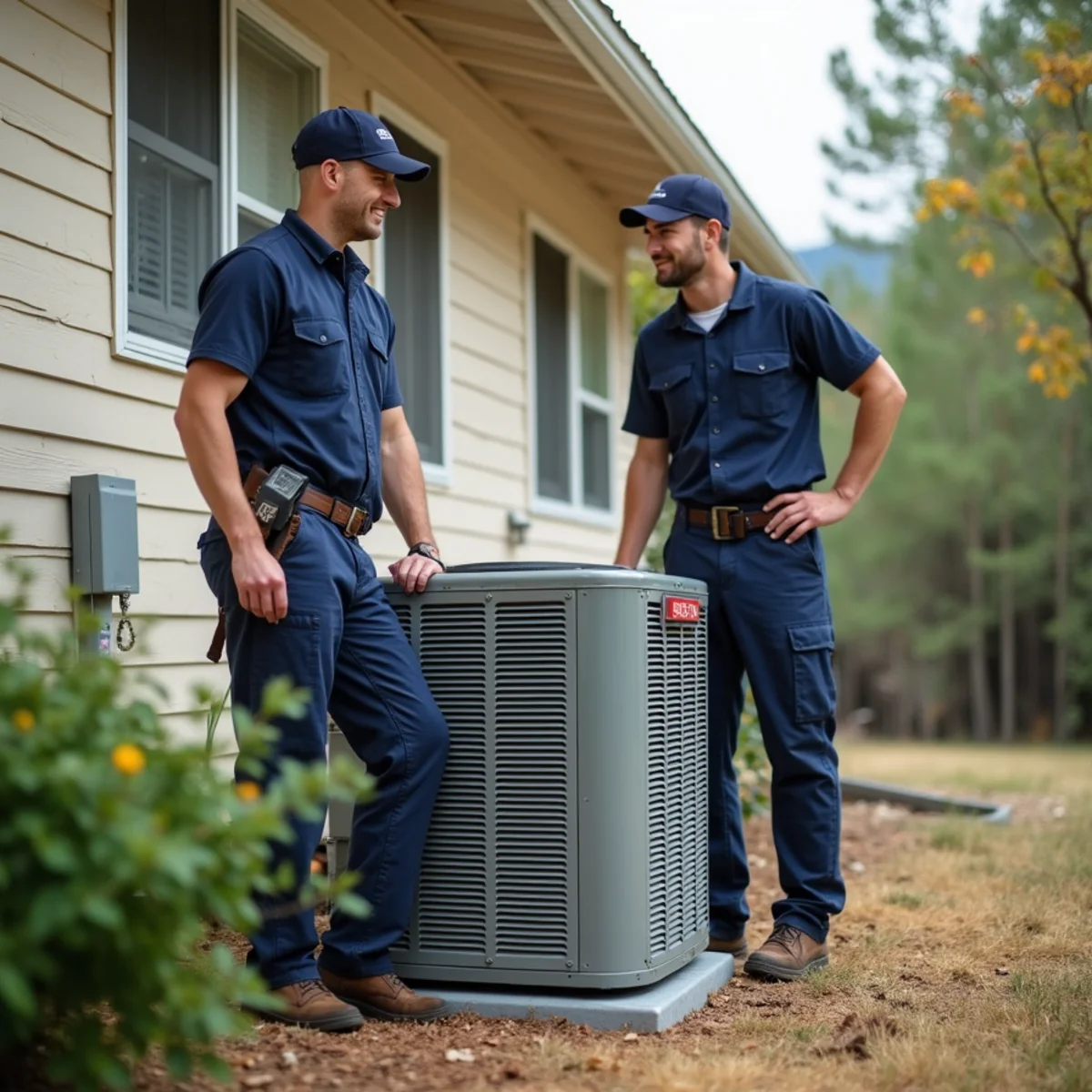
For rural properties on a well, the well pump is its own large surge load, so foothill homes out toward Applegate often need more headroom than a comparable in-town house. Our residential HVAC team can pull your equipment's actual electrical specs so the backup gets sized to reality, not a guess.
Planning Ahead for the Next Shutoff
The worst time to figure out backup power is during a shutoff. Decide now whether your goal is to ride out a PSPS in relative comfort or simply to protect the essentials, then size for that. If a heat pump plus battery is on your radar anyway, our heat pump installation planning and our broader PSPS home comfort guide for the foothills tie the comfort and power pieces together.
A practical middle path a lot of foothill homeowners land on is to back up a single efficient mini-split serving one or two key rooms, rather than trying to power the entire central system. It keeps a bedroom or living area comfortable on a fraction of the power, which a home battery or a modest generator can actually sustain through a multi-day event — and it's far cheaper than sizing backup for a whole-house compressor you only need a few days a year.
Want your HVAC to survive the next PSPS?
Call +1 (327) 210-5999 and we'll pull your system's electrical specs and talk through realistic backup options. Same-day service in Auburn and North Auburn; 24/7 emergency support when the power and the heat both fail.
Frequently Asked Questions
Usually not. A typical portable generator can power a furnace blower, fridge, and lights, but a central AC's starting surge is often too much for it. A soft-start device or a larger standby generator may be required to run central cooling. Have your equipment's starting requirements checked before you buy.
It depends on the battery's capacity and your system. A battery can run a ductless mini-split or short central-AC cycles, but stored energy is limited, so it may not carry heavy cooling through a multi-day shutoff. Pairing a battery with solar and an efficient mini-split gives the best odds.
Sizing starts with your air conditioner or heat pump's starting surge, not just its running watts, then adds your other critical loads like the fridge and well pump. A ductless mini-split is far easier to back up than a large central system. We can pull your equipment's actual specs to size it correctly.