
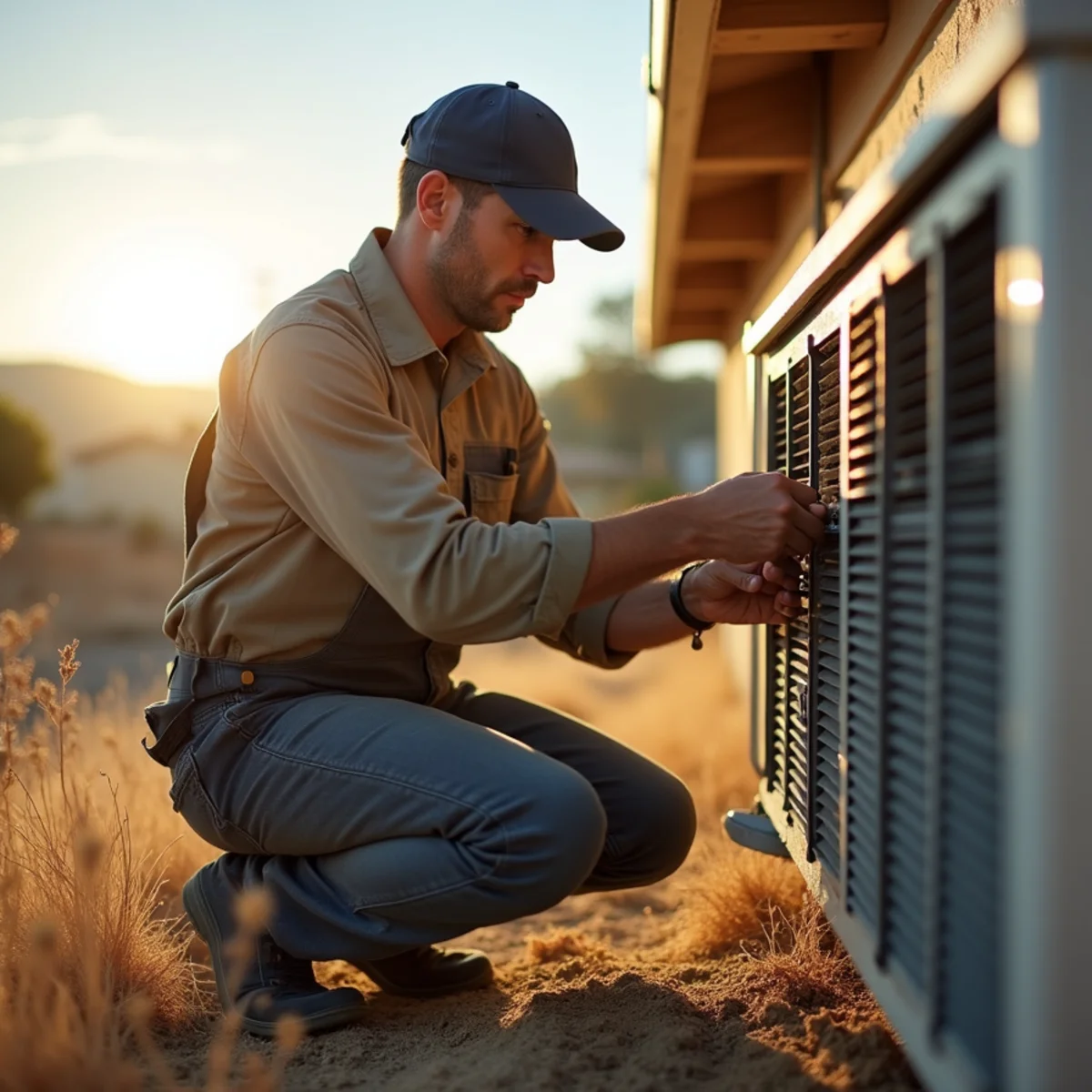
Cameron Park is about 35 minutes south of us, roughly 30 miles down the Highway 50 corridor. It is an El Dorado County community we serve as an Auburn-adjacent market, not a Placer County town, and one of our Tier 3 areas. Its 1970s and 80s subdivisions get hot in summer, and a lot of them are still cooling on original equipment — which is why AC is the bulk of our work here. Response depends on the distance, Highway 50 traffic, and how busy the day runs.
Original HVAC Meets Hot-Summer Load
Cameron Park grew up as a planned foothill community, and much of its housing dates to the 1970s and 80s — including the fly-in neighborhoods around the airpark, where homes back onto taxiways. Summers here run hot enough to push cooling systems hard, and a surprising number of these homes are still on their original air conditioners and furnaces, thirty-plus years in. That is a lot of tired compressors, weak capacitors, and refrigerant that has slowly leaked away, all coming due around the same time.
We keep the repairable systems running with straightforward AC service and maintenance, and when a unit finally ages out we size and install a modern, efficient replacement. For the larger two-story homes here, we often add smart thermostats and zoning so the upstairs and downstairs stop fighting each other — a fix that solves the hot-bedroom complaint far better than just running the AC harder ever could.
- A compressor that hums but will not start on hot afternoons — often a failing capacitor
- Cooling that fades late in the day as an aging system loses capacity
- Rising power bills from low refrigerant and dirty coils
- Upstairs rooms that never keep up with a single-zone thermostat
Why Cameron Park Homeowners Choose The HVAC Auburn CA
Cameron Park's 1970s and 80s subdivisions get hot, and a lot of them are still cooling on original equipment — which is why AC is the bulk of our work here. We come from North Auburn, about 35 minutes south and roughly 30 miles down the Highway 50 corridor, into this Auburn-adjacent El Dorado County market.
- Licensed CA CSLB C-20, bonded and insured, with permitted replacements and clean workmanship
- Upfront written pricing on repairs and replacements alike
- ACCA Manual J sizing so a new AC matches the home's real cooling load
- Hands-on knowledge of the 1970s and 80s subdivisions here, the two-story tract homes, and the fly-in airpark properties
- Response that depends on distance, Highway 50 traffic, and how busy the day runs — an honest window rather than an automatic same-day promise
The HVAC Work Cameron Park Homes Need Most
Cameron Park grew up as a planned foothill community at a lower, hotter elevation than the towns up the hill, so its summers push cooling systems hard. Much of the housing dates to the 1970s and 80s — including the fly-in neighborhoods around the Cameron Park Airpark, where homes back onto taxiways with their own hangars. A surprising number of these houses still run their original air conditioners thirty-plus years on, which means a wave of tired compressors, weak capacitors, and slowly leaked-away refrigerant all coming due near Cameron Park Lake at once.
We keep the repairable systems running and, when a unit ages out, size and install an efficient replacement. For the larger two-story homes here, we often add smart thermostats and zoning so the upstairs and downstairs stop fighting — a far better fix for the hot-bedroom complaint than just running the AC harder. On the airpark properties, a ductless mini-split is the easy way to cool a hangar or shop, and matched AC installation covers the main house. The west-facing two-story homes here take a real afternoon solar load, so right-sizing and zoning matter more than raw tonnage. We serve neighboring Shingle Springs and El Dorado Hills on the same corridor.
Local Landmarks & a Recent Job
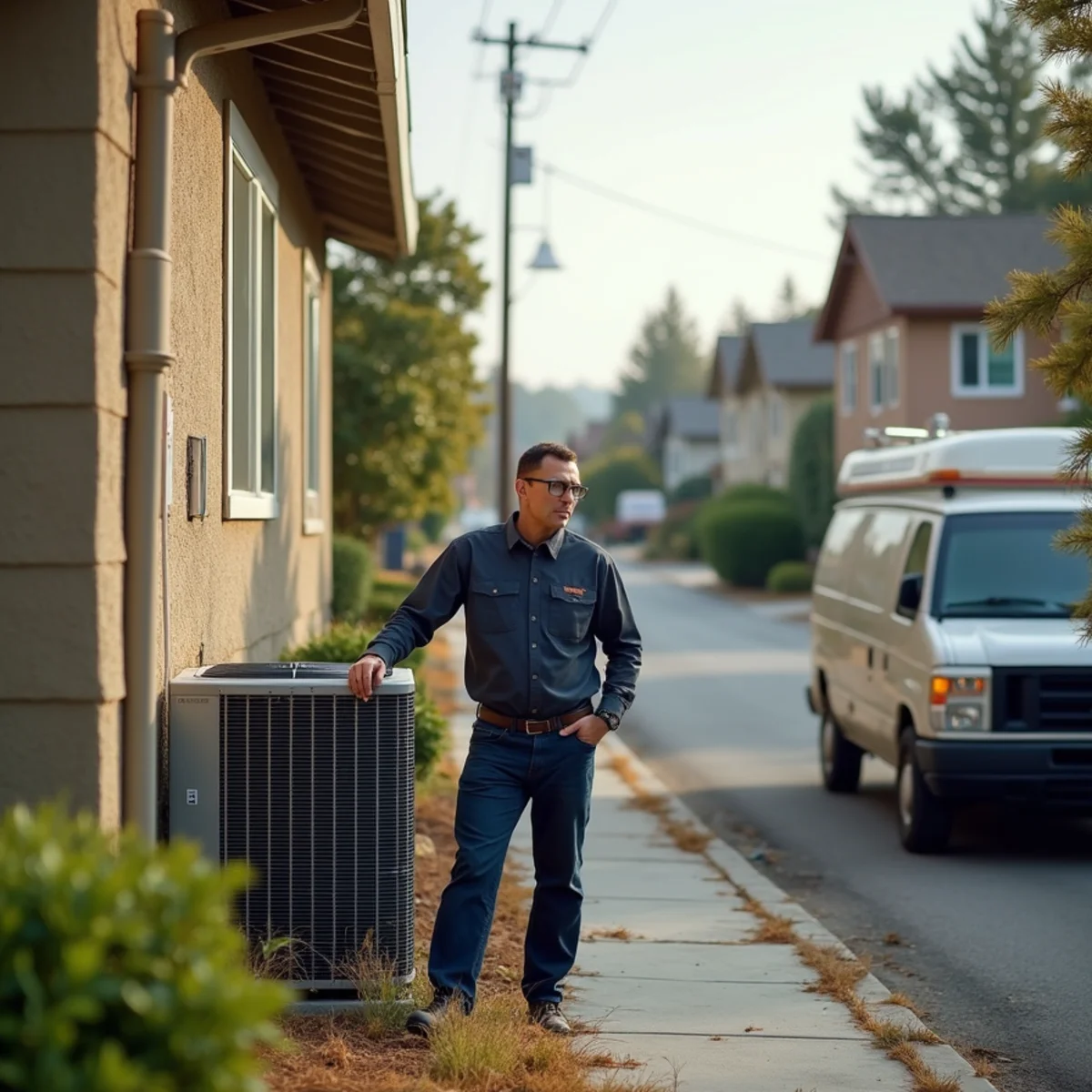
A homeowner near Cameron Park Lake called mid-heat-wave with an upstairs that never dropped below 80 while the downstairs froze. The original single-zone system simply could not balance a two-story house. We added a zoning system with a smart thermostat on each floor, and the bedrooms finally cooled without over-cooling the living room.
HVAC Services in Cameron Park
For Cameron Park's hot summers and aging systems, these are the services we are called on most:
AC Repair
Same-day diagnosis and repair when your AC quits during a foothill heat wave.
Learn moreAC Installation & Replacement
Right-sized, high-efficiency AC installs with Manual J sizing and Title 24 compliance.
Learn moreHVAC Maintenance & Tune-Ups
Seasonal AC and furnace tune-ups that head off breakdowns before peak demand.
Learn moreSmart Thermostats & Zone Systems
Zoning and smart controls that fix hot upstairs rooms and cut PG&E bills.
Learn moreNearby Areas We Serve
Cameron Park HVAC FAQs
That is a classic single-zone problem, and it is common in Cameron Park's two-story tract homes. One thermostat cannot balance heat that rises to the second floor, so the downstairs freezes while the bedrooms bake. Adding a zoning system with a smart thermostat per floor lets each level call for cooling on its own, which solves it far better than running the whole system harder.
If it is a one-off part on an otherwise sound unit, we repair it. But a thirty-plus-year-old AC with a weak compressor, low refrigerant, and rising power bills is usually better replaced, and a modern unit will cool the same house for much less. We show you what we find and price both options in writing so the decision is yours.
Yes. The fly-in homes around the Cameron Park Airpark often have a hangar or shop that never had real cooling, and a ductless mini-split is the straightforward fix — efficient heating and cooling from one small unit with no ductwork required. We can condition the hangar and service the main house's system on the same visit.
That pattern usually points to a system running low on margin. A capacitor that is failing may start fine in the morning but not on a 100-degree afternoon, and an aging unit low on refrigerant or with a dirty coil simply loses capacity as the day heats up. We test for all three, since catching a weak capacitor early is far cheaper than a mid-heat-wave breakdown.