When the sky over Auburn goes that flat orange-brown and you can smell campfire inside your own living room, your HVAC system is either your best line of defense or the machine quietly pulling smoke into every room. Which one it is depends on choices you make before the next fire, not during it.
During the Mosquito Fire and Caldor Fire summers, plenty of foothill homeowners learned the hard way that the dollar-store fiberglass filter in the furnace does almost nothing against wildfire smoke. The air inside felt about as rough as the air outside — eyes burning, throats scratchy, a fine gray film settling on the counters overnight.
The good news is that a properly set-up central system can hold indoor particulate far below what's happening outdoors. Here's how we set Auburn homes up for smoke season: the right filter, whole-home purification, sealing the leaks that let smoke sneak in, and the humidity target that keeps it comfortable. If you want a full assessment, start with our indoor air quality service.
Why Your Standard Filter Does Nothing Against Smoke
Wildfire smoke is mostly fine particulate — PM2.5, particles two and a half microns across and smaller, small enough to slip deep into your lungs. A basic 1-inch fiberglass filter is rated MERV 1 to 4. It catches carpet lint and the big dust bunnies, and lets smoke pass straight through the system and right back into your rooms. If your filter looks like a blue spider web you can see daylight through, it is not a smoke filter, and it never was.
MERV-13 vs. Airflow: The Trade-Off Nobody Explains
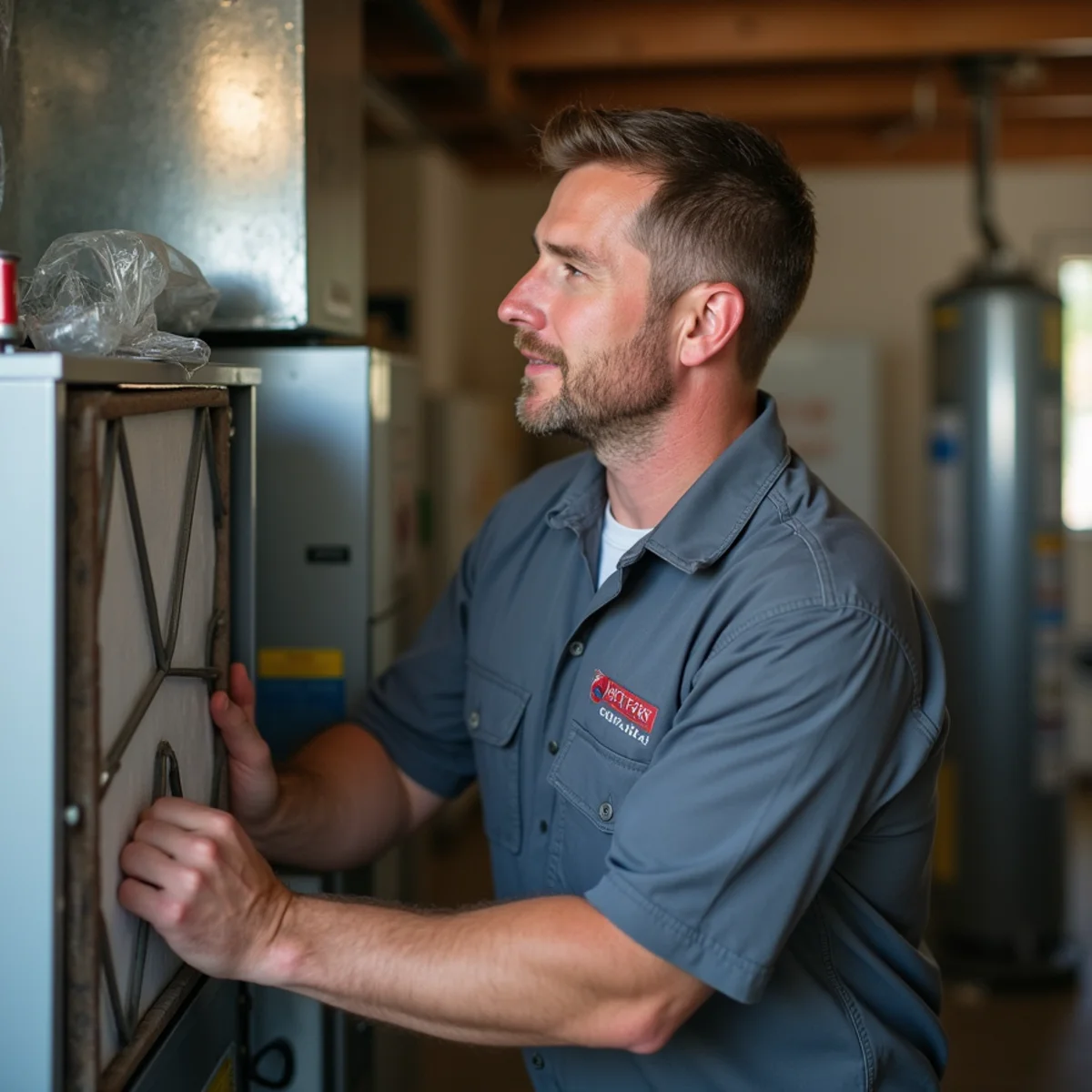
For wildfire smoke, MERV-13 is the honest sweet spot — it captures a large share of PM2.5 while staying realistic for residential equipment. But here's the catch every homeowner should hear before buying a stack online: a higher MERV rating means denser media, and denser media means more resistance to airflow, what we call static pressure. Drop a cheap 1-inch MERV-13 into a system built for a see-through filter and you can starve the blower, freeze the AC coil, or overheat the furnace.
Running MERV-13 the right way
- 1Install a deep 4-to-5-inch media cabinet so the larger surface area drops resistance back to safe levels.
- 2Have a tech measure static pressure across the filter instead of guessing.
- 3Match the filter to a blower that can actually move air against it — variable-speed motors usually can; older PSC motors often can't.
- 4Never seal a high-MERV filter into a return that was already starved for air.
Check static pressure first
Before you commit to high-MERV filtration, ask us to put a manometer on your system. It takes a few minutes and tells us whether your blower can handle MERV-13 or whether you need a deeper cabinet first. Guessing here is how coils freeze in the middle of smoke season.
Whole-Home Purifiers, Carbon, and UV Lights
A good filter handles particles. It does not handle the smell. That acrid smoke odor is gases and volatile organic compounds, and pulling it out of the air takes activated carbon, not a pleated filter. For homes that get hit hard every fire season — think Meadow Vista and the Foresthill Divide — a whole-home air purifier that pairs media filtration with a carbon stage does far more than any plug-in room unit. On UV lights I'll be straight with you: UV targets biological growth like mold on the coil, not smoke particles. It has a place in a healthy system, but it will not clear a smoky house, so don't let anyone sell it to you as a wildfire fix.
Seal the Leaks Before You Filter the Air
Here's the part that surprises people: the best filter in the world can't clean air that never passes through it. Most foothill homes leak — around recessed lights, attic hatches, and especially through ductwork running through a hot, smoky attic. When supply ducts leak, they pull smoky attic air into the stream after the filter and deliver it straight to your bedrooms. Sealing the ducts and tightening the envelope is often the single biggest improvement for smoke defense, and it pays you back on the cooling bill the rest of the year. Our duct sealing and repair work targets exactly those attic leaks.
Keep the Windows Closed — and Mind the Humidity
When the AQI climbs, keep windows and doors shut and run the system on recirculate rather than pulling in outdoor air. Set the fan to run continuously so the filter keeps scrubbing even when the AC isn't calling for cooling. And watch your humidity — the EPA recommends keeping indoor levels between 30 and 50 percent. Auburn summers are bone dry to begin with, and running the AC hard during a smoke event can pull a house toward single-digit humidity that leaves smoke-irritated throats even rawer. A whole-home humidifier or even a cheap hygrometer helps you hold that comfortable middle.
Change Your Filters Far More Often in Smoke
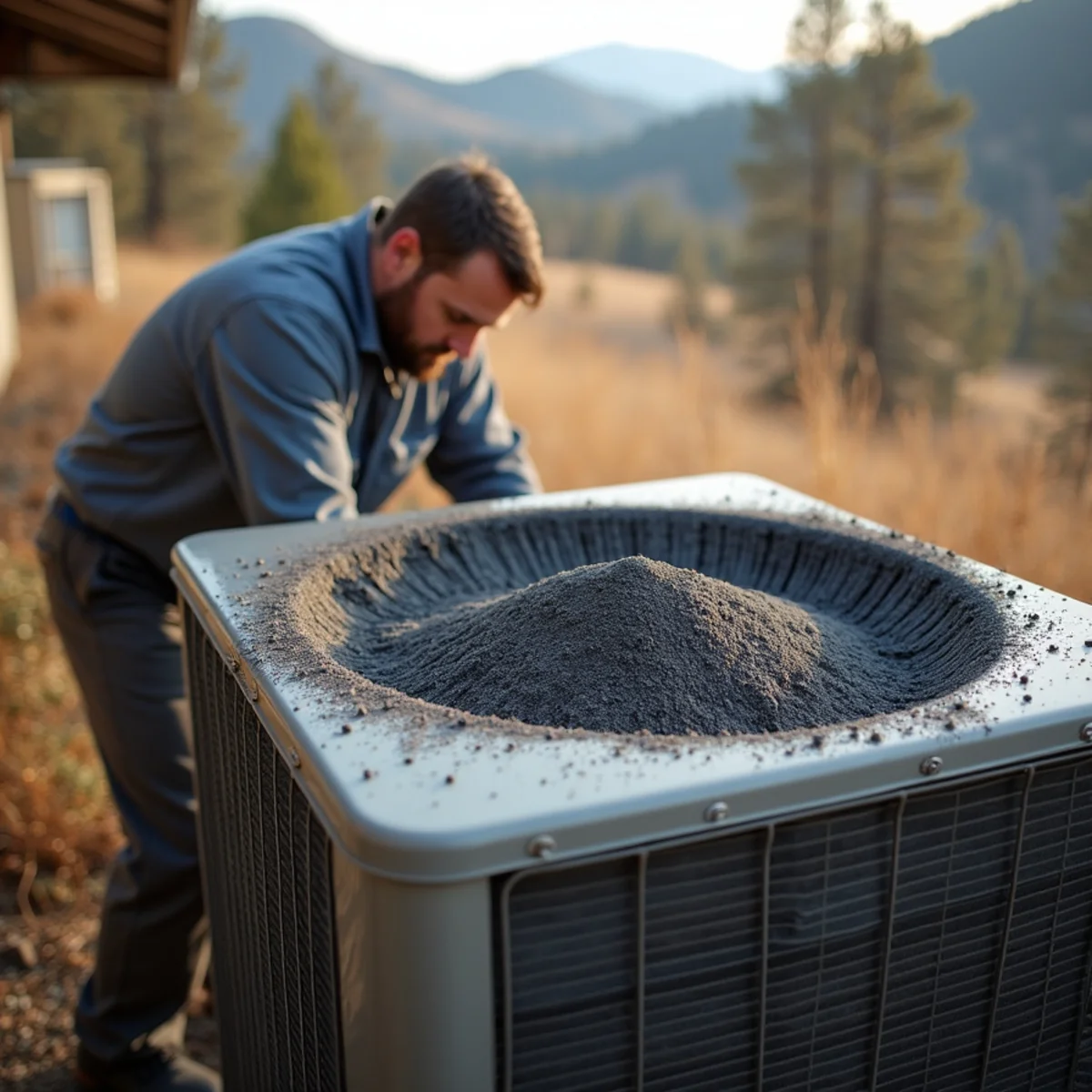
A filter that lasts three months in clean air can load up and choke airflow in a couple of weeks of heavy smoke. When a filter clogs, static pressure spikes, airflow drops, and you're right back to a frozen coil and a house that won't cool. During active fire events, check the filter every week or two and change it when it looks loaded, not when the calendar says so. For what ash does to the rest of the system, read our breakdown of Mosquito Fire smoke and ash lessons — the coils and condenser take a beating too.
Set your home up before the next fire
We install MERV-13 filter cabinets, whole-home purifiers, and duct sealing across Auburn and the foothills, with same-day service when smoke rolls in. Call +1 (327) 210-5999 — we run 24/7 for air-quality emergencies.
Frequently Asked Questions
MERV-13 is the practical sweet spot for residential systems. It captures a large share of the fine PM2.5 particles in wildfire smoke while still allowing enough airflow when installed correctly. Going higher can choke a typical home blower, so have the system checked before jumping past MERV-13.
Not safely in every case. High-MERV filters resist airflow, and forcing one into a system built for a cheap 1-inch filter can freeze the AC coil or overheat the furnace. A deeper 4-to-5-inch media cabinet and a static-pressure check let most homes run MERV-13 without starving the blower.
Particle filters won't, because the odor is gases and VOCs rather than dust. Removing smoke smell takes an activated-carbon stage, ideally in a whole-home purifier tied into your ductwork. UV lights target mold and bacteria on the coil and won't clear smoke odor.