In September 2022 the Mosquito Fire blew up along the Foresthill Divide and burned for weeks, dropping ash across Foresthill, Todd Valley, and down into Auburn. For anyone who lived through it, the memory is the gray grit that got into everything — the porch, the cars, the patio furniture, and the parts of your HVAC system you never think about.
When the smoke finally cleared, a lot of homeowners flipped the AC back on and never gave a thought to the ash packed into the condenser fins, the filter, and the indoor coil. Some of them paid for it the following summer with weak cooling, a corroded contactor, or a compressor working itself to death against a choked coil.
This is a technician's field guide to what wildfire ash actually does to an HVAC system, what to inspect after a smoke event, and how to protect the equipment next time — because on the Divide, there will be a next time. If you want a full cleanup and indoor air quality assessment, that's exactly the work we do after a fire.
What Wildfire Ash Actually Does to Your System
Ash isn't just dust. It's abrasive, slightly alkaline, and when it gets damp from morning dew or humidity it turns into a mild caustic that pits aluminum fins and eats at copper and electrical contacts. Everywhere it settles inside your system, it insulates surfaces that are supposed to move heat and clogs passages that are supposed to move air.
- Packs the outdoor condenser fins, choking off the airflow the unit needs to dump heat
- Coats the indoor evaporator coil, insulating it so it can't pull heat out of your house
- Loads filters in days instead of months, starving the blower and freezing the coil
- Settles in the blower wheel and duct interior, then blows back into your rooms
- Turns corrosive when it gets damp, pitting aluminum fins and control contacts
The Condenser Outside Takes the Worst of It
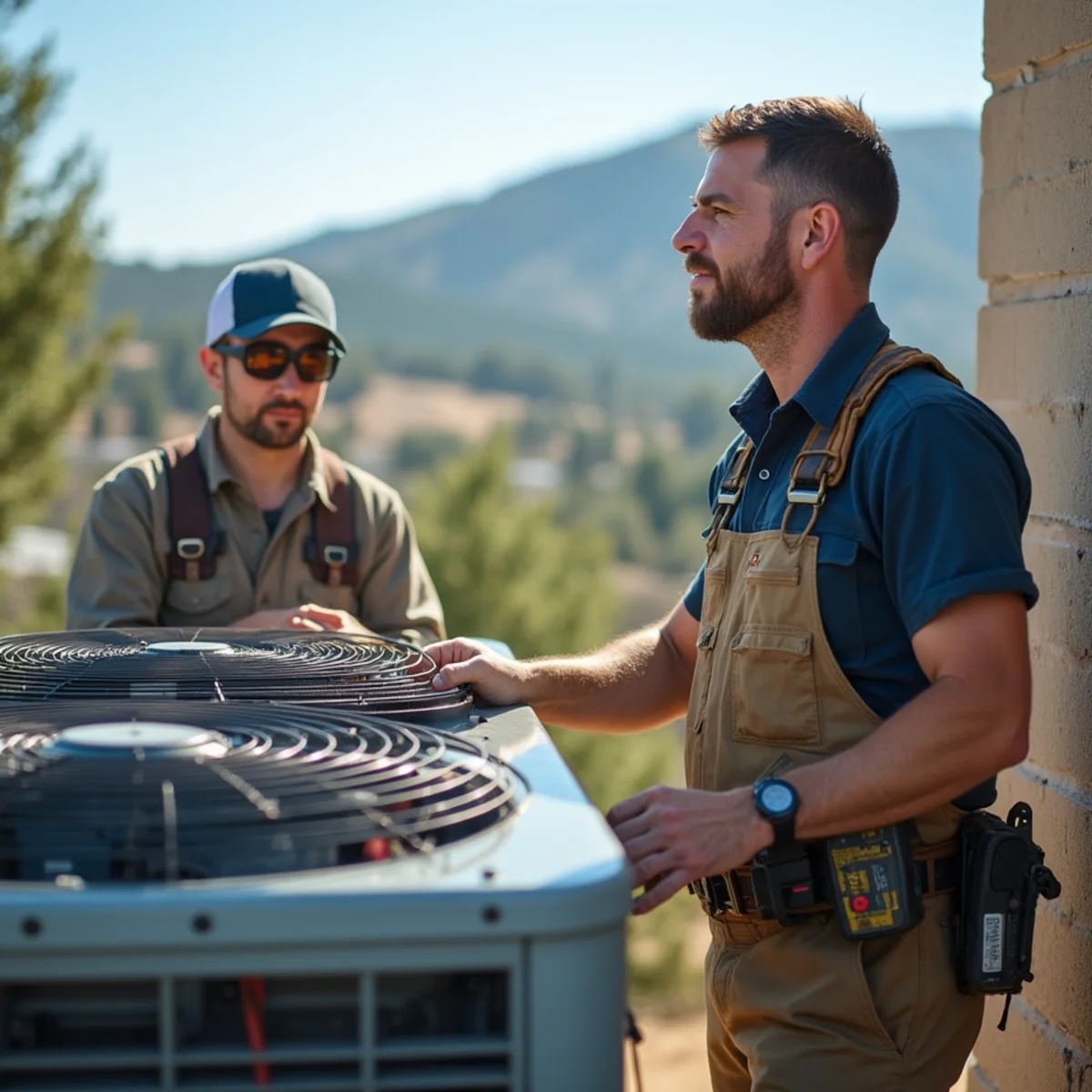
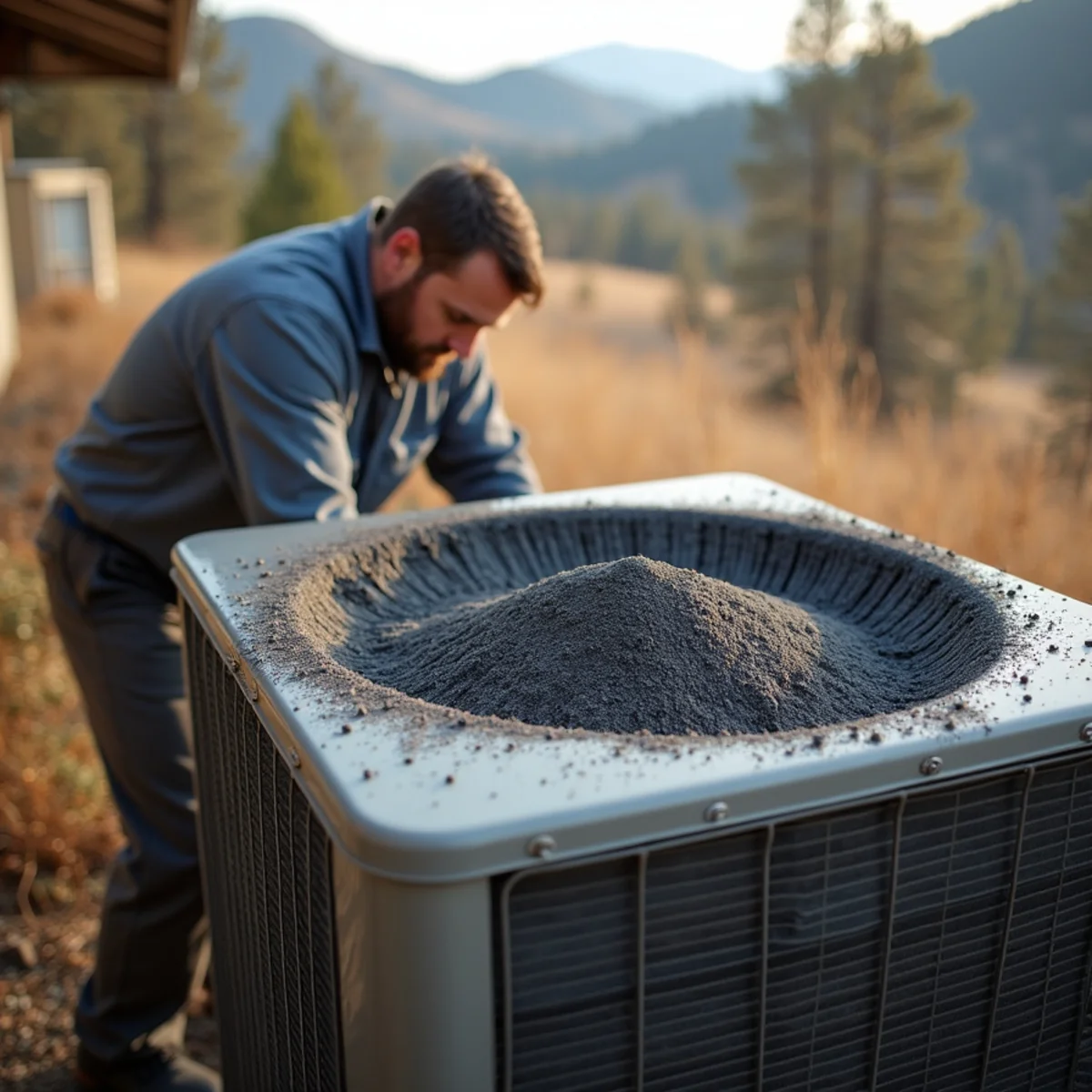
Your outdoor unit is basically a big air pump, pulling ash-laden air through its coil for hours at a time. During the Mosquito Fire, condensers up on the Foresthill Divide packed with ash in a matter of days. The instinct is to blast it clean with a pressure washer — don't. High pressure folds the delicate aluminum fins flat and permanently cuts the airflow, turning a cleaning job into a coil replacement.
Kill the power first
Before you touch or rinse an outdoor condenser, shut it off at the disconnect and the breaker. Never pressure-wash the coil — high pressure bends the fins closed for good. A gentle rinse with a garden hose from the inside out, or a professional coil cleaning, is the safe move.
What to Inspect After a Smoke Event
Post-fire HVAC check
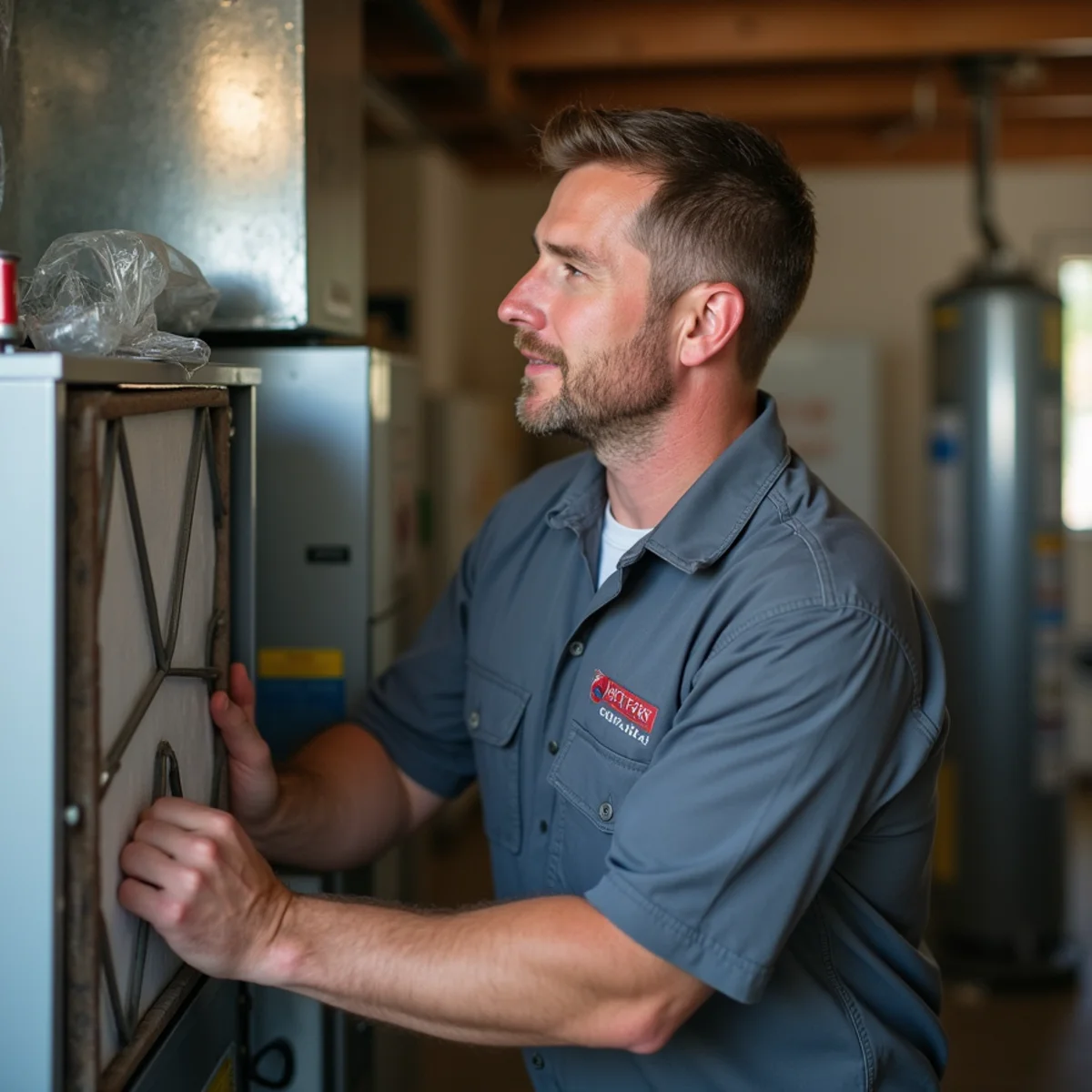
- 1Shut the system down and pull the filter — if it's gray and loaded, replace it before running again.
- 2Look at the outdoor condenser coil for packed ash; check whether you can still see light through the fins.
- 3Have the indoor evaporator coil and blower wheel inspected — they hide ash you can't see from the vents.
- 4Check the condensate drain and pan for ash sludge that can clog and overflow.
- 5Run the system and note any drop in cooling, longer run times, or new smells.
Cleanup: What You Can Do vs. What We Should
You can handle the surface work yourself — change the filter, gently rinse the condenser exterior with the power off, wipe down the supply and return registers, and upgrade to a MERV-13 filter for the next round of smoke. What needs a tech is the deeper cleaning: a chemical coil cleaning on both the indoor and outdoor coils, a blower-wheel cleaning, a duct inspection, and a check of refrigerant pressures once the coils are clear, since a restricted coil can mask or mimic a charge problem. It's also worth confirming the ash didn't corrode the contactor. For the filter-and-purifier setup that keeps ash out to begin with, see our guide to wildfire smoke season filters.
One more habit worth building after a major smoke event: document the condition of your system before and after cleaning, and keep the service records. If ash later forces a coil replacement or contributes to a compressor failure, that paper trail matters — our notes on wildfire smoke and HVAC insurance claims cover what to hang onto. And don't forget the heating side. The same ash that fouled your AC coil settled on the furnace burners and flame sensor, so a fall furnace check before you lean on heat is cheap insurance against a no-heat call the first cold week.
Protecting Your Equipment for the Next Fire
On the Foresthill Divide and anywhere in fire country, a little preparation before the season saves the equipment. None of it is exotic — it's mostly about airflow, filtration, and keeping ash from settling where it does damage.
- Keep clear space around the condenser so it isn't pulling ash out of a cramped, debris-filled corner
- Upgrade to MERV-13 with a proper filter cabinet before fire season starts
- If you cover the condenser during heavy ashfall, do it only when the system is off — never run it covered
- Seal the ducts so smoky attic air isn't pulled into the airstream
- Book a post-season coil cleaning as part of routine HVAC maintenance
Get it cleaned before you rely on it
If your system ran through a smoke event, have it inspected before the next heat wave leans on it. Call +1 (327) 210-5999 for same-day service in Auburn and the foothills, or 24/7 if the AC already quit.
Frequently Asked Questions
Yes. Ash is abrasive and becomes mildly corrosive when it gets damp, pitting aluminum fins and electrical contacts. It also packs the condenser and evaporator coils, insulating them so the system loses cooling capacity and runs hotter and longer, which shortens its life.
Minimize it. Run on recirculate rather than drawing outdoor air, use a MERV-13 filter, and change that filter often since it will load quickly. After the event, have the coils and blower cleaned before the next hot stretch so the system isn't fighting a choked coil.
You can gently rinse the exterior with a garden hose after shutting off the power, but never use a pressure washer — it bends the fins closed and cuts airflow permanently. Packed ash inside the coil is a job for a professional chemical cleaning.