Heat pump or furnace is the question every Auburn homeowner faces when it is time to replace a heating system, and most contractors make it fuzzier than it needs to be. At Auburn's elevation of about 1,200 feet, the answer is actually pretty clear, because in the foothills the deciding factor is not brand or efficiency rating. It is how high up you live.
This is a 15-year, five-figure decision, so it is worth getting right. Pick wrong and you either overpay to run the system every winter or leave the house cold on the coldest nights.
Here is how the two systems compare on upfront cost, operating cost, and cold-weather performance, plus the dual-fuel middle ground, and a straight answer on what wins at 1,200 feet versus higher up the hill.
Why Elevation Decides This in the Foothills
Heating demand rises fast with elevation in the Sierra foothills. Auburn, at roughly 1,200 feet, has mild, short winters. NOAA January normals here run a high near 56°F and a low near 38°F, and hard freezes are the exception. Climb the hill and that changes quickly: Colfax sits around 2,400 feet, Foresthill near 3,200, and Alta about 3,700, where real snow falls and nights stay below freezing for stretches. The colder and higher the home, the more a furnace or a dual-fuel setup earns its place. Down on the Auburn valley floor and across the lower reaches of Placer County, a heat pump has the easy winters it wants.
How Each System Works
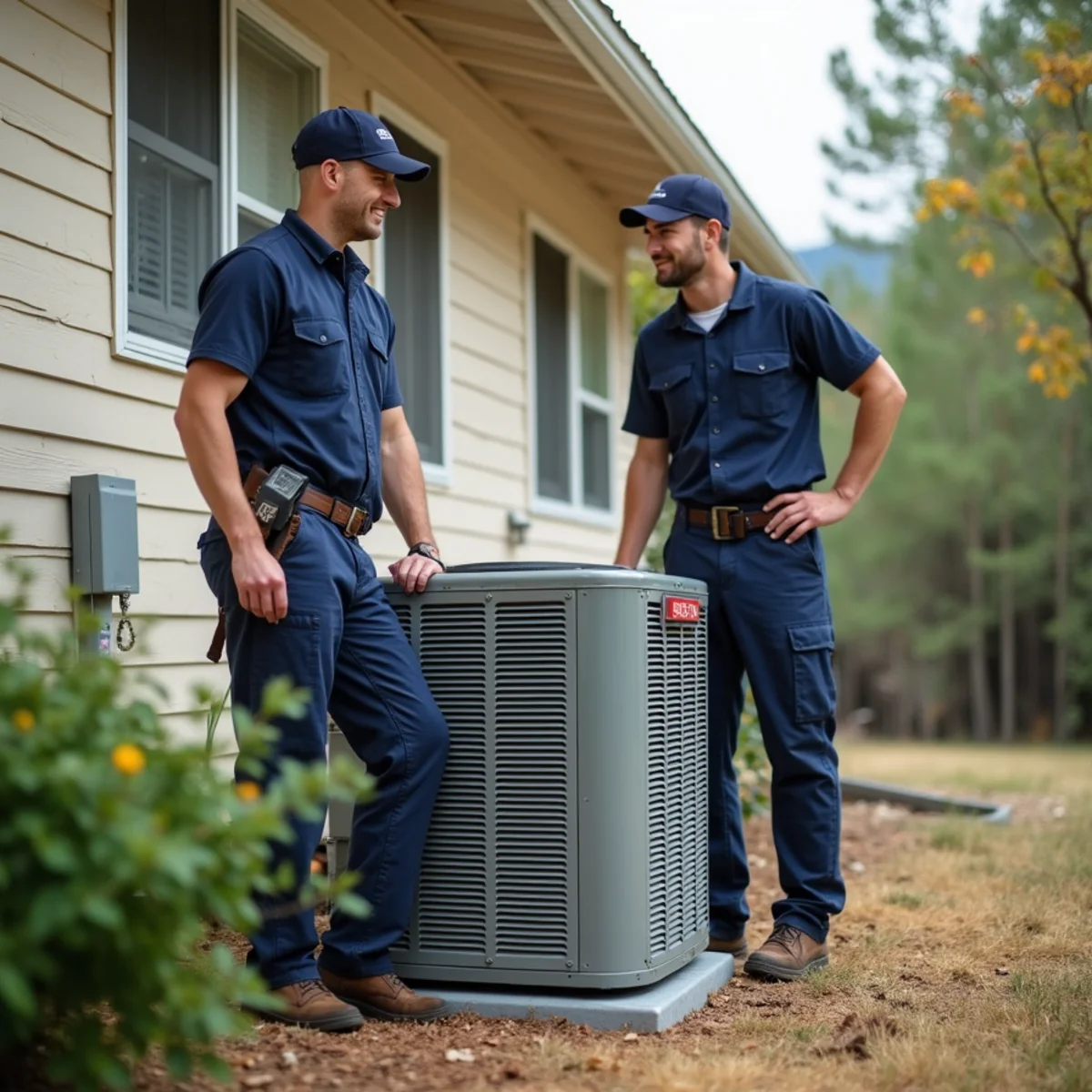
A furnace burns natural gas or propane to make hot air. It does one job, heating, and it needs a separate air conditioner for summer. A heat pump moves heat instead of burning fuel, using the same refrigerant cycle as an AC, and it simply reverses in winter to pull heat from the outdoor air into the house. That means one system heats and cools all year, which is a big part of its appeal in a climate like ours that needs plenty of both.
The efficiency gap between them comes straight from that difference between moving heat and making it. A furnace can only ever turn most of the fuel it burns into heat, while a heat pump moves several units of heat for every unit of electricity it draws, which is how it undercuts combustion on operating cost in a mild climate. The catch is that a standard heat pump gets less efficient as the outdoor air turns bitter, because there is simply less heat out there to move. That single fact, more than any spec sheet, is what ties the right choice to your elevation in the foothills.
The Head-to-Head Comparison
Heat pump vs. furnace-plus-AC for the Auburn area (directional context, not a quote)
| Factor | Heat Pump | Gas/Propane Furnace + AC |
|---|---|---|
| Upfront cost | $8,000–$18,000+ whole-home | $10,000–$20,000+ for furnace and AC |
| Handles heating and cooling | Yes, from one system | No, needs a separate AC |
| Operating cost, mild winter | Low; very efficient at 1,200 ft | Higher, especially on propane |
| Cold-weather performance | Strong to about 30°F; cold-climate models lower | Strong at any temperature |
| Best fit | Auburn valley floor near 1,200 ft | High foothills and snow country |
| Coldest-night backup | Electric strip or dual-fuel | Not needed |
What Wins at 1,200 Feet: the Heat Pump
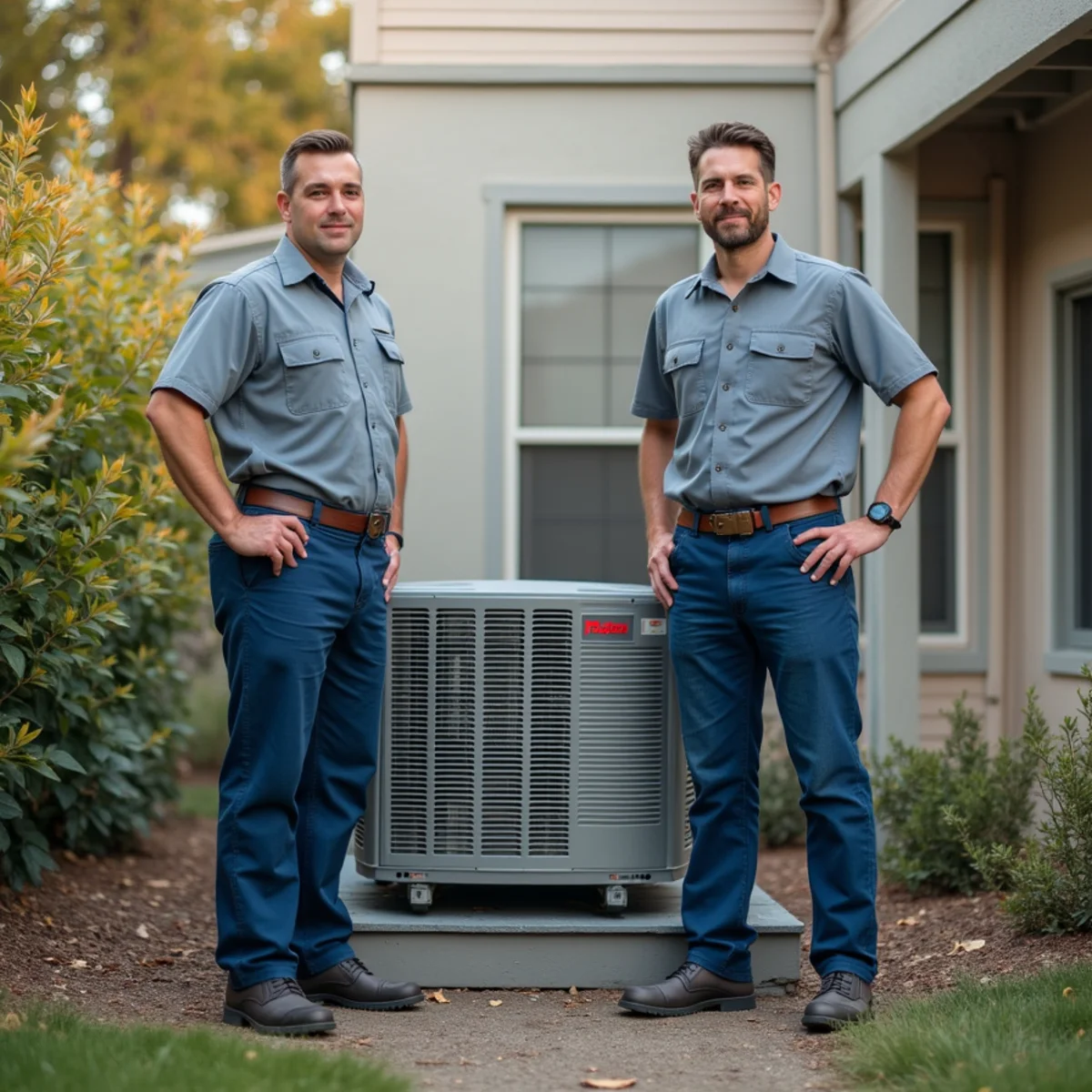
For the majority of Auburn homes, a heat pump is the better buy. It does both jobs from one system, runs very efficiently through our mild, short winters, and skips the gas line and combustion venting entirely. Current electrification rebates favor it, and against propane it usually wins clearly on operating cost. New equipment also has to meet California 2025 Title 24 and the 700 GWP refrigerant limit for systems installed on or after January 1, 2025, and a modern heat pump lines up naturally with those rules. For most homeowners on the valley floor, a heat pump installation is the system I would put in my own house.
When a Furnace or Dual-Fuel Still Wins
Higher up, the math flips. In Colfax, Foresthill, and Alta, where nights sit below freezing for weeks and snow is normal, a gas or propane furnace holds full output when a plain heat pump starts losing efficiency. If you already have inexpensive natural gas, love the feel of warm-air heat, or are heating a cabin above 3,000 feet, a furnace installation or a dual-fuel system is the smart call. Dual-fuel pairs a heat pump for mild days with a furnace that takes over on the coldest nights, giving you the efficiency of one and the muscle of the other for a higher upfront cost. For the numbers behind the equipment, see our heat pump cost guide for Auburn.
How to Decide for Your Home
- 1Start with your elevation and your typical winter overnight lows.
- 2Get an ACCA Manual J load calculation instead of matching the old tonnage.
- 3Compare total cost over 15 years, not just the sticker price.
- 4Ask about current PG&E, TECH Clean California, and federal rebates, and verify status.
- 5Consider dual-fuel if you are higher up or want a hedge against a hard freeze.
On rebates and directional pricing
Whole-home heat pumps commonly run $8,000 to $18,000+, and a full furnace-and-AC replacement $10,000 to $20,000+, as directional ranges rather than quotes. Federal HEEHRA guidance describes up to $8,000 for qualifying homeowners, but single-family HEEHRA rebates were reported fully reserved statewide as of February 24, 2026, so always verify current status before counting on any amount.
Get a straight recommendation
We will look at your elevation, your ducts, and your bills, then tell you plainly which system fits. Call +1 (327) 210-5999 for a free consultation, same-day service in Auburn, and 24/7 emergency help.
Frequently Asked Questions
For most homes on the Auburn valley floor at about 1,200 feet, a heat pump is the better choice. It heats and cools from one system and runs efficiently through our mild winters. At higher, colder elevations like Colfax, Foresthill, and Alta, a furnace or a dual-fuel system usually makes more sense.
Yes, within limits. Standard heat pumps perform well down to around 30°F, and cold-climate models keep strong output well below that, which covers Auburn's typical winter easily. In true snow country a dual-fuel system, pairing a heat pump with a furnace backup, handles the coldest nights without a drop in comfort.
A dual-fuel system combines a heat pump with a gas or propane furnace. The efficient heat pump handles most of the winter, and the furnace automatically takes over on the coldest days when the heat pump is less efficient. It costs more upfront but gives you low operating cost most of the year plus reliable heat in a hard freeze.