
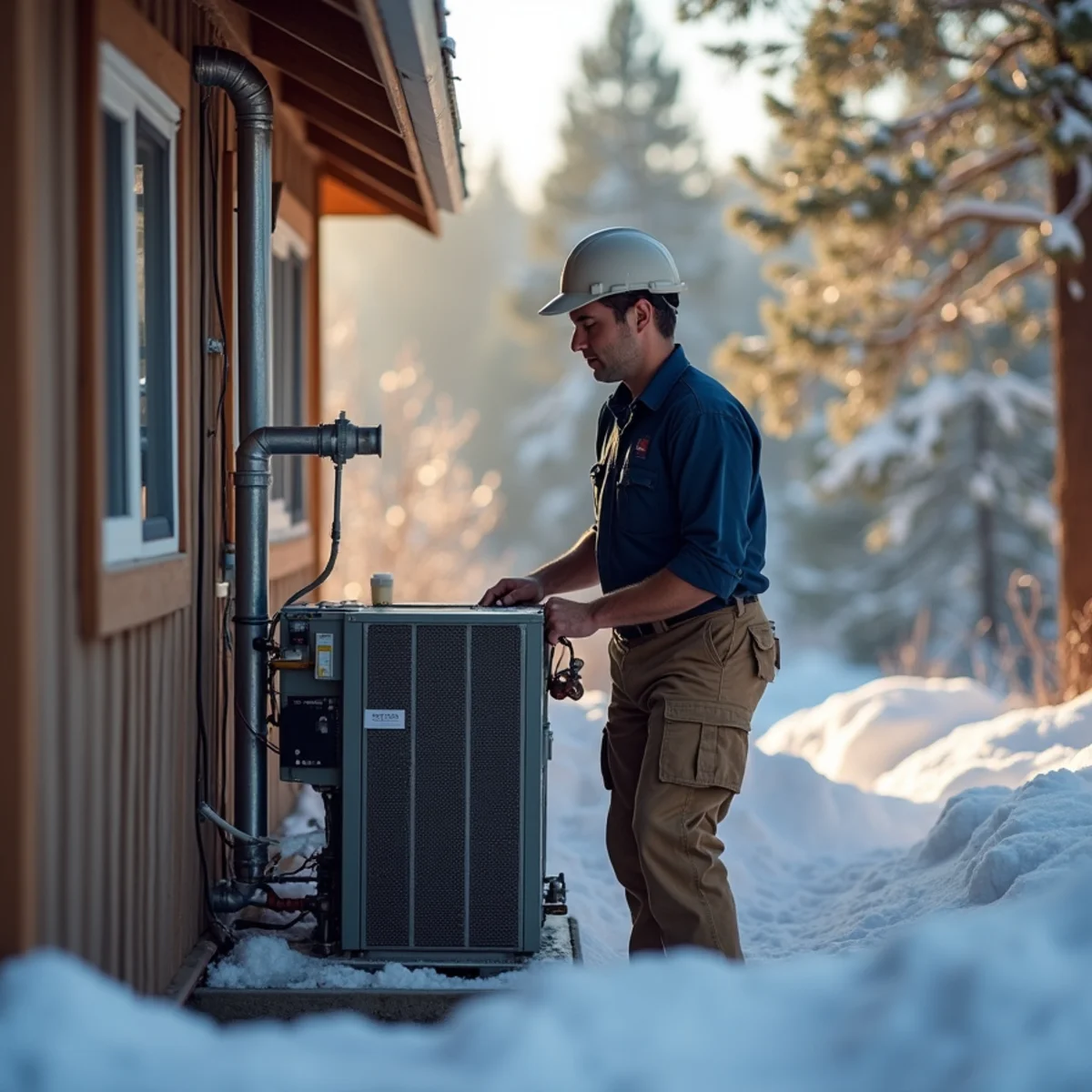
Pollock Pines rides Highway 50 up at roughly 4,000 feet, about 45 minutes and 40 miles southeast of our North Auburn shop — the highest, snowiest town on our map. It is an El Dorado County community we serve as an Auburn-adjacent market rather than a Placer County town, and one of our Tier 3 areas. Real snow loads and a wood-and-gas heat culture make this a heating town through and through. On a drive this far up Highway 50, arrival depends on distance, mountain traffic, and demand.
Snow-Country Heat at 4,000 Feet
At 4,000 feet, Pollock Pines gets winter the way the valley never does — feet of snow, sustained freezes, and homes built to shrug it off. Mountain cabins, A-frames, and full-time residences here lean on propane furnaces and woodstoves, often working together, with heat as the year-round priority and cooling almost an afterthought. When a furnace quits during a storm, it is not an inconvenience; it is frozen-pipe territory, and that is how we treat the call.
We focus on keeping these heating systems reliable through the hard months — furnace repair and maintenance before the snow flies, emergency response when something fails mid-storm, and proper replacements sized for genuine snow-country load. Cold-climate heat pumps are increasingly viable even up here and can trim propane costs, so we walk owners through where they make sense and where a robust furnace is still the safer bet.
Winter no-heat calls come first up here
A furnace failure at 4,000 feet in a storm can freeze pipes fast, so we prioritize no-heat emergencies in Pollock Pines. The trade-off is honesty about timing: mountain roads and storm demand affect how quickly we reach you, and a pre-winter tune-up is the best insurance against a mid-storm breakdown.
Why Pollock Pines Homeowners Choose The HVAC Auburn CA
At roughly 4,000 feet, Pollock Pines gets real snow-country winters, and homeowners here want heating they can trust through a storm, plus a company honest about mountain logistics. That is what we bring:
- Licensed California CSLB C-20, bonded and insured, with genuine snow-country and propane-heat experience behind every job.
- Upfront written pricing before the work starts, so a furnace repair or a pre-winter replacement is a number you approve first.
- Furnaces and heat pumps sized by ACCA Manual J for a true 4,000-foot snow load, not a valley rule of thumb that leaves you cold when the storms stack up.
- Real familiarity with Pollock Pines' mountain cabins, A-frames, and full-time homes on propane and wood heat, where a failed furnace in a storm is frozen-pipe territory.
- Honest logistics: at about 45 minutes and 40 miles southeast up Highway 50, our arrival depends on distance, mountain traffic, and storm demand, so we never promise same-day, but we prioritize no-heat emergencies.
Snow-Country Heating at 4,000 Feet
Pollock Pines rides Highway 50 up at roughly 4,000 feet, the highest, snowiest town on our map, where winter arrives the way the valley never sees it: feet of snow, sustained freezes, and homes built to shrug it off. Mountain cabins, A-frames, and full-time residences here lean on propane furnaces and woodstoves working together, with heat the year-round priority and cooling almost an afterthought. When a furnace quits mid-storm it is not an inconvenience, it is frozen-pipe territory, so reliable furnace repair and fast emergency furnace repair are the core of what we do up here.
The best defense is getting ahead of the season, furnace maintenance and, where a unit is near the end, a proper furnace installation sized for genuine snow-country load before the first storm rather than during one. Cold-climate heat pumps are increasingly viable even at this elevation and can trim propane costs, so we walk owners through where they pencil out and where a robust furnace is still the safer bet. Because Highway 50 links Pollock Pines down to Placerville and the divide country around Georgetown, we know exactly how the drive and the heating load change as the road climbs.
Local Landmarks & a Recent Job
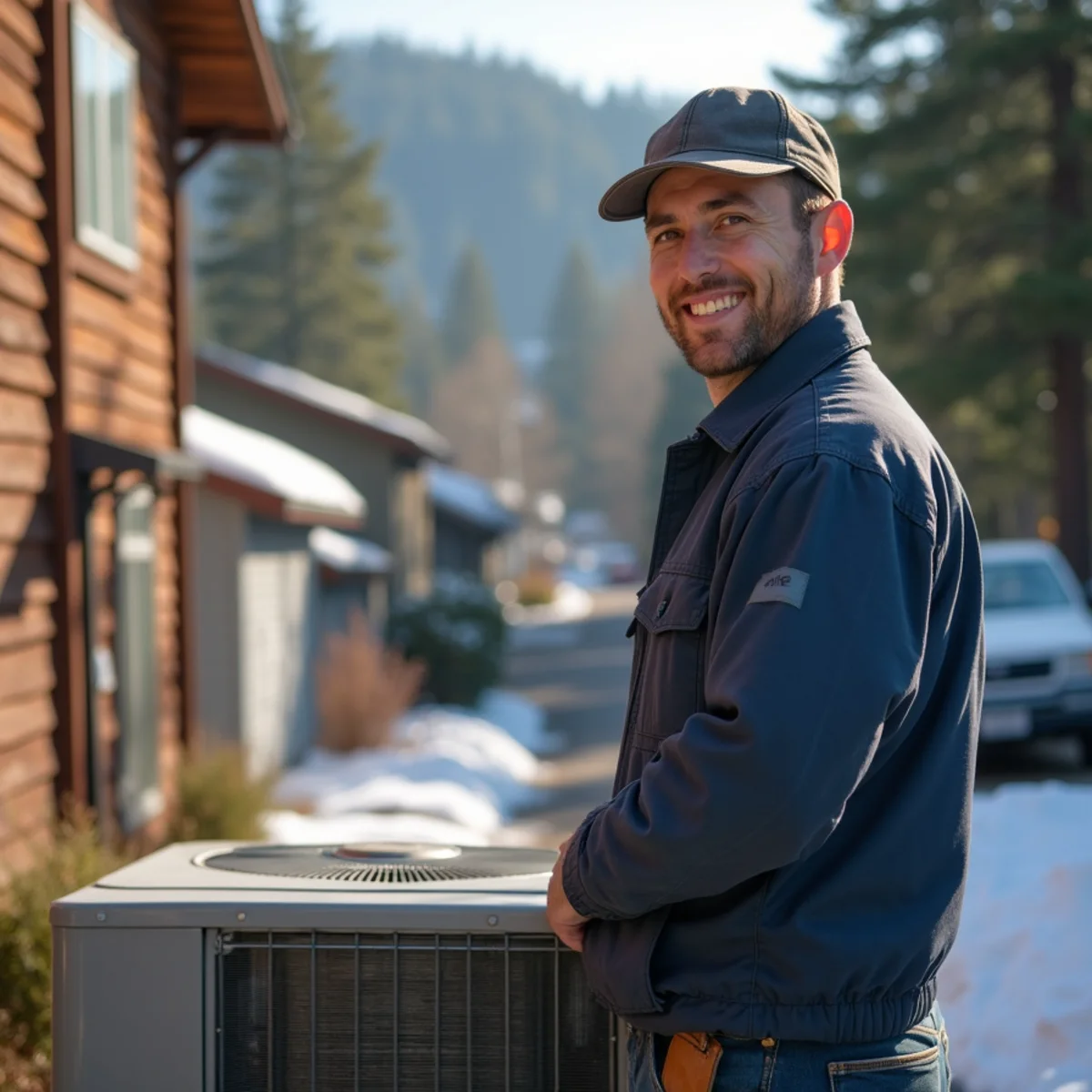
A family near Jenkinson Lake lost their furnace in the middle of a January storm with the house dropping fast. We chained up and made the climb up Highway 50, found a failed inducer motor, and got safe heat running again before the pipes were at risk — then scheduled a pre-winter tune-up so the next storm would not be a gamble.
HVAC Services in Pollock Pines
For Pollock Pines' snow-country homes, these are the heating and emergency services we are called on most:
Furnace Repair
Gas, propane, and electric furnace repair when a foothill cold snap leaves you without heat.
Learn moreEmergency Furnace Repair
No heat on a freezing foothill night? Priority dispatch, day or night.
Learn moreFurnace Installation & Replacement
High-efficiency gas, propane, and electric furnace replacement, sized and installed to code.
Learn moreHeat Pump Installation & Repair
Heating and cooling from one efficient system, with real rebate and Title 24 guidance.
Learn moreNearby Areas We Serve
Pollock Pines HVAC FAQs
Yes. Pollock Pines is the highest town on our service map, about 45 minutes and 40 miles southeast up Highway 50, and we service it regularly, especially for heating. We are honest that the drive and mountain weather affect timing, so we give you a real arrival window rather than a same-day promise. For a true no-heat emergency in a storm, when frozen pipes are on the line, we prioritize the call and get up there as conditions allow.
A pre-winter tune-up is the single best insurance. Before the snow flies we check the igniter, inducer motor, heat exchanger, and safeties, clean the burners, and catch the weak part that would otherwise fail on the coldest night. At 4,000 feet a mid-storm breakdown can freeze pipes fast and the roads slow everyone's response, so heading off the failure in October beats scrambling for a repair in January. We can set Pollock Pines homes on a seasonal maintenance schedule so it is not left to memory.
For most homes at this elevation, yes. Summers are mild and short enough that many residents get by with little or no air conditioning, while winter brings feet of snow and sustained freezes that demand dependable heat for months. That is why we treat heating as the priority, reliable furnaces, emergency response, and proper sizing for snow-country load, and treat cooling as a nice-to-have that a heat pump can add efficiently if you want it.
It is worth a real look. Modern cold-climate heat pumps can carry much of a snow-country home's heating while cutting propane costs and adding summer cooling, but at this elevation the coldest stretches still matter. We often recommend a heat pump paired with backup heat, or keeping a robust propane furnace where that is the safer bet, depending on your insulation, electrical service, and how hard your winters run. We size it with a load calculation and give you honest operating-cost numbers first.