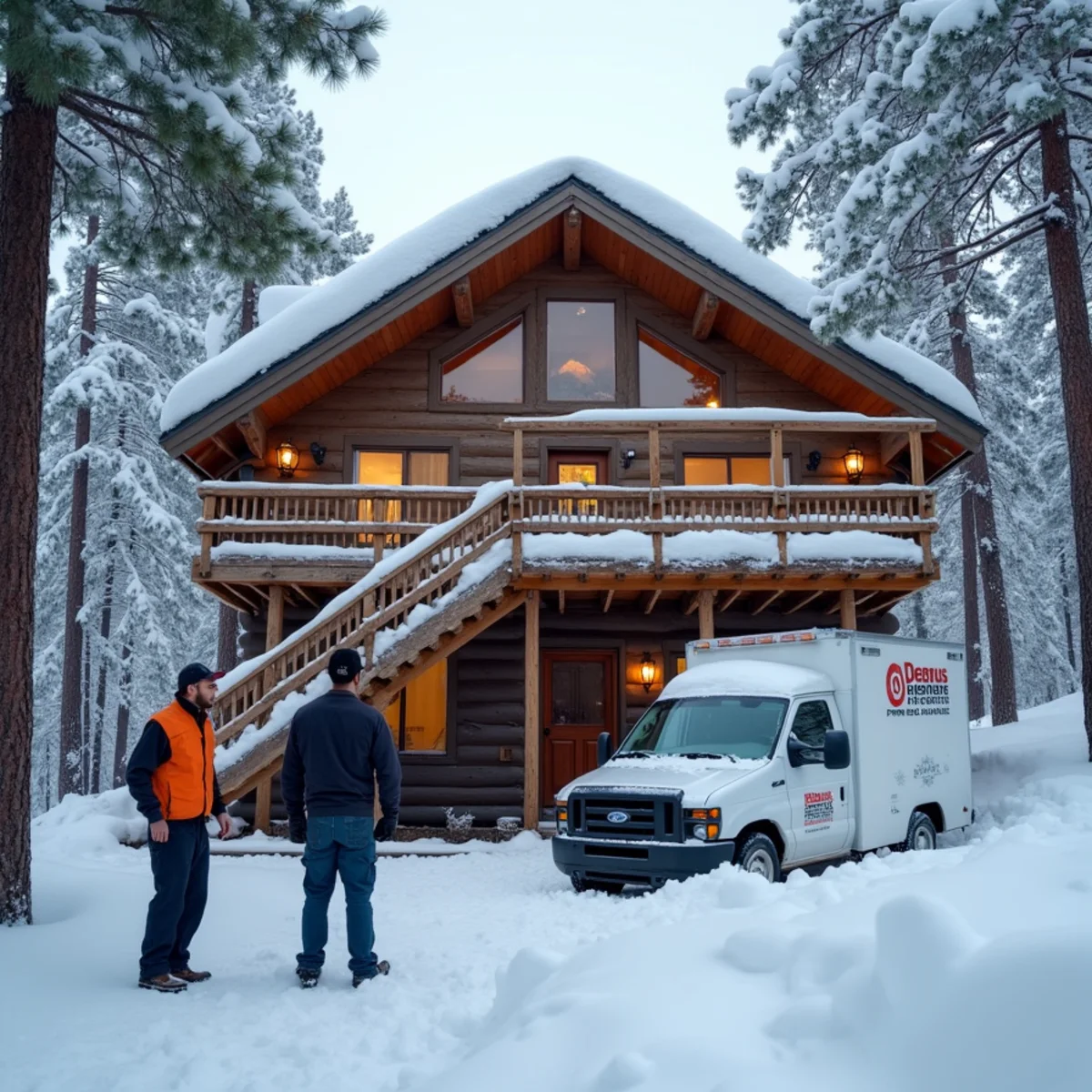
Up on the ridges above Auburn — Robie Point, Skyridge, the lots that look straight down into the American River canyon and Auburn State Recreation Area — defensible space isn't a suggestion, it's how you keep a house. Most homeowners here have already thought hard about the roof, the gutters, and the brush line. The one thing that tends to get skipped is the outdoor AC unit.
That's a problem, because the condenser is a low metal box with electrical connections, sitting outside, usually tucked against the house where wind-blown embers pile up. Wrap it in juniper and bark mulch and you've built a small fuel bed right against it. Its coil fins catch drifting debris, and the spot where the refrigerant line set passes through the wall is a ready-made ember path into the structure.
This guide covers how to give your air conditioner — or heat pump — real defensible space in the wildland-urban interface, and why doing it also happens to make the unit run better.
Why the Condenser Matters in the Wildland-Urban Interface
The wildland-urban interface, or WUI, is where homes meet unmanaged vegetation — and that's most of the foothills around Auburn. In a wind-driven fire, the biggest threat to these homes usually isn't a wall of flame; it's embers, which can travel a mile or more ahead of the fire and rain down for hours. The 2022 Mosquito Fire showed how far foothill smoke and ash spread, and how ridge-top homes catch the worst of the canyon winds that carry embers uphill. Your condenser sits right in that fallout zone, and anything flammable packed around it is exactly what turns a stray ember into a problem.
Clearance: Give the Unit Room to Breathe and Stay Safe
Here's the part that makes this easy to justify: the clearance that protects the unit from fire is the same clearance the manufacturer already requires for airflow. Doing it right helps your cooling and your fire safety at the same time.
Clear the zone around the condenser
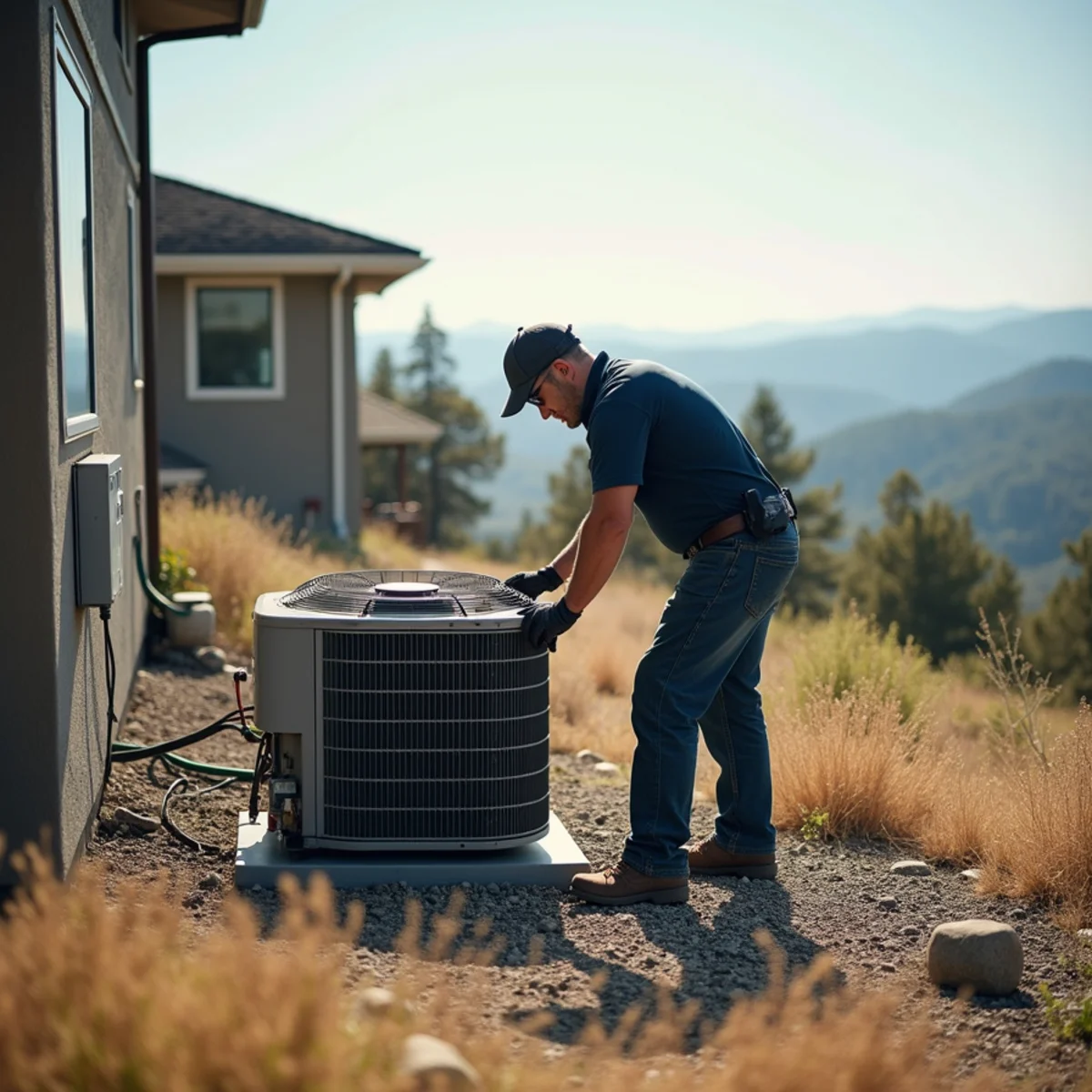
- 1Keep at least two to three feet clear on every side and about five feet of open space above the unit — this is also the airflow minimum most manufacturers specify.
- 2Replace bark mulch and wood chips within the first five feet with gravel, decomposed granite, or bare mineral soil. This is CAL FIRE's Zone 0, and it should be as noncombustible as you can make it.
- 3Cut back shrubs, ornamental grasses, and especially juniper so nothing touches or overhangs the unit. Juniper is one of the most flammable landscape plants in the foothills.
- 4Keep the pad and the ground around it raked clear of dead leaves, pine needles, and dry grass.
- 5Never stack firewood, propane bottles, or anything else combustible against the unit or the wall directly behind it.
Zone 0 is the ember-resistant zone
CAL FIRE treats the first five feet around a structure — Zone 0 — as the most important defensible space of all, and your condenser lives right inside it. Within that zone, gravel beats bark mulch every time, and bare noncombustible ground beats both.
Ember-Resistant Vents and the Line-Set Penetration
Embers don't just land on the ground; they hunt for gaps. Two spots on the HVAC side of the house deserve attention. First, the wall penetration where the refrigerant line set and electrical whip enter the home — if that gap is open, an ember can ride straight into the wall cavity. Seal it with a fire-rated sealant or metal flashing. Second, any attic, crawlspace, or eave vents near the unit should be ember-resistant, screened with 1/8-inch metal mesh rather than the wider mesh that lets embers through. This is the point where HVAC work and home hardening become the same job.
Protecting the Unit and the Line Set
A few practical habits keep the equipment itself in good shape through fire season:
- Keep the line-set insulation intact — sun and rodents chew it up over time, and bare copper hurts efficiency.
- Skip the solid plastic condenser cover during fire season. It traps heat and embers and you can't run the unit under it; if you want debris protection, use a breathable wire-mesh guard instead.
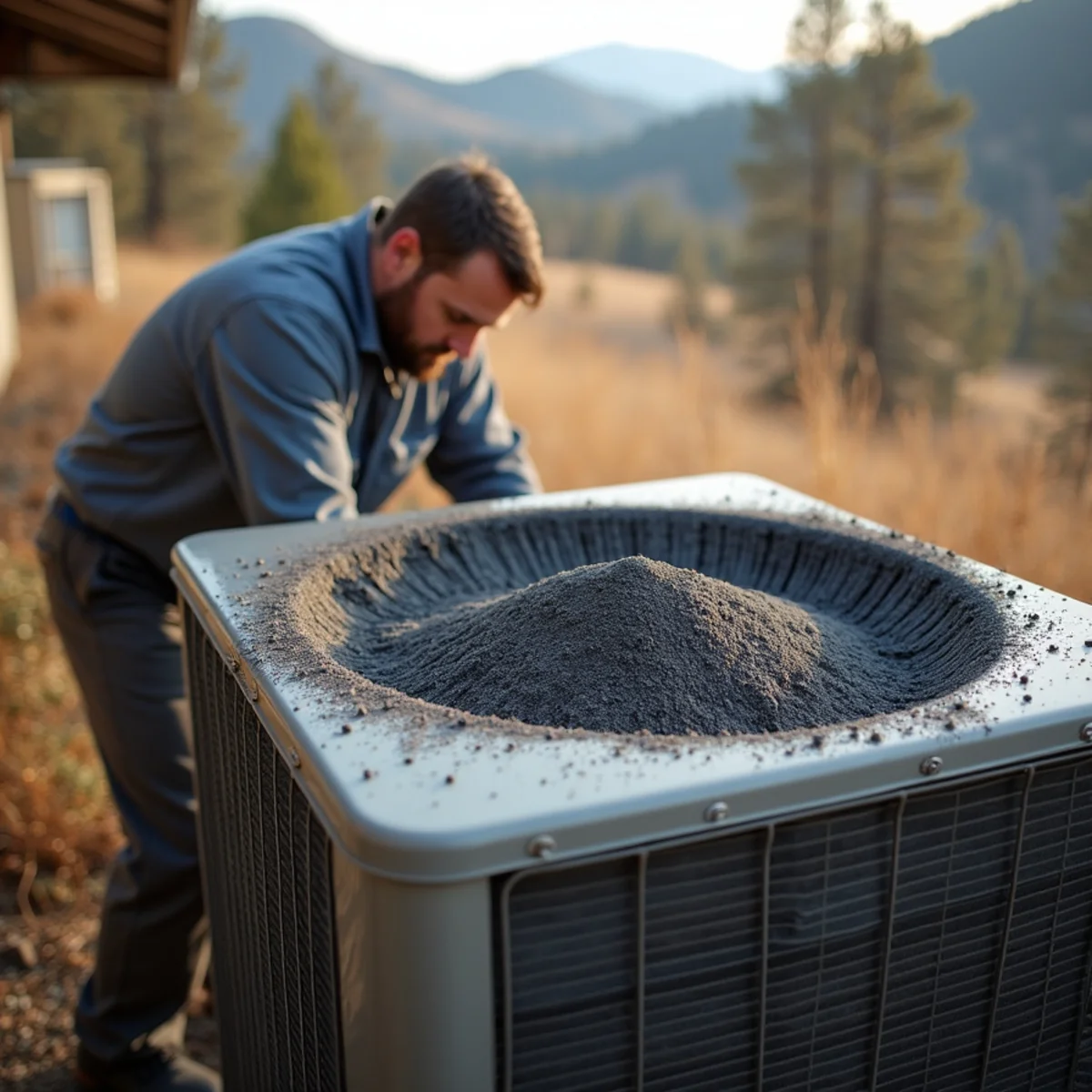
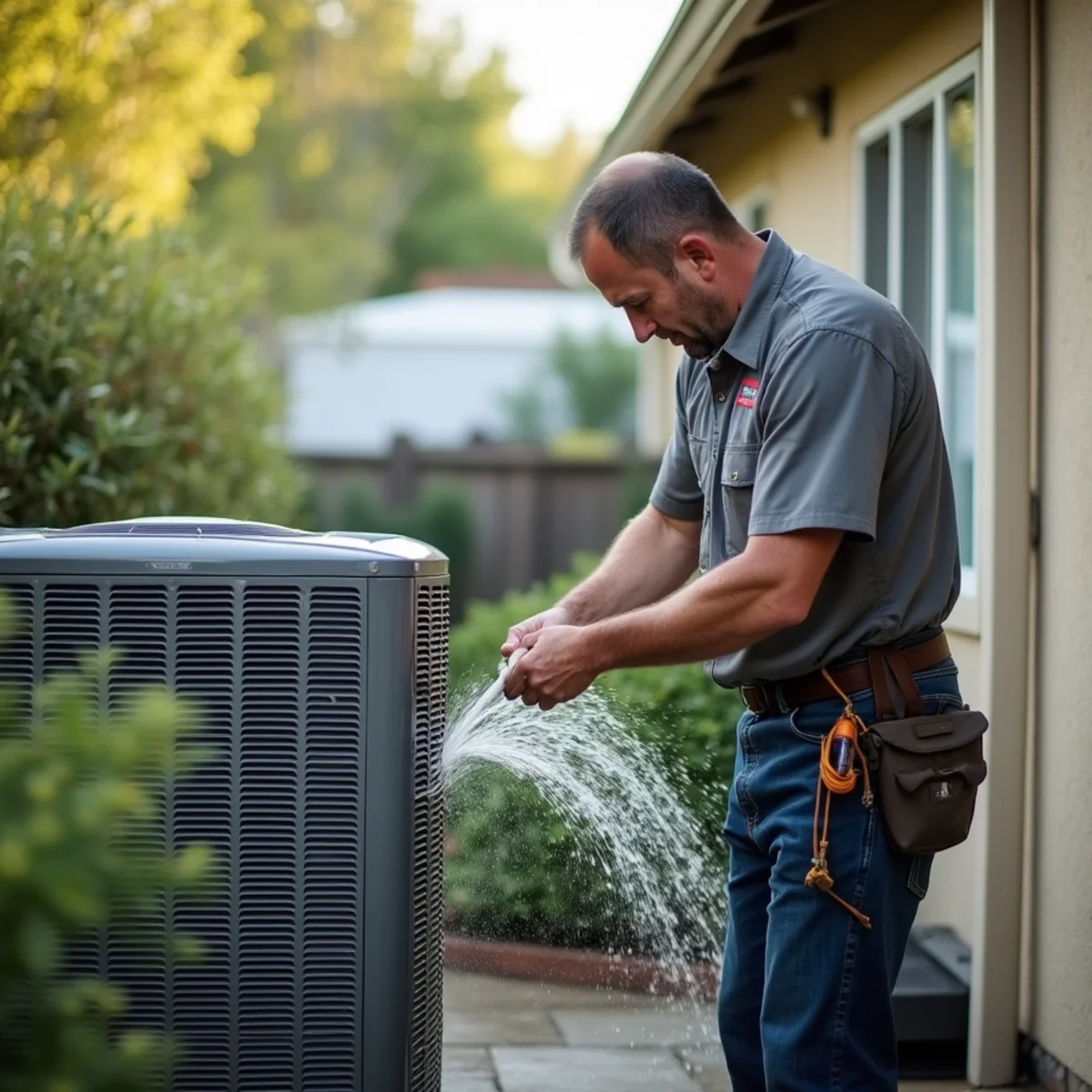
- After any ash or heavy smoke event, cut the power at the disconnect and gently rinse the coil so ash doesn't cake on and choke airflow.
- Have a tech check the unit after a nearby fire — ash is abrasive and mildly corrosive, and it works its way into the coil and electrical.
If ash has already clogged your system or the unit isn't cooling after a smoke event, our AC repair team can clean and check it before the heat sets in.
Ridge-Top Homes Near the Canyon
If your home is on the interface — the Robie Point and Skyridge neighborhoods, or anywhere along the canyon rim near Auburn State Recreation Area — treat the AC as one item on your home-hardening list, not an afterthought behind the house. After the Mosquito Fire, plenty of foothill homeowners found ash-packed condensers that had lost half their cooling capacity; our write-up on HVAC smoke and ash after the Mosquito Fire covers what that damage looks like and how to recover from it.
Harden your HVAC before fire season
Want the condenser and line set checked and cleared before the smoke rolls in? Call +1 (327) 210-5999 for same-day service across Auburn and the foothills, plus 24/7 emergencies.
Frequently Asked Questions
At least two to three feet on every side and about five feet of open space overhead, kept clear of vegetation and mulch. That happens to match the airflow clearance the manufacturer already requires, so it protects the unit and improves cooling at the same time.
Not a solid plastic cover. It traps heat and embers, and you can't run the unit while it's on. Keep the surrounding area clear instead, and if you want protection from debris, use a breathable wire-mesh guard that still allows airflow.
Yes. Within the first five feet of the unit and the house — CAL FIRE's Zone 0 — replace wood mulch with gravel or bare soil. Bark and wood chips ignite easily from wind-blown embers and sit right against a hot electrical unit.