The Gold Rush-era cottages and Victorians in Old Town Auburn were built with fireplaces and, later, wall and floor furnaces, not central ductwork. When owners want real air conditioning and modern heat, they run into the same wall: adding ducts to a 120-year-old house means tearing into plaster, dropping soffits down the hallways, and boxing in trunk lines where there is no room to hide them.
The usual workarounds are no better. Window units are loud, block the light, and look wrong on a historic facade, and the old wall heaters they replace are inefficient and only warm one room. Gutting a character home for ducts is a shame when the character is the whole point.
This is exactly the problem ductless mini-splits were made for. They heat and cool room by room with almost no demolition, and in a historic Auburn home they are usually the smartest option on the table.
Why Historic Auburn Homes Have No Ducts
Central forced air did not become standard until well into the 20th century, so homes built in the 1800s and early 1900s were designed around fireplaces, gravity heat, and later floor and wall furnaces. Thick plaster-and-lath walls, balloon framing, and no dedicated chase space leave nowhere to run modern ducts. Decades of additions and converted porches, common in Old Town Auburn, only add to the patchwork. Retrofitting ductwork into that is invasive, expensive, and hard on the very finishes that make the house worth keeping.
How a Ductless Mini-Split Works
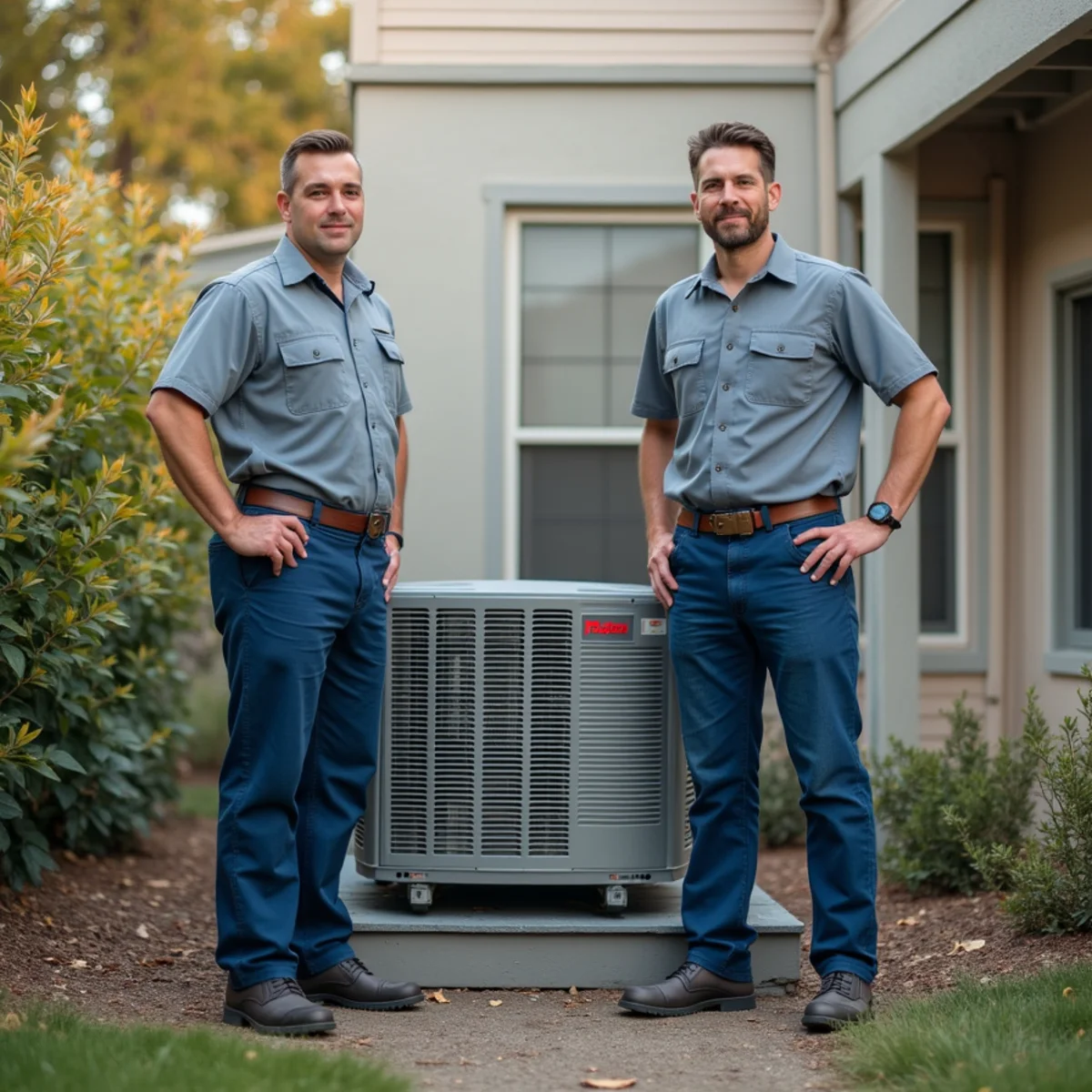
A mini-split has two parts: a compact outdoor condenser and one or more indoor heads mounted inside. Instead of ducts, they are joined by a slim refrigerant and control line that runs through a hole about three inches across in the wall. Each indoor head cools and heats its space directly, with an inverter-driven compressor that ramps up and down instead of slamming on and off, so it runs quietly and sips power. No plenum, no trunk lines, no soffits.
That inverter-driven compressor is also why mini-splits run so efficiently and so quietly. Instead of the on-off blasts of a single-speed system, it holds a steady, low output that matches the room and sips power, which keeps operating costs down. The indoor head runs at little more than a whisper, a real plus in a small historic bedroom, and each head carries its own washable filter, which helps during foothill wildfire smoke season when you want to keep a room sealed and filtered. For a home that has only ever had a rattling wall heater, the jump in comfort and quiet is night and day.
A Minimal-Invasion Install That Preserves Character
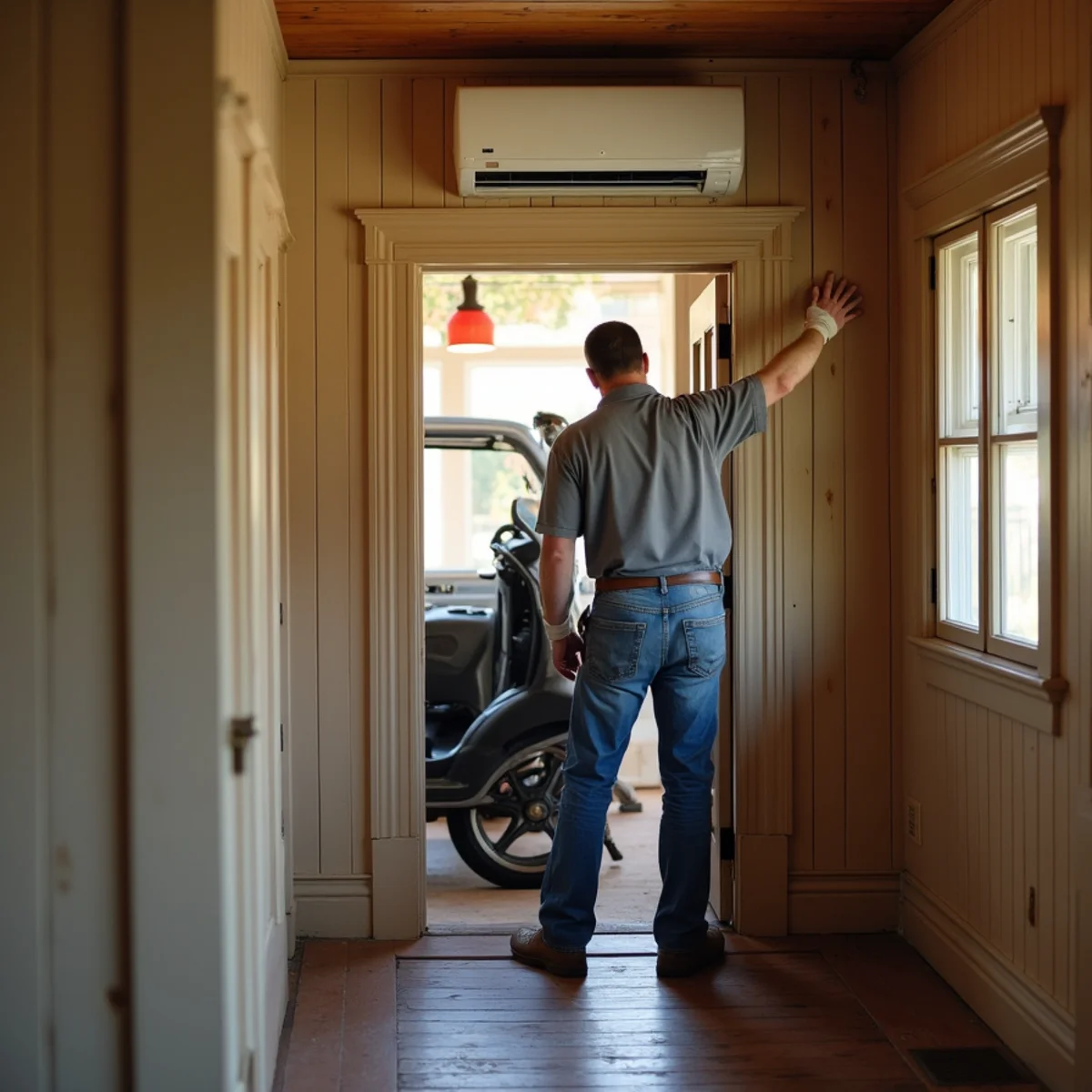
The install is what wins people over. Each head needs only that one small penetration, and the line set can be routed through a closet or hidden along the exterior in a slim line-hide cover instead of carved into the plaster. There is no ductwork to chase through the walls and no demolition of original trim, wood floors, or ceilings. Heads mount high on a wall out of sightlines, or you can choose a low-profile floor console that reads a bit like an old radiator. A careful ductless mini-split installation can leave the historic fabric of the house essentially untouched.
Plan the head and line-set locations first
In a historic home, deciding where heads and line sets go before the install is half the battle. Interior walls, closets, and the least-visible exterior runs keep the equipment discreet and the plaster intact. A walkthrough beforehand prevents regret later.
Single-Zone vs. Multi-Zone: How Many Heads?
A single-zone system pairs one outdoor unit with one indoor head, which is perfect for a single problem space. A multi-zone system runs several heads off one outdoor unit, each with its own thermostat, so you get whole-house comfort with independent control room by room, which suits a drafty old house where every room behaves differently. Good candidates include:
- A converted attic bedroom or bonus room that no other system reaches
- A home office over the garage that runs hot or cold
- A sunny south-facing parlor that bakes in the afternoon
- A primary suite you want on its own schedule
- A whole home that has only wall heaters and no cooling at all
Yes, They Heat Too, and Handle Auburn Winters
A mini-split is a heat pump, so it heats as well as cools. Modern cold-climate models put out efficient heat well below freezing, which is more than enough for Auburn's typical winter lows near the upper 30s. They are far more efficient than the electric wall heaters or aging floor furnaces these homes usually rely on, and safer than a cracked gravity furnace. If you have some ducts but the airflow to certain rooms is weak, compare notes with our post on weak airflow in older Auburn homes before deciding whether to fix the ducts or add a head.
Cost, Permits, and Rebates
As directional Auburn-market context, a single-zone ductless mini-split commonly runs $2,500 to $6,500, with multi-zone systems higher depending on the number of heads. These are ranges, not a quote, and we put your exact scope in writing. Mini-splits often qualify for PG&E, TECH Clean California, manufacturer, and federal incentives, but program funding changes, so verify current eligibility rather than counting on a maximum. As with any install, a permit is required in California.
Directional cost, not a quote
Single-zone ductless installs in the Auburn area typically fall in the $2,500 to $6,500 range; multi-zone costs more. Your written proposal depends on the number of heads, electrical, line-set routing, and permits. Call +1 (327) 210-5999 for same-day estimates and 24/7 service across Auburn and the foothills.
Frequently Asked Questions
Yes. A ductless mini-split adds cooling and heating without any ductwork. It uses a compact outdoor unit connected to indoor heads by a slim refrigerant line that passes through a small hole in the wall, so there is no need to tear into plaster or drop soffits in a Gold Rush-era home.
It depends on the layout and how independently you want to control each space. A single head handles one problem room or addition, while a multi-zone system runs several heads off one outdoor unit for whole-house comfort. A technician sizes it with a load calculation rather than guessing by square footage alone.
For Auburn's climate, yes. A mini-split is a heat pump, and modern cold-climate models deliver efficient heat well below freezing, comfortably covering Auburn's typical winter lows. They are more efficient than the wall and floor furnaces common in historic homes. Homes at much higher, colder elevations may want a backup heat source.