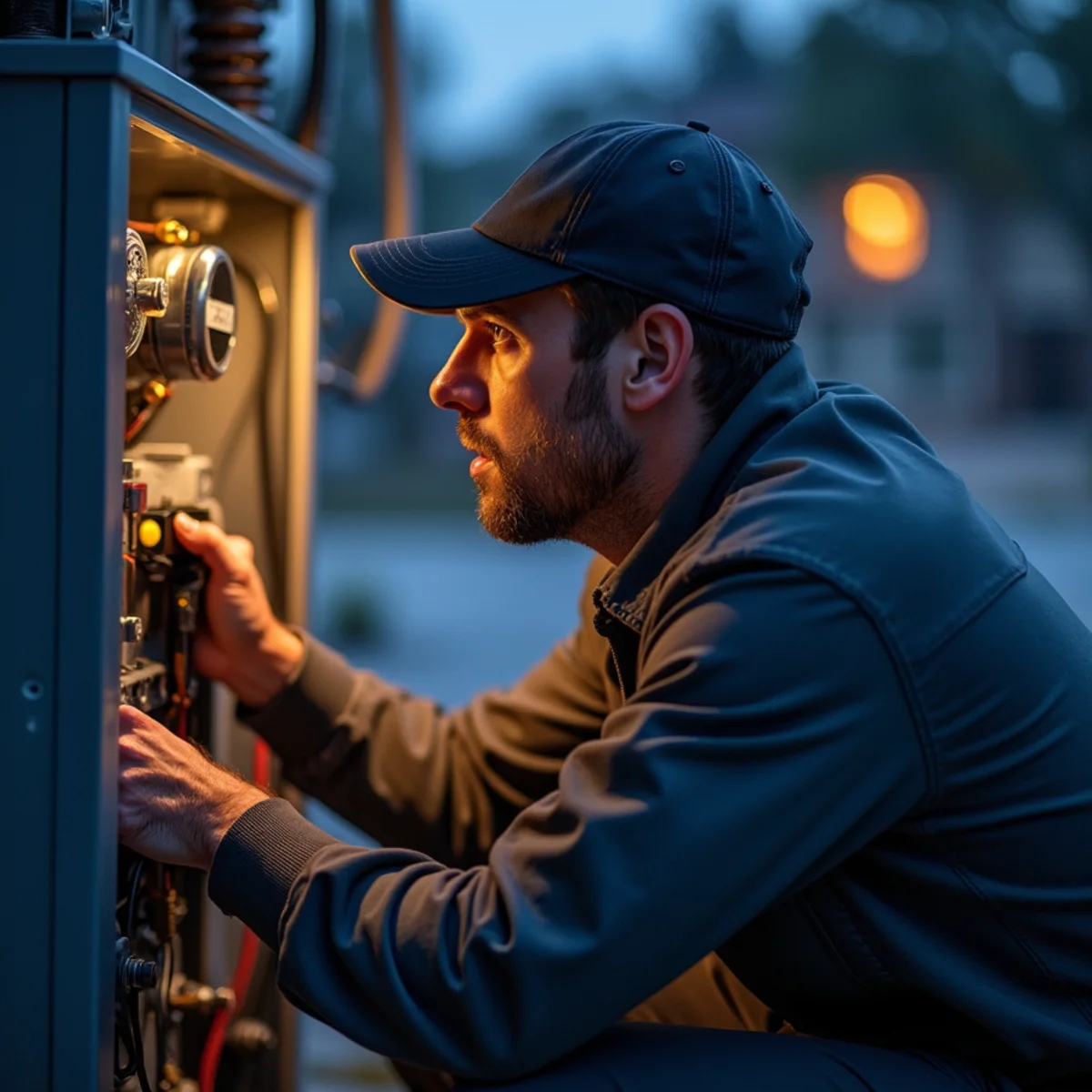
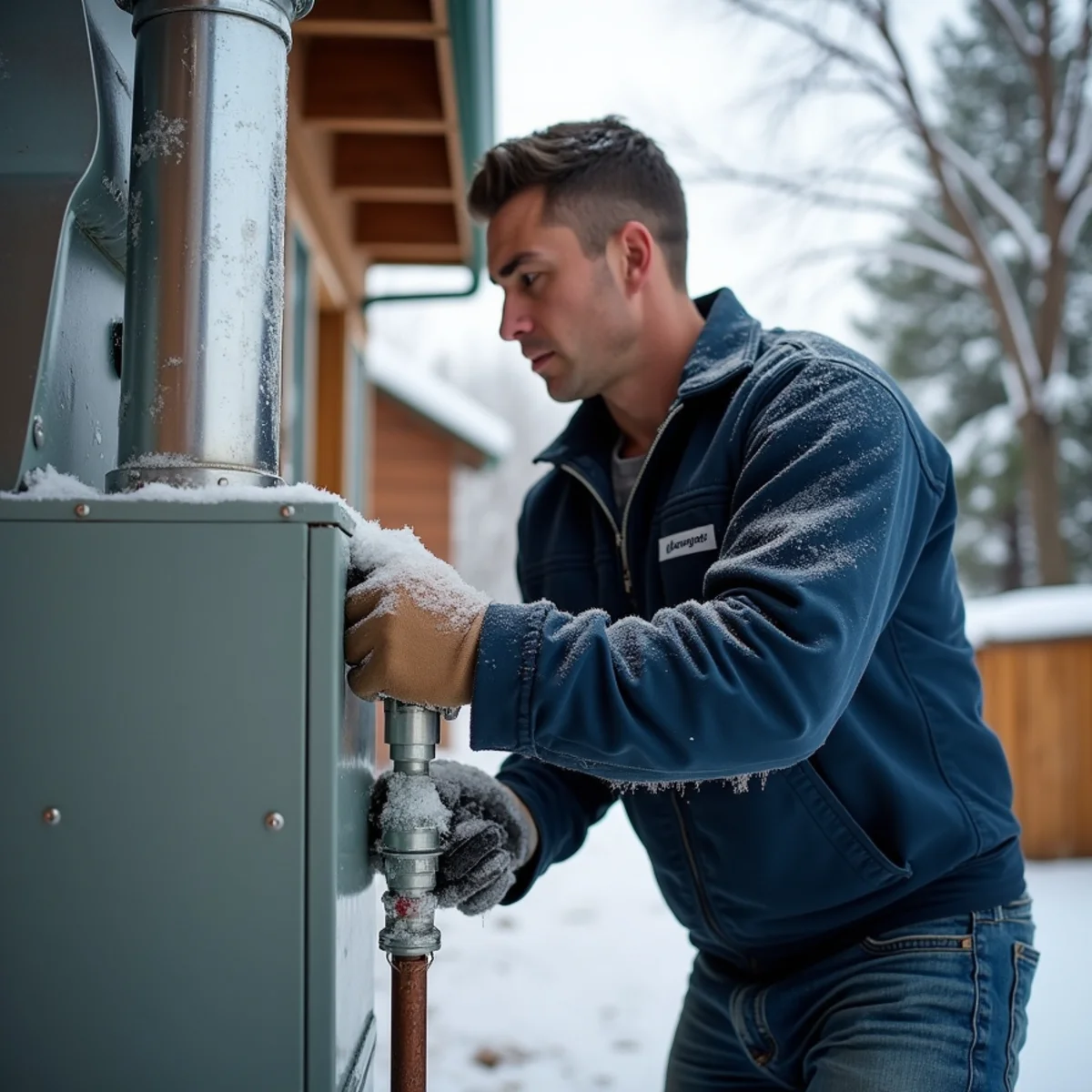
In December 2013, Auburn woke up to temperatures around 5°F — cold enough to burst pipes across the foothills and push furnaces well past what they were built to handle. It does not happen every winter, but when a hard freeze settles into Placer County, two failures tend to arrive together: the furnace gives out, and the plumbing starts to freeze.
That combination is what makes a December cold snap different from an ordinary chilly night. You are not just uncomfortable — you are racing the clock on frozen pipes while the house bleeds heat. This is the playbook we give Auburn homeowners so they are ready before the cold arrives and know exactly what to do if the furnace dies in the middle of it.
Why a Hard Freeze Is a Double Threat
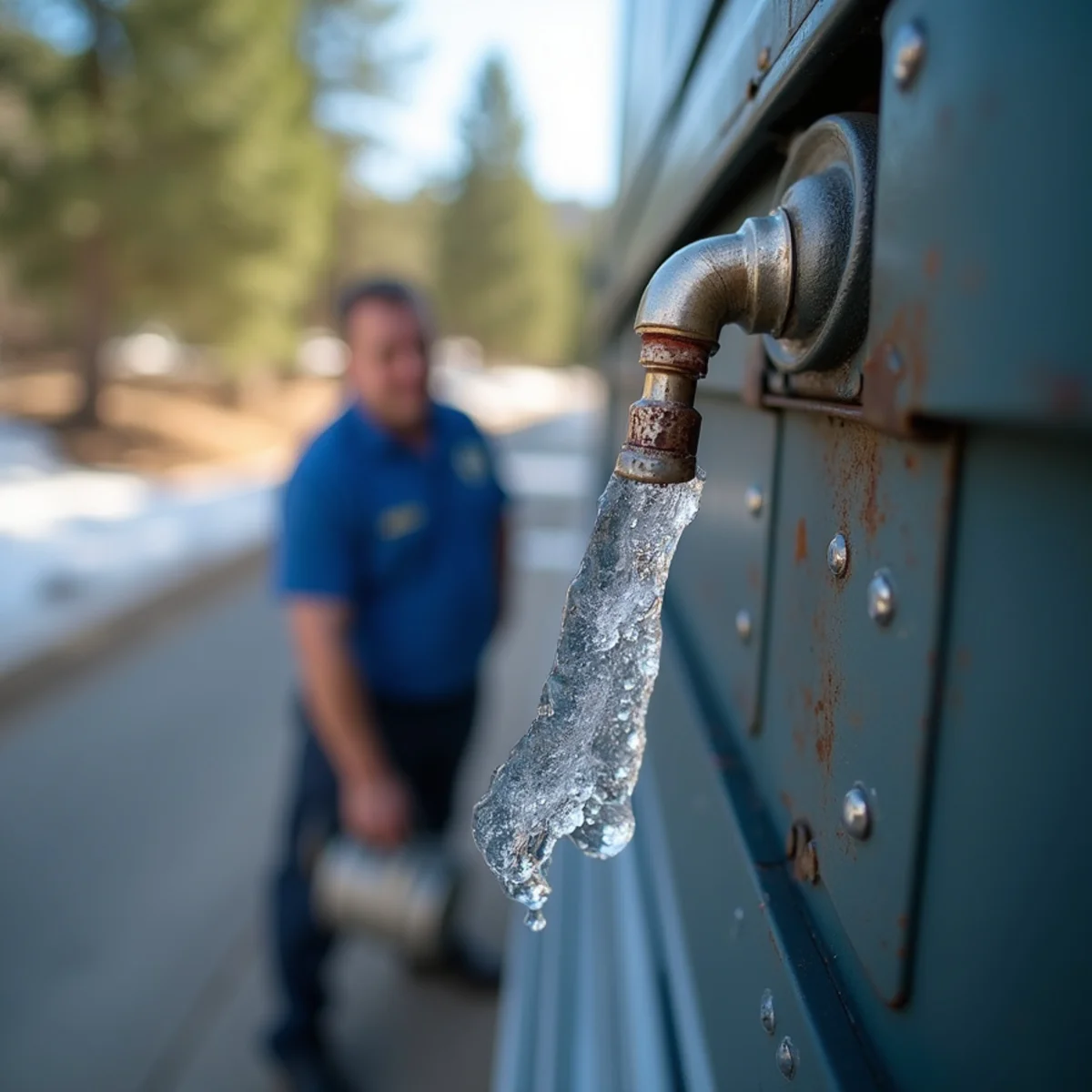
No heat and freezing pipes feed on each other. Once the furnace goes down, the indoor temperature falls, and pipes running through crawlspaces, exterior walls, and unheated garages start to freeze. A frozen pipe can split and then flood the house when it thaws. Meanwhile, a cold snap is exactly when furnaces work hardest and longest — running nearly nonstop — which is when a marginal ignitor, a dirty flame sensor, or a tired blower motor finally quits. The failure and the freeze show up in the same twelve hours.
Before the Freeze — Get Ahead of It
The best time to prepare for a Placer County winter freeze is the week before, when the forecast turns cold. A little prep buys you hours of margin if something fails.
Freeze-prep checklist
- 1Get the furnace serviced in fall so it is not the weak link — a fresh flame sensor and a clean burner are cheap insurance against a cold-snap failure.
- 2Find your main water shutoff now and make sure the valve turns. In an emergency you do not want to be hunting for it in the dark.
- 3Insulate exposed pipes and hose bibs, and disconnect garden hoses so outdoor spigots can drain.
- 4Seal drafts at crawlspace vents and around garage doors on the coldest nights to keep the space above freezing.
- 5Confirm your CO alarms work and have a safe space-heater plan ready before you need it.
The Playbook — When the Furnace Dies During a Freeze
If the heat quits in the middle of a cold snap, work this order. It keeps people and plumbing safe while you get a technician headed your way.
- 1Run the quick furnace checks — thermostat set to heat with fresh batteries, furnace switch on, breaker reset once, filter clear, gas or propane on. Our freezing-night furnace steps walk through each one.
- 2Protect the pipes immediately: open cabinet doors under sinks, let a thin trickle run from the farthest faucet, and keep the garage closed.
- 3Consolidate everyone into one room and warm it with a properly used electric space heater — plugged into the wall, three feet of clearance, never left running while you sleep.
- 4Call for emergency furnace repair. We run 24/7 through the foothill winter, and a no-heat freeze is a priority call.
- 5If the indoor temperature keeps falling toward freezing and heat is not coming, shut off the water at the main and open faucets to drain the lines, then plan to relocate for the night.
Two things to never do
Never heat the house with a gas oven, grill, or unvented fuel heater — that is a carbon monoxide risk. And never thaw a frozen pipe with an open flame or torch; it can burst the pipe or start a fire. Use a hair dryer or a space heater instead.
If a Pipe Freezes — or Bursts
If a pipe is frozen but still intact, open the faucet it feeds and gently warm the pipe with a hair dryer or space heater, starting at the faucet end and working back. Running water helps melt the ice and tells you when flow returns. If a pipe has already burst, shut off the main immediately, open faucets to relieve pressure, and call a plumber — our focus is getting your heat back so the rest of the house does not follow.
Getting Heat Restored Fast
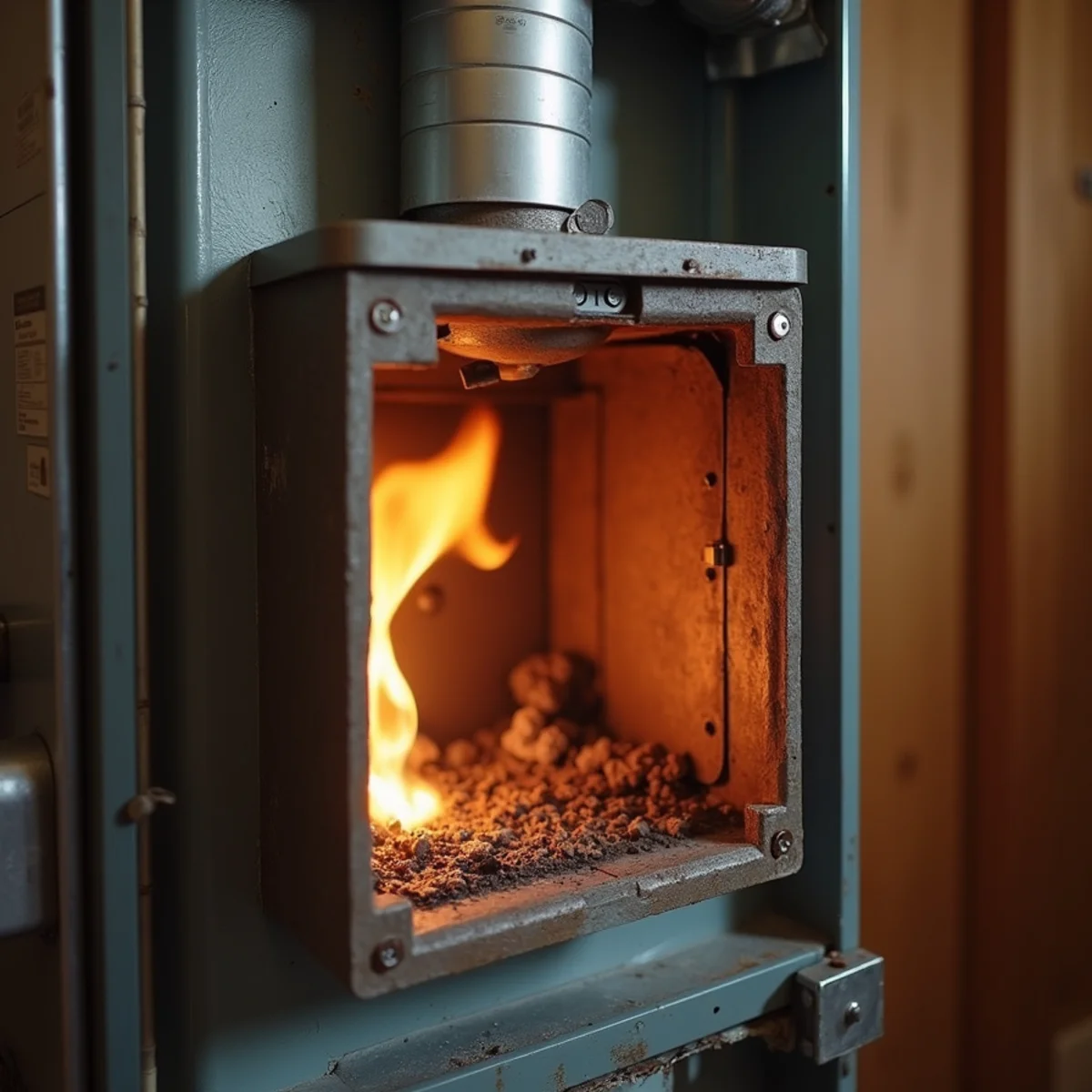
In freeze calls, the failures we see most are cracked heat exchangers, failed hot-surface ignitors, dirty flame sensors that drop the burner, control boards locked out after repeated ignition attempts, and — on high-efficiency furnaces — a frozen condensate line that shuts the unit down. We cover all of Placer County, from the valley floor up into the snow line, and carry the common parts to restore heat on the first visit whenever we can. Ask for the diagnostic fee in writing, and we will tell you honestly whether it is a repair or, for an old and failing furnace, a replacement conversation.
One more thing to check if your home runs on propane, as many foothill properties do: extreme cold lowers the pressure a propane tank can deliver, and a tank that is low on a freezing morning may not feed the furnace properly even though it is not technically empty. Keep the tank above roughly 30 percent heading into winter, keep snow and ice off the regulator, and never let it run down during a cold stretch. A furnace starving for fuel in a freeze can look exactly like a mechanical failure when the real fix is a propane delivery.
Heat out in a freeze? Call now
Do not wait out a hard freeze with no heat. Call +1 (327) 210-5999 for 24/7 emergency furnace service across Auburn and Placer County.
Frequently Asked Questions
Auburn's January normals run about a high of 56°F and a low near 38°F, but hard freezes happen. A December 2013 cold snap dropped temperatures to roughly 5°F, cold enough to burst pipes across the foothills. Higher towns like Colfax and Alta run colder and get real snow, so they see longer, harder freezes.
Run the quick checks — thermostat, furnace switch, breaker, filter, and gas or propane supply. If that does not restart it, protect your pipes by opening sink cabinets and running a thin trickle from a far faucet, gather everyone into one safely heated room, and call for emergency furnace repair.
If the indoor temperature is falling toward freezing and you cannot restore heat, shutting off the water at the main and opening faucets to drain the lines prevents a burst pipe and flooding. Know where your main shutoff is before a cold snap so you can act quickly if you need to.