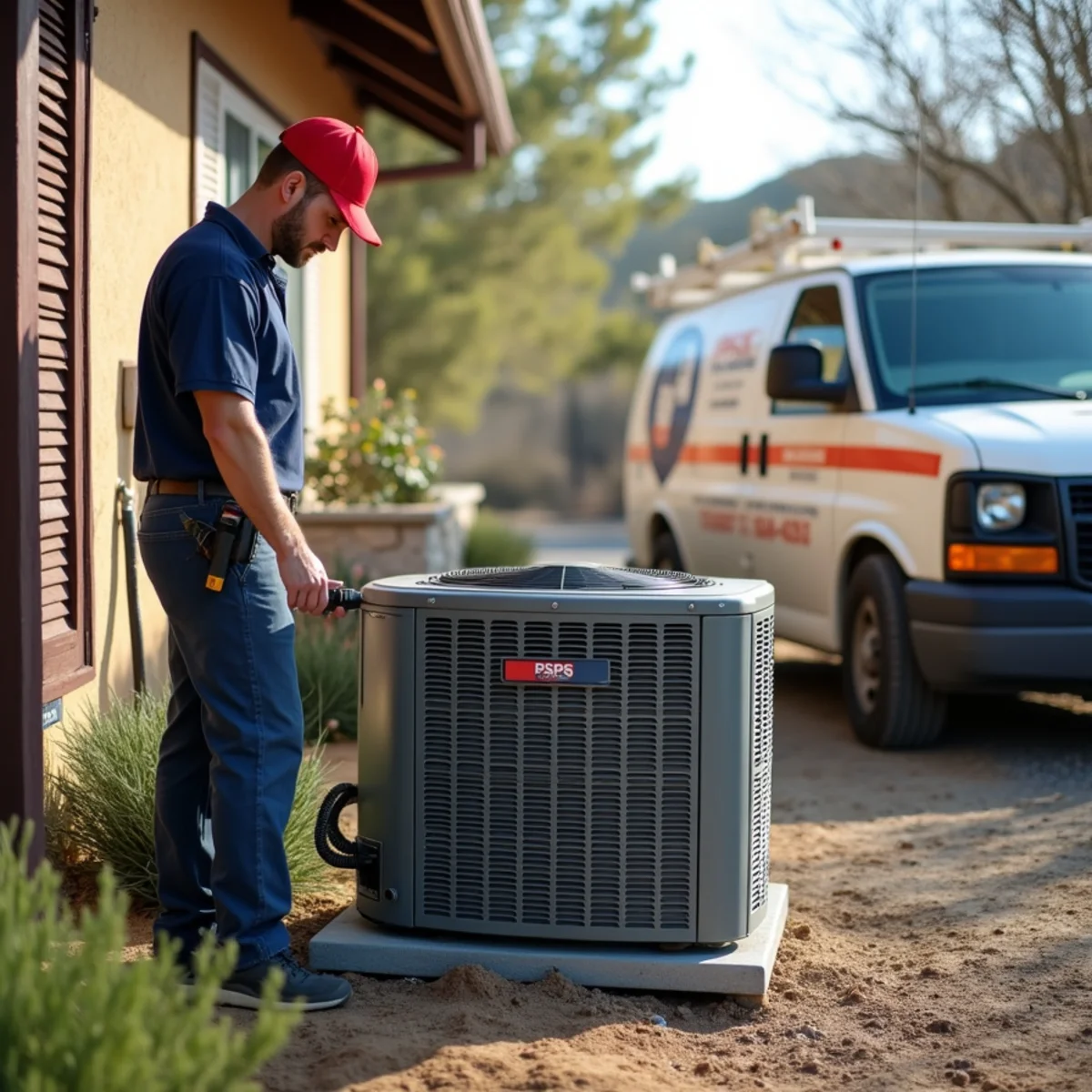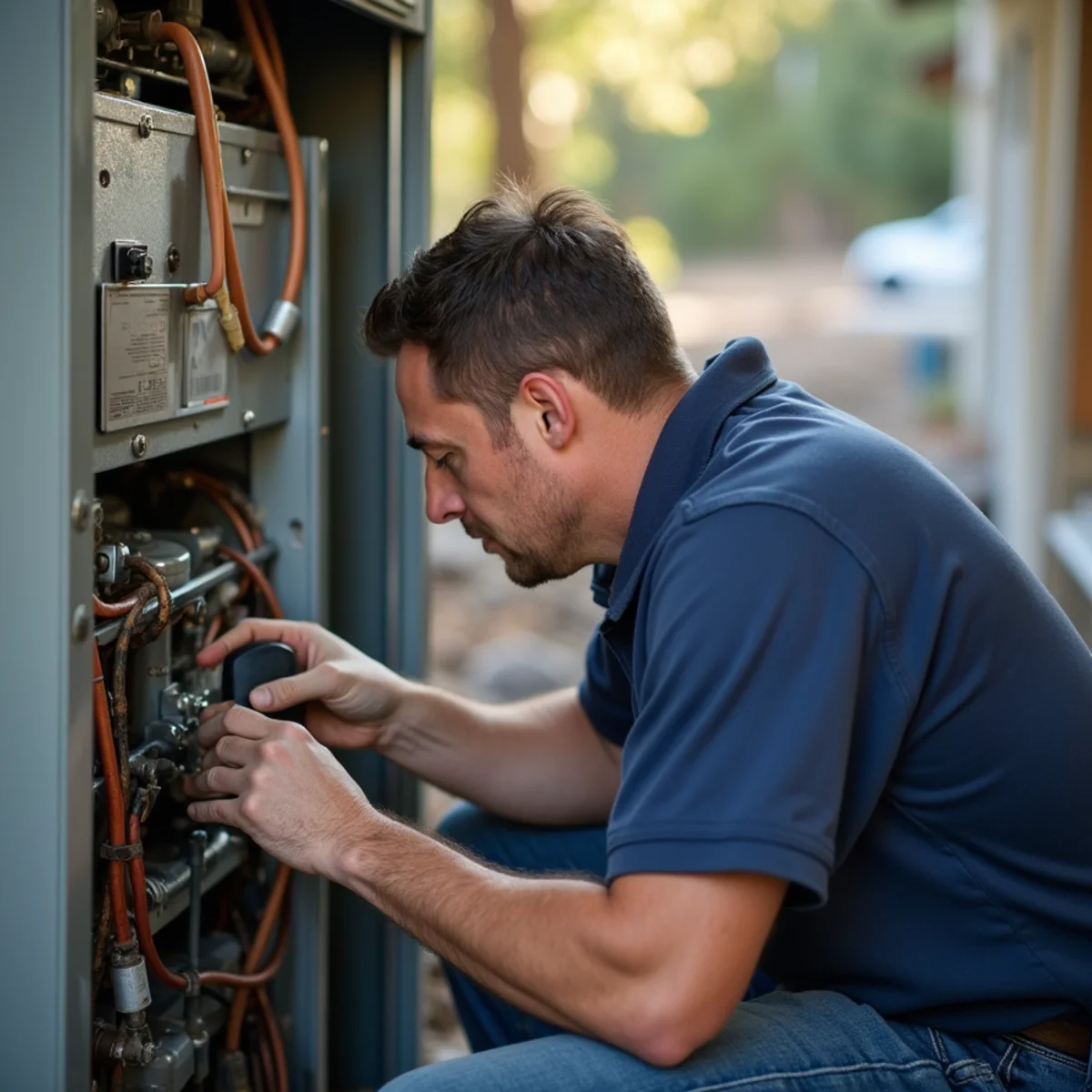
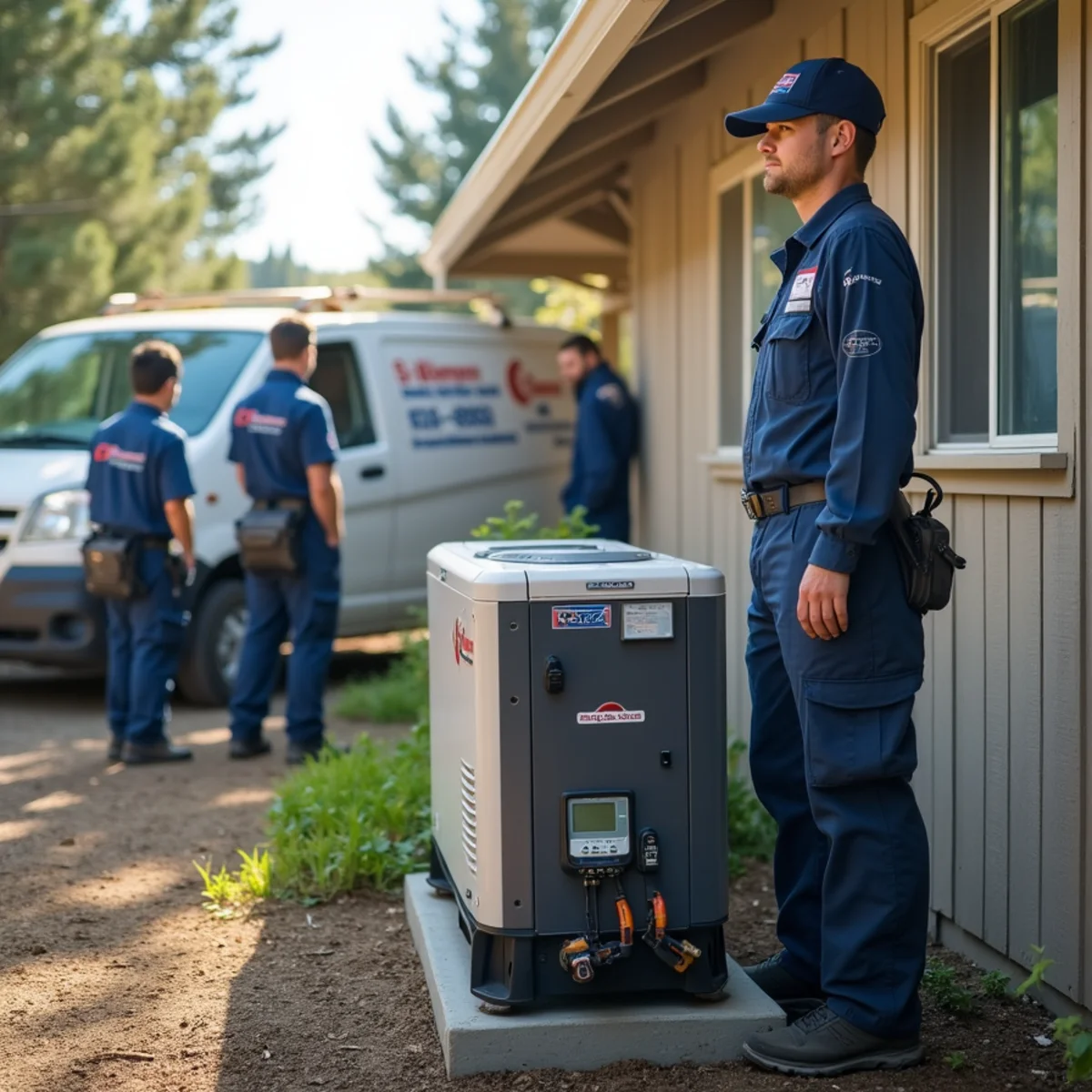
When PG&E calls a Public Safety Power Shutoff, the foothills can go dark for hours or days — during exactly the hot, dry, windy weather that makes a business unlivable without cooling. For a restaurant with a walk-in cooler, a medical office, a market with refrigerated cases, or any storefront trying to stay open, a PSPS isn't an inconvenience. It's a revenue event.
A backup power system changes the math. Done right, it keeps your HVAC and refrigeration running, your doors open, and your inventory safe while the block around you sits dark. Done wrong — undersized, wired without the right transfer switch, or asked to run everything at once — it trips, overheats, or simply won't carry the load you actually need.
Here's how commercial HVAC backup power for a PSPS works, what to prioritize, and how to size it without overbuilding.
Standby Generators vs. Portable Power
A portable generator is fine for a few lights and a register. It is not the tool for commercial HVAC and refrigeration. Air conditioners and compressors draw a big surge of current the instant they start, and they need to run for hours or days, not minutes. That job calls for a permanently installed commercial standby generator — natural gas, propane, or diesel — wired to start automatically when the grid drops. In fire-prone parts of Placer County, standby power is quickly becoming standard for any business that can't afford to close during a shutoff.
The Transfer Switch Is the Whole Ballgame
The piece that makes backup power safe is the transfer switch. An automatic transfer switch (ATS) senses the outage, disconnects your building from the utility, and starts the generator — then reverses cleanly when grid power returns. That isolation isn't optional: it protects your equipment and, critically, keeps generator power from backfeeding onto utility lines where it can injure or kill a lineworker. This is licensed electrical work, and it has to be permitted and inspected.
Never backfeed your panel
Do not run a portable generator into a wall outlet or breaker to power the building. Backfeeding bypasses safe isolation, can electrocute utility crews working to restore power, and can destroy your equipment when the grid comes back. A properly installed transfer switch is the only safe way to connect backup power to a building.
Load Prioritization: You Don't Need to Run Everything
The smartest way to keep a business running on backup power isn't to power the whole building — it's to power what matters and shed the rest. Load prioritization lets a right-sized generator carry the loads that protect revenue and inventory while non-essential circuits stay off. Think in tiers:
- Tier 1 — refrigeration (walk-ins and cases), HVAC for occupied and product-critical zones, and life-safety systems.
- Tier 2 — point-of-sale, essential lighting, network and phones, so you can actually transact.
- Tier 3 — non-essential loads like signage, secondary AC, and water heating that can wait out the outage.
Automatic load-shedding controls can drop Tier 3 the moment the generator needs headroom, so a tight start on a hot compressor doesn't overwhelm the system. That's how a modestly sized generator does the job of a much bigger one.
Sizing the Generator to the Load
Generators aren't sized by adding up running watts. The number that matters is the surge when your largest compressor or motor starts — inrush current that can be several times the running load. Miss it and the generator sags, the HVAC won't start, and everything on the system flickers. This is where the HVAC side of the project earns its keep:
How backup power for HVAC gets sized right
- 1We calculate the real electrical demand of your HVAC and refrigeration, including compressor starting loads, not just nameplate running watts.
- 2We decide which loads are essential and which get shed, so the generator is sized to the plan instead of the whole building.
- 3Soft starters on large compressors can cut inrush and let you use a smaller generator — often the difference between two sizes.
- 4A licensed electrician sizes and installs the generator and transfer switch to code, permitted and inspected.
- 5We commission the system under load to confirm the HVAC actually starts and holds on generator power.
Standby power sized for commercial HVAC is a real capital investment, and the right number depends entirely on your equipment and which loads you choose to back up. We won't quote a figure sight-unseen — the honest move is a load study and a written proposal. Get it done before fire season, not during a red-flag warning.
Keeping Doors Open During a PSPS
The payoff is simple: when the block goes dark, you stay open. That means an HVAC system that's maintained well enough to start cleanly on generator power the first time, every time. A neglected unit with a weak capacitor or a marginal compressor is exactly the one that won't fire when you need it most, so tie backup power to a real commercial HVAC service plan. For the residential and small-property side of shutoffs across Placer County, our guide to PSPS backup power for Auburn homes covers the same thinking at a smaller scale.
Plan your backup power before fire season
Want your business ready for the next PSPS? Call The HVAC Auburn CA at +1 (327) 210-5999. We'll assess your HVAC and refrigeration loads, coordinate the generator and transfer-switch install, and keep your equipment serviced so it starts on backup power — same-day service in Auburn and 24/7 emergency response.
Frequently Asked Questions
Yes, if it's sized for the load and wired through a proper transfer switch. Commercial HVAC and refrigeration need a permanently installed standby generator, not a portable one, because compressors draw a large surge at startup and have to run for the length of the outage. Sizing to that starting load is the key to reliable operation.
It depends on your HVAC and refrigeration equipment and which loads you choose to back up. Sizing is driven by compressor starting surge, not just running watts, and load prioritization or soft starters can let a smaller generator do the job. The right approach is a load study and a written proposal, not a guess from square footage.
It's not recommended for commercial AC. Portable units generally can't handle a compressor's startup surge or run long enough for a multi-day shutoff, and connecting one to your building's panel without a transfer switch is dangerous. For HVAC and refrigeration, a permanently installed standby generator with an automatic transfer switch is the safe, reliable choice.