It is the third 100°F day in a row, your AC is running nonstop, and the air from the vents is barely cool. Maybe a tech topped off the refrigerant last summer and told you it was a little low. Now it is low again. That pattern is not bad luck — it is almost always a refrigerant leak, and it is worth understanding before you pay to have the system recharged one more time.
Refrigerant is not a fuel that gets used up. A sealed AC system should never need more. If yours is running low, the refrigerant went somewhere — through a leak — and topping it off without finding that leak is throwing money into a hole. During Auburn's 100-degree stretches, when the system is working hardest, a leak shows itself in a handful of specific ways.
What Refrigerant Actually Does
Refrigerant is the fluid that carries heat out of your house and dumps it outside. The charge is set to a precise amount for your equipment, and even a small loss drops cooling capacity fast — especially on the hottest afternoons, when you need every bit of it. That is why a leak that was invisible back in May becomes obvious in a July heat wave: the system that could barely keep up now cannot, and the vents blow warm.
5 Warning Signs of a Refrigerant Leak
If you are low on refrigerant, your Auburn AC usually tells you. These are the freon leak signs we look for — and the ones you can spot yourself.
- 1Warm or barely-cool air: the system runs and runs but cannot hit the setpoint on hot afternoons. If it has been getting worse all season, read why your AC runs all day.
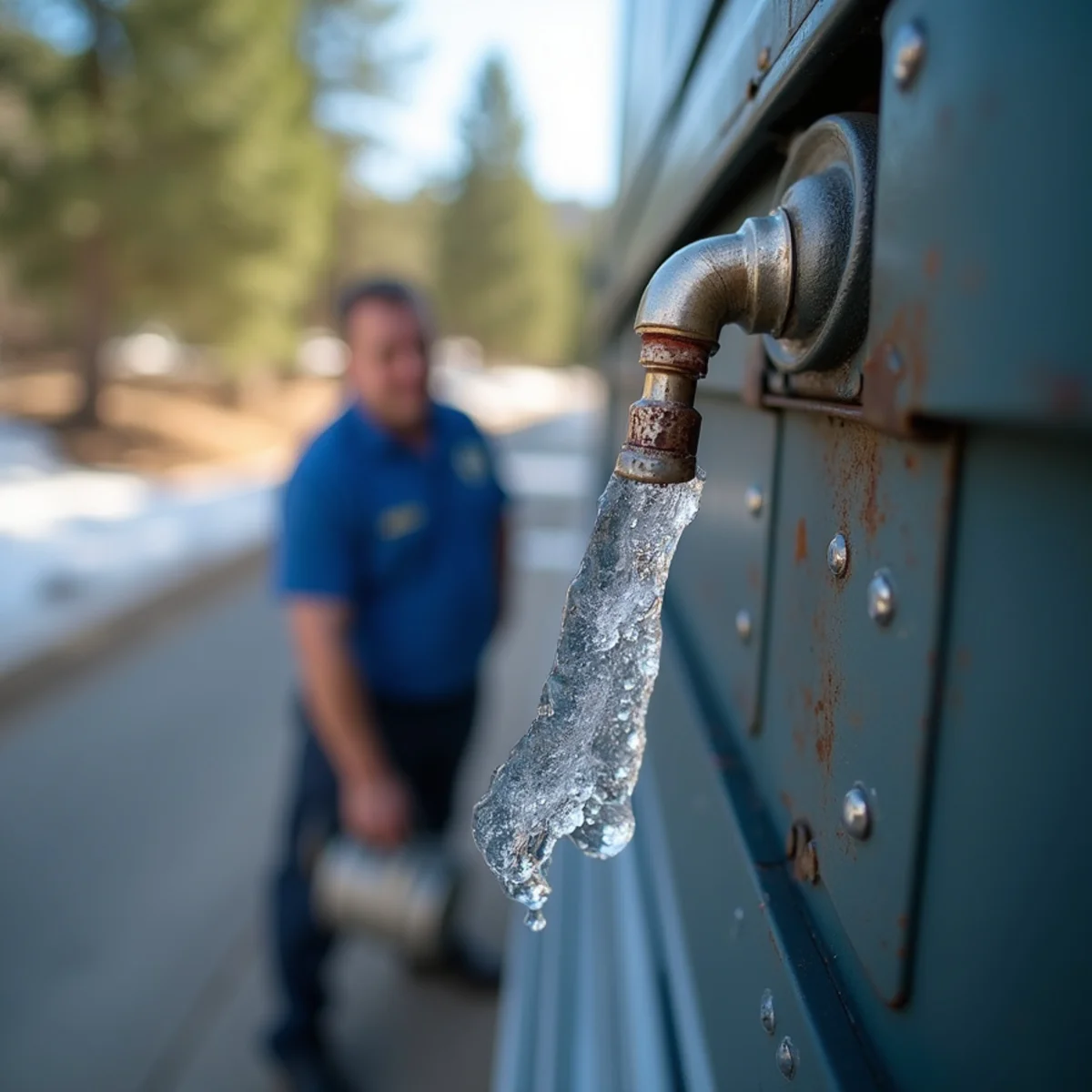
- 2Ice on the copper lines or indoor coil: a low charge drops the coil below freezing, so it frosts over and then blows warm once the ice blocks airflow.
- 3Hissing or bubbling sounds: a hiss can be refrigerant escaping a larger leak, and a bubbling or gurgling noise can point to the same problem in the lines.
- 4Rising electric bills with less comfort: the system runs far longer for less cooling, so your PG&E bill climbs during the very months it is already highest.
- 5Recharged last year and low again: this is the tell. A charge that drops season after season means an active leak, not normal wear.
Warm air plus ice is a stop sign
If you see frost or ice on the coil or refrigerant lines, shut the AC off and set the fan to ON to thaw it. Running an iced-up system can damage the compressor — the single most expensive part in the unit. Once it has thawed, call rather than switching it back to cooling.
Why Topping Off Is Not a Repair
Adding refrigerant to a leaking system is a temporary patch, not a fix. Under EPA rules, technicians are expected to find and repair leaks rather than just refill, and venting refrigerant to the air is both illegal and an environmental problem. Practically speaking, every recharge costs you again and lets more refrigerant escape in the meantime. A real repair locates the leak with an electronic detector, dye, or a nitrogen pressure test, repairs or replaces the failed component, pulls a proper vacuum, and then recharges to the exact factory spec. That is what refrigerant leak repair actually involves.
The Refrigerant Rules Are Changing, Too
There is a cost angle worth knowing. New residential AC and heat pump equipment installed on or after January 1, 2025 has to use lower-GWP refrigerant under a 700 GWP limit, and older refrigerants are phasing down — which makes recharging an aging system more expensive over time. If your unit is old and leaking, factor that in. Sometimes a repair still makes clear sense; sometimes the math points toward replacement, where central AC runs roughly $3,500 to $8,500 as directional market context — never a quote. Ask us for the diagnostic fee in writing so you can decide with real numbers.
Where AC Systems Usually Leak
Refrigerant leaks are not random. The indoor evaporator coil is a common spot, where slow pinhole corrosion develops over years and is nearly impossible to see by eye. The other frequent sources are the copper line set and its brazed joints, the service valves a technician connects gauges to, and the connections at the coil and compressor. In our dry, dusty foothill air, a coil that also collects debris can corrode faster, which is one more reason to keep the system clean. That is why a proper leak search uses an electronic detector or a nitrogen pressure test rather than a guess — finding a pinhole on a coil buried in the air handler is not something you eyeball. Once we know where the system is losing charge, we can tell you honestly whether it is a straightforward repair or a coil that has reached the end of its life.
What to Do During a Heat Wave
Do not just keep recharging a leaking system through Auburn's hottest weeks. Get a proper leak search, protect the compressor by not running the AC while it is iced up, keep your filter clean, and close blinds on the sun side to take some load off the system while you wait. We handle refrigerant diagnostics across the area, including South Auburn and the neighborhoods around downtown, and we will show you honestly whether it is a fix or a replacement.
Stop paying to refill a leak
Low on refrigerant again? Call +1 (327) 210-5999 for same-day leak diagnosis in Auburn and 24/7 emergency service during heat waves.
Frequently Asked Questions
Common signs are warm or barely-cool air on hot days, ice on the copper lines or indoor coil, a hissing or bubbling sound, rising electric bills with less cooling, and a system that needed a recharge last year and is low again. A sealed system should never lose refrigerant, so any of these usually points to a leak.
Adding refrigerant only masks the problem. The charge will drop again as more escapes through the leak, so you pay repeatedly for a temporary fix. EPA rules also direct technicians to find and repair leaks rather than simply refill. A proper repair locates and seals the leak, then recharges the system to the exact factory specification.
Refrigerant leaks are mainly an efficiency, cost, and environmental problem rather than an immediate home hazard, but running a system that is iced up or badly undercharged can damage the compressor, which is expensive to replace. If you see ice on the lines, shut the AC off, let it thaw, and have the leak found and repaired rather than topped off.