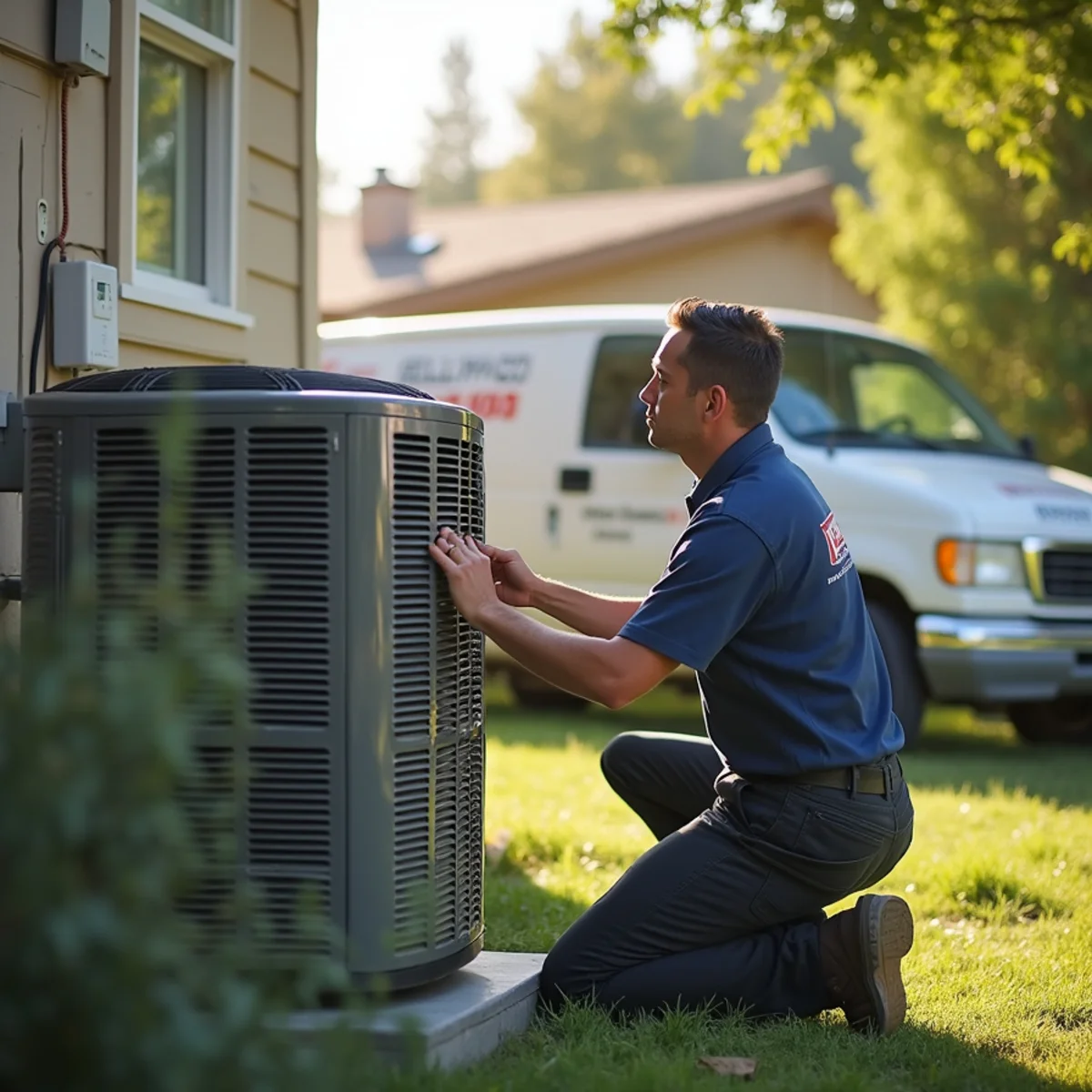

You can hear the system running, but hold your hand to the vent and the air barely moves. In an older Auburn home, especially the pre-war and mid-century houses around Old Town, weak airflow is one of the most common comfort complaints we get, and it is almost never a single cause.
Weak airflow does not just make rooms stuffy. It ices the indoor coil, stretches run times, and makes the blower and compressor fight a restriction they were never built to overcome. Ignore it and a cheap fix at the filter can turn into a frozen coil or a burned-out blower motor by August.
Here is how a foothill tech tracks weak airflow down, from the two-dollar filter to the ductwork buried in the walls and crawlspace.
Start at the Filter, the Cheapest Restriction to Fix
A filter caked with foothill dust, pet hair, and wildfire ash is the number-one cause of low airflow from vents we find in Auburn. During smoke season it can load up in a couple of weeks instead of a couple of months. There is a second filter trap too: a very high-MERV filter jammed into an older system built for a basic one can choke an aging blower that does not have the muscle to pull through it. Check the filter first, match it to what your system can actually move, and pair it with sensible indoor air quality upgrades if smoke is your real concern.
The Blower and Its Capacitor
The blower is what actually pushes air through the house, and several failures quietly cut its output. A weak run capacitor starves the motor, a tired PSC motor slows down under load, and, most common of all, a blower wheel packed with years of dust can lose a third of its airflow while looking fine at a glance. Older air handlers with their original blowers are especially prone to it. Some of the oldest systems still use a belt-drive blower, where a loose or glazed belt slips under load and quietly robs airflow that a fresh belt restores in minutes. A motor that has been running hot for years may also be on its way out, so we check the amp draw against its rating rather than waiting for it to seize on the first 100-degree afternoon. If airflow is weak at every vent and the filter is clean, the blower is the next stop.
Leaky, Undersized, and Crushed Ducts
This is the heart of the problem in Old Town-era homes. Many of these houses were built before central air existed, so ducts were retrofitted decades later into tight crawlspaces and low attics never designed for them. That means undersized trunk lines, runs that came apart at the joints, sections crushed under attic storage, and old cloth tape that let go years ago. The Department of Energy estimates typical duct systems lose 20 to 30 percent of their air to leaks, and in a retrofitted old home it is often worse. Sealing and resizing that ductwork is frequently the real fix, which is why we start with a full ductwork inspection and repair in the older houses around Old Town Auburn.
Closed, Crushed, and Disconnected Runs
Beyond leaks, whole branches can be choked off. Watch for these in an older home:
- Registers painted or rusted partly shut after decades of repainting
- Flex duct kinked around a joist or crushed under boxes in the attic
- A branch run that came apart at the boot and now dumps air into the crawlspace
- Undersized or too-few returns that starve the blower no matter how strong it is
- A supply trunk that was never resized when a later AC was added
Return air is the half of the system people forget. Many older Auburn homes have a single, undersized return grille that simply cannot feed a modern blower, so the system starves no matter how clean the supply side is. Adding a second return or enlarging the one you have is often the highest-value airflow fix we make in these houses, and it costs a fraction of new equipment.
Weak airflow can wreck the equipment
Chronic low airflow lets the evaporator coil ice over, which chokes airflow further and can slug liquid refrigerant back to the compressor. A neglected airflow restriction is one of the cheaper problems to fix and one of the more expensive ones to ignore.
How We Track Down Weak Airflow
Guessing wastes your money, so a real diagnosis follows the air:
- 1Measure static pressure across the air handler, the blood-pressure reading of a duct system.
- 2Inspect and replace the filter, then re-measure to see how much it was costing you.
- 3Check blower amp draw, the run capacitor, and the blower wheel for caked-on dust.
- 4Inspect accessible duct runs for leaks, crushed sections, and disconnected boots.
- 5Confirm the return is large enough to feed the system's required airflow.
Why Older Auburn Homes Are Especially Prone to This
Homes built before central air was standard had ducts squeezed into spaces never meant to carry them, and every addition, converted porch, and finished attic added rooms at the end of long, starved runs. Many still rely on a single undersized return that cannot feed a modern system. Weak airflow and a system that never seems to keep up often travel together, which is why the same houses that struggle here also show up in our post on why your AC runs all day. Fix the airflow and both problems usually ease at once.
Get the air moving again
If your vents barely breathe, do not just buy a bigger unit and hope. Call +1 (327) 210-5999 for same-day airflow and duct service in Auburn, with 24/7 help when a weak system quits in the heat.
Frequently Asked Questions
The usual suspects are a clogged filter, a dirty or failing blower, and leaky, crushed, or undersized ducts. In older Auburn homes retrofitted with ductwork, the ducts are the most common cause. A technician measures static pressure to find where the air is being lost before recommending a fix.
Yes. Restricted airflow lets the evaporator coil ice over, which further reduces airflow and can send liquid refrigerant back to the compressor. It also forces longer run times and higher bills. Correcting airflow early is far cheaper than replacing a compressor.
Rarely, and often it makes things worse. If the ducts leak or are undersized, more equipment just pushes against the same restriction. The right approach is to find and fix the restriction, seal and resize ducts, and confirm the return is adequate before upsizing anything.