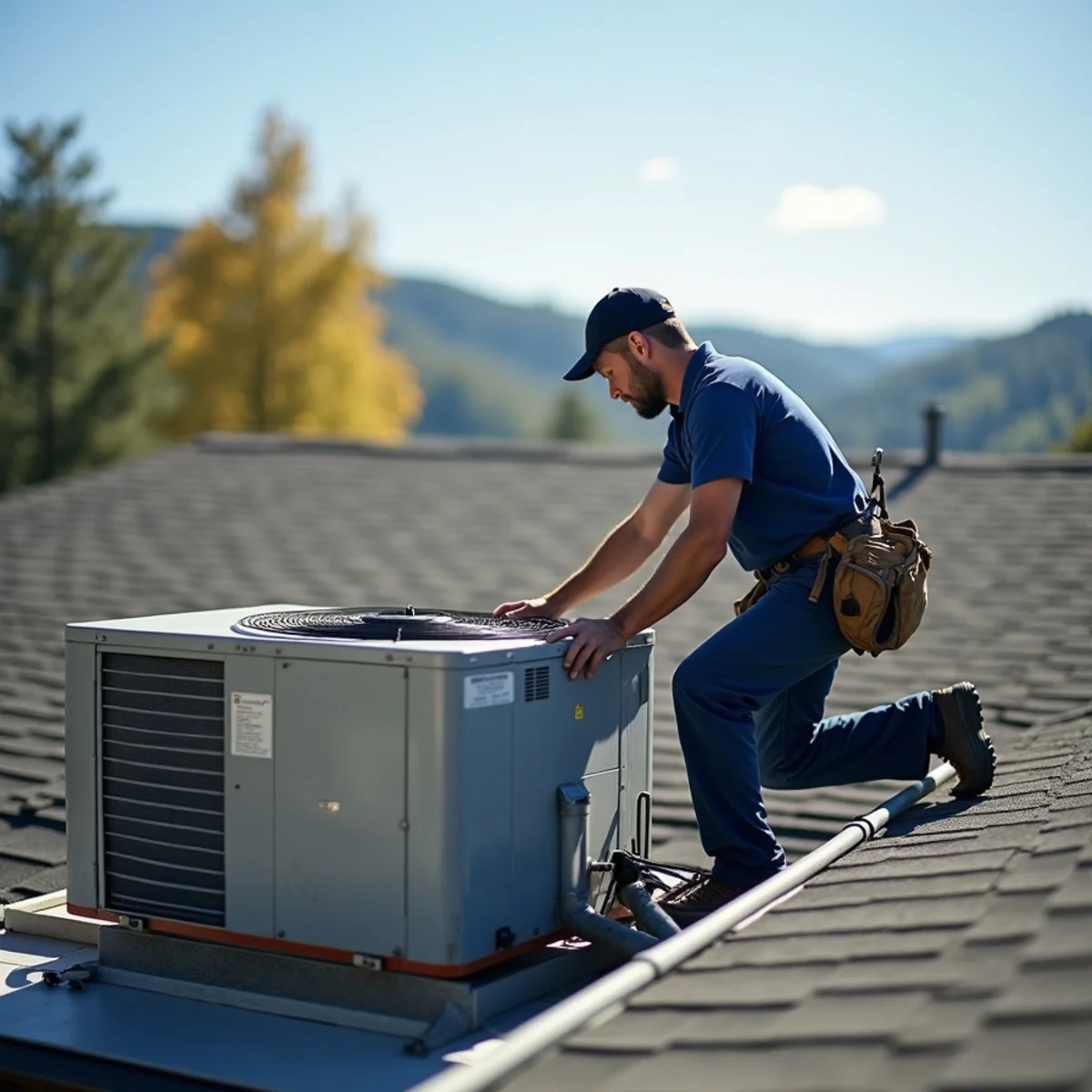
The rooftop unit is the most ignored piece of equipment your business owns. It sits out of sight above the ceiling grid, grinding through 100°F Placer County afternoons and cold winter mornings, and nobody thinks about it until the sales floor hits 85 degrees and customers start walking out.
By the time an RTU fails outright, it has almost always been warning you for weeks — a squealing belt, a coil packed with cottonwood fluff, a capacitor slowly cooking in the heat. Deferred maintenance turns a small part into a shutdown, and a shutdown on a summer weekend costs you far more than the repair ever would.
Rooftop units aren't complicated, but they are relentless. Here's why they fail, what a real preventive maintenance schedule looks like, and how good documentation protects your warranty and your budget.
Why Rooftop Units Fail in Placer County
Package units live a hard life up there. Sun, dust, ag-country pollen, wildfire ash, and big temperature swings all wear on the same handful of components. When we get an emergency call on a dead RTU, it's usually one of these:
- Belts and bearings: a worn blower belt slips, glazes, and snaps — often the single most common no-cooling cause on older units.
- Capacitors and contactors: heat kills capacitors, and a pitted contactor won't pull the compressor in on the hottest day of the year.
- Coils: condenser coils packed with dust and cottonwood choke off heat rejection, while dirty evaporator coils ice up and starve airflow.
- Economizers: stuck dampers and failed actuators either lock out free cooling or drag in 105°F outside air when they shouldn't. Economizer maintenance is the step most service outfits skip.
- Refrigerant: a slow leak quietly drops capacity long before the unit stops cooling, and running low burns out compressors.
- Drains and curbs: plugged condensate lines and failed roof-curb seals leak water into the ceiling below.
The Real Cost of Downtime
A dead rooftop unit isn't just a repair bill. It's an uncomfortable store that empties out, a restaurant that can't seat its patio-side tables, staff you send home, and — for anyone holding refrigerated product — inventory on the clock. One failed capacitor or a snapped belt can close you for a full summer weekend, and the after-hours emergency rate plus a rush-shipped part costs far more than a scheduled repair ever would have. Restaurants have it worst: lose the walk-in on a hot Saturday and you're not just closed, you're throwing product in the dumpster. On the worst weeks of summer, every commercial HVAC company in the county is booked, so the wait for an emergency part climbs right when you can least afford it. Preventive maintenance is cheap insurance against exactly that scenario.
Book service before the first heat wave
The worst time to discover a weak capacitor or a glazed belt is the first 100°F Saturday of the year, when everyone else is discovering theirs too. Schedule cooling-season service in spring so a marginal part gets caught on your terms, not during a shutdown.
A Preventive Maintenance Schedule That Works
For most Placer County businesses, twice-a-year service is the minimum — once before cooling season and once before heating season — with filter changes in between. Here's what belongs on each visit:
Rooftop unit preventive maintenance at a glance
| Timing | Priority tasks |
|---|---|
| Spring (before cooling) | Clean condenser and evaporator coils, check refrigerant charge, test capacitors and contactors, inspect and tension belts, service the economizer, clear the condensate drain. |
| Fall (before heating) | Inspect the heat exchanger or gas train (or heat-pump defrost), test ignition and safety controls, check belts and bearings, verify thermostat and staging. |
| Every visit | Replace filters, check belt tension, read compressor and motor amp draws, tighten electrical connections, confirm the drain is clear, log readings. |
Amp draws and refrigerant readings matter because they show a component sliding toward failure before it quits. A compressor pulling high amps or a charge trending low is a scheduled repair today instead of an emergency in August. A full commercial HVAC maintenance plan puts that on a calendar so it doesn't depend on someone remembering.
Filters, Belts, and the Cheap Stuff That Saves You
The least glamorous items prevent the most expensive failures. A clogged filter starves airflow, freezes the evaporator, and can take out a compressor. A cracked belt is a five-minute swap on a maintenance visit and a shutdown when it lets go mid-shift. During wildfire-smoke season, filters load up far faster than usual, so plan on changing them more often than the box says — the same lesson our wildfire smoke filter guide covers for homes applies double to a rooftop unit pulling foothill air all day.
Documentation for Warranty and Budget
Most manufacturers require proof of regular maintenance to honor a compressor or parts warranty. No service records, no warranty claim — and a bare compressor is a serious bill. Keep a log of every visit: date, tasks, amp and pressure readings, parts replaced, and refrigerant added.
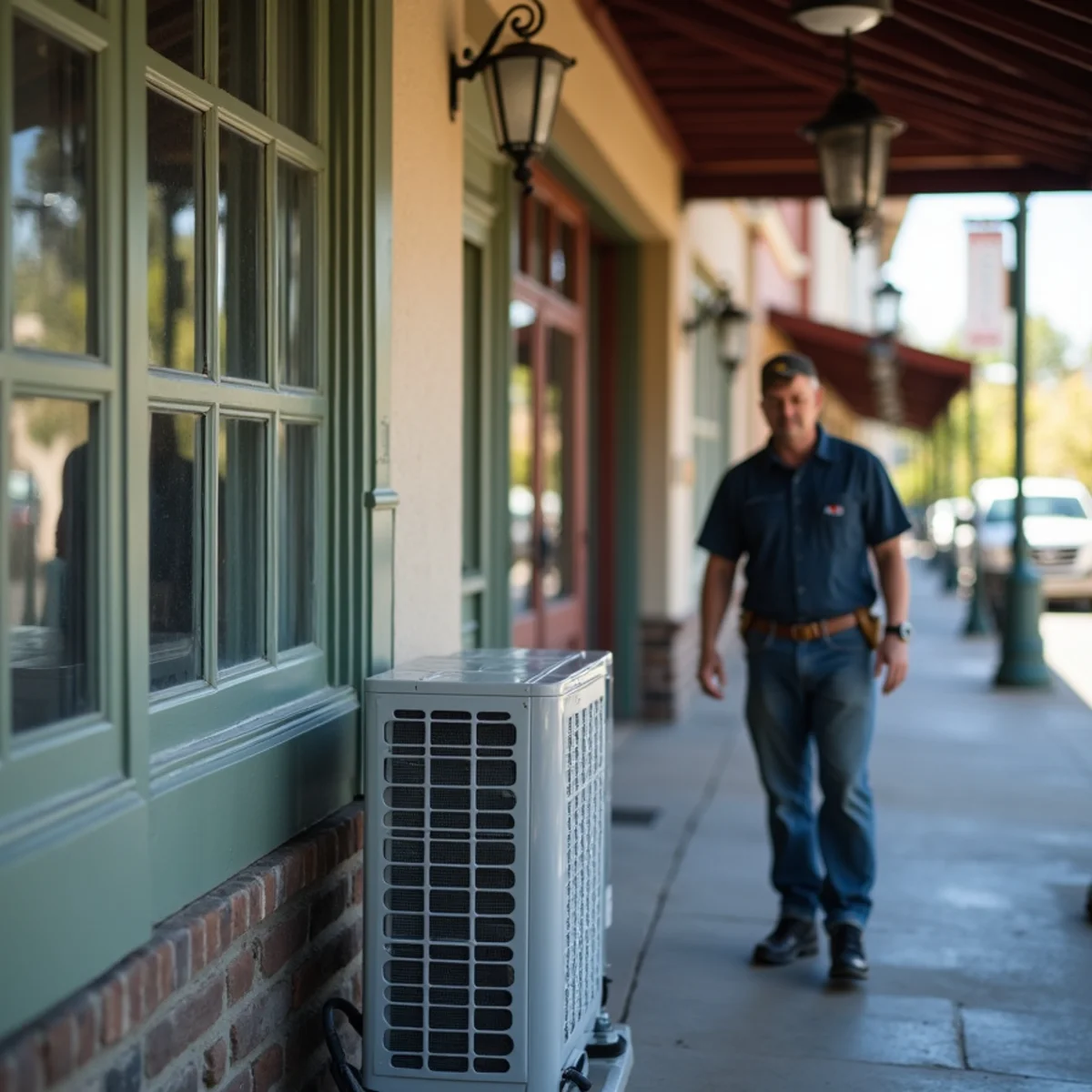
Good records pay off at budget time too. When you can see which units are trending toward replacement, you plan capital instead of reacting to a failure. Whether your building is in Auburn, Roseville, or anywhere across the county, that paper trail turns HVAC from a surprise into a line item. If you also run a storefront in a historic downtown, our take on commercial HVAC for Old Town storefronts covers the placement and access wrinkles those buildings add.
Put your rooftop units on a plan
Want your RTUs inspected and documented before the next heat wave? Call The HVAC Auburn CA at +1 (327) 210-5999. We service commercial rooftop units across Placer County with same-day availability in Auburn and 24/7 emergency response.
Frequently Asked Questions
At least twice a year for most businesses — once in spring before cooling season and once in fall before heating season — plus filter changes in between. High-use restaurants, units near heavy dust, and buildings running through wildfire-smoke season often need quarterly service to keep coils and filters clear.
On older units, a failed blower belt or a bad capacitor tops the list, followed by dirty condenser coils and low refrigerant from a slow leak. Most of these give warning signs — noise, weak airflow, rising run times — for days or weeks before the unit quits, which is why routine service catches them early.
It can. Most manufacturers require documented, regular maintenance to honor parts and compressor warranties, and they can deny a claim if you can't show service records. Keeping a simple log of every visit — tasks, readings, and parts — protects both the equipment and your warranty coverage.